.avif)

Key Takeaways:
- AI-SPM tools give you visibility into AI systems, data access, and real-time behavior across cloud and SaaS environments
- The biggest risks come from excessive access, uncontrolled data usage, and prompt-based manipulation
- Strong platforms combine AI discovery, posture management, and runtime protection in one system
- Integration with existing security tools ensures findings turn into action
- The best solutions support AI adoption by enforcing controls without slowing teams down
That's a significant security problem. Gartner predicts 25% of enterprise GenAI applications will hit at least five minor security incidents per year by 2028, up from 9% in 2025.
AI Security Posture management (AI-SPM) tools tell you what AI systems exist in your environment, what data they can access, and how they're behaving. This guide covers the best options and how to choose the best AI-SPM software for your business.
Best AI-SPM Tools: Quick Overview
Choosing the right AI-SPM tool depends on how your organization uses AI and where your data lives. Some platforms focus on data-centric security, while others extend cloud security or SaaS governance into AI environments.
To build this comparison, we evaluated each tool based on AI asset discovery, risk detection, runtime protection, and integration with existing security workflows. We reviewed product documentation, vendor websites, and customer feedback across platforms like G2 and Gartner Peer Insights to understand real-world performance and limitations. We also considered scalability, since most enterprise environments span multiple clouds, SaaS platforms, and internal systems.
What Is AI-SPM and Why Do Enterprises Need It?
AI-SPM is a security framework that helps organizations discover, assess, and govern AI systems and the data those systems can access. It provides visibility into AI models, agents, and copilots, along with the permissions and data flows associated with them.
Traditional security tools weren’t built for this. AI agents act autonomously, process data in real time, and operate across cloud, SaaS, and on-premises environments at once. They don’t follow the same patterns as human users or static applications. Today, 79% of organizations already use OpenAI tools, yet nearly half admit they have little to no visibility into how AI is used.
At the same time, data continues to expand as the primary attack surface. Global data volume is projected to exceed 181 zettabytes, and AI systems sit directly on top of that exposure. Without purpose-built controls, risk scales faster than security teams can keep up.
Three compounding problems drive the need for AI-SPM:
- Excessive access: AI agents often run with broad permissions that aren’t tightly scoped. They query databases, pull files, and access sensitive records with minimal oversight. Most organizations still define “privileged users” as human identities only, leaving AI agents outside standard access controls.
- Uncontrolled data usage: Access doesn’t guarantee control. Sensitive data such as customer records, financial data, and intellectual property can move through AI workflows without clear tracking. Teams often can’t see what data gets used, where it flows, or what appears in outputs.
- Manipulation: Prompt injection and jailbreak techniques allow attackers to embed hidden instructions into content that an agent processes. The agent follows those instructions, potentially exposing or exfiltrating data without triggering alerts. These attacks are difficult to detect and often bypass traditional controls.
Key Features of AI-SPM Tools
Here’s what to look for when evaluating options:
- Cloud-native AI security: Choose platforms that operate across multi-cloud, hybrid, and SaaS environments without agents or complex setup. This keeps deployment fast and avoids gaps in coverage as AI workloads move across environments.
- AI asset discovery and classification: Look for tools that automatically discover AI models, agents, and copilots, then map the sensitive data they can access. Without this, you can’t understand exposure or prioritize risk.
- Runtime policy enforcement and remediation: Select solutions that monitor AI behavior in real time and take automated action when something goes wrong. This reduces dwell time and limits the impact of prompt injection or misuse.
- Integration with existing security stack: Prioritize tools that integrate with security information and event management (SIEM), identity and access management (IAM), security orchestration, automation, and response (SOAR), data loss prevention (DLP), and ticketing systems. This ensures findings don’t sit in isolation and instead trigger workflows your team already uses.
- Traceability and audit trails: Choose platforms that log AI actions and data access at a granular level. This supports investigations, simplifies audits, and gives you a clear record of how data was used.
- Business enablement value: Look for solutions that reduce risk without slowing teams down. The right platform supports AI adoption by adding guardrails, not friction.
Best AI SPM Tools
The best AI-SPM tool depends on your organization’s environment, AI usage, and security requirements. To help you evaluate the options, here’s a breakdown of the leading tools, along with their key features, pros, and cons.
Cyera
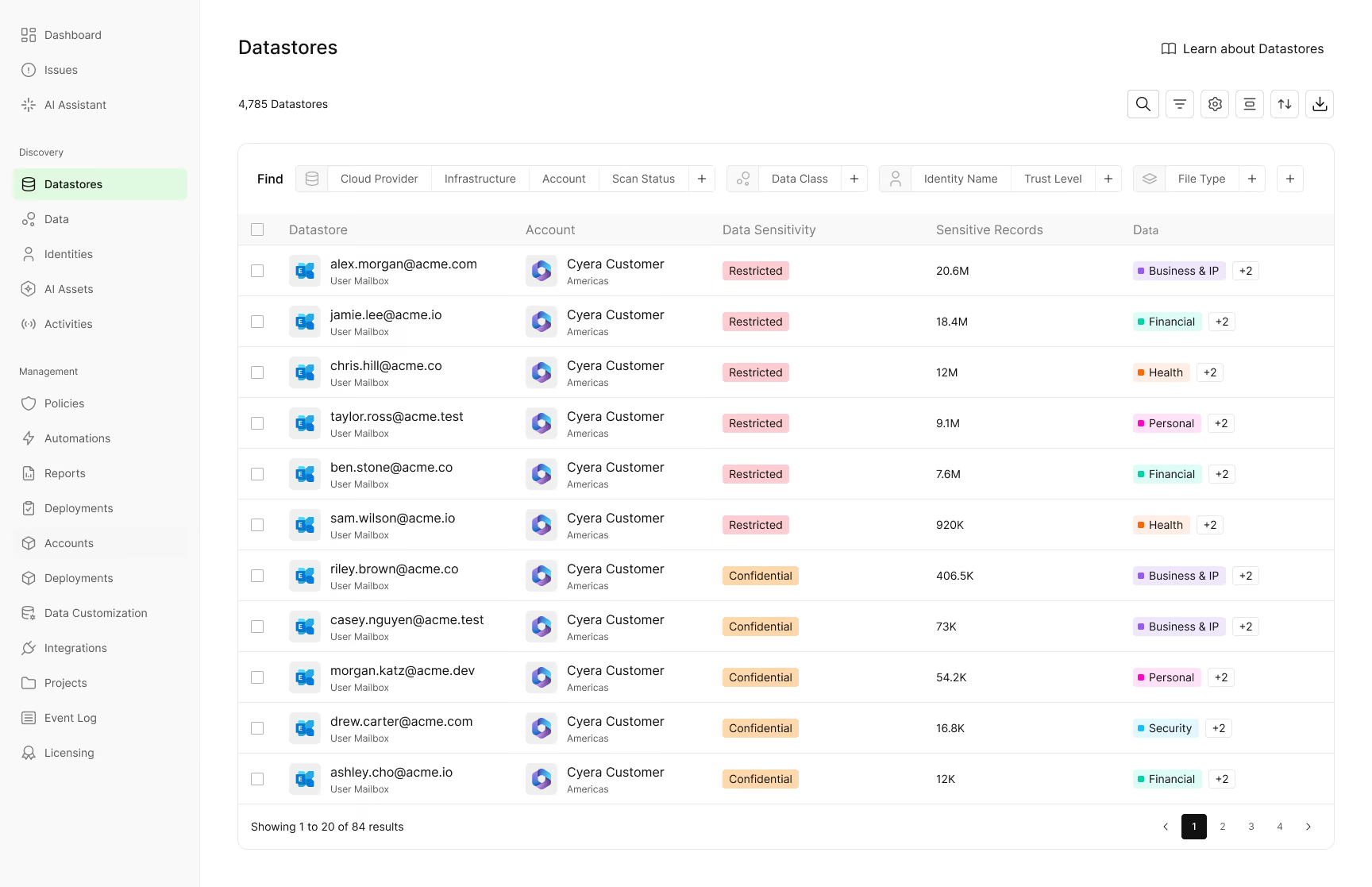
Cyera is an AI-native data security platform built to help enterprises discover, understand, and secure sensitive data across cloud, SaaS, and on-prem environments. It combines Data Security Posture Management (DSPM), Data Loss Prevention (DLP), and AI Security Posture Management (AI-SPM) into a single control plane, giving teams visibility into where sensitive data lives, who can access it, and how it’s used by both humans and AI systems.
The platform focuses on data-first security. Instead of relying on perimeter controls, it continuously discovers and classifies sensitive data, maps access across identities and AI agents, and enforces policies in real time. This approach helps teams reduce exposure from over-permissioned access, shadow AI, and misconfigured data environments.
Cyera deploys without agents and reaches value quickly. It can scan petabytes of data across environments while maintaining high classification accuracy, allowing teams to prioritize real risk instead of chasing false positives. You can also run a quick AI Data Security Assessment to evaluate your exposure and get a detailed report on risks across your environment.
Key features:
- AI-native data discovery and classification: Discovers and classifies structured and unstructured data across cloud, SaaS, and on-prem environments with high precision, enriched with business and identity context
- AI-SPM and shadow AI discovery: Identifies AI models, agents, and unsanctioned tools, then maps what data they can access and how they interact with it
- Identity-aware access governance: Maps sensitive data to human and machine identities, exposing over-permissioned access and helping teams enforce least-privilege controls
- Real-time policy enforcement and remediation: Detects risky behavior and triggers automated remediation actions, including access revocation, quarantining data, or alerting owners
- Unified DSPM and DLP control plane: Combines data discovery, classification, and DLP into a single system, reducing noise and simplifying policy management
Pros:
- Data discovery works across cloud and on-premises with minimal impact on business operations
- Dedicated SMEs and account managers respond quickly to issues and drive outcomes
- The agentless platform allows deployment in as little as a day, up to a week
Cons:
- Initial deployment may be long or configuration-heavy for teams new to DSPM
User testimonial
“What stands out most about Cyera is how it handles scanning within data stores. Having used several Data Discovery tools, I found that Cyera’s on-premises discovery through Connectors was particularly smooth and trouble-free. In contrast, I’ve observed that other DSPM tools often cause servers to hang when their connectors or agents initiate the discovery process. Additionally, Cyera integrates well with cloud platforms like Azure and GCP, making it effective for discovering data across these environments.” G2 review
BigID
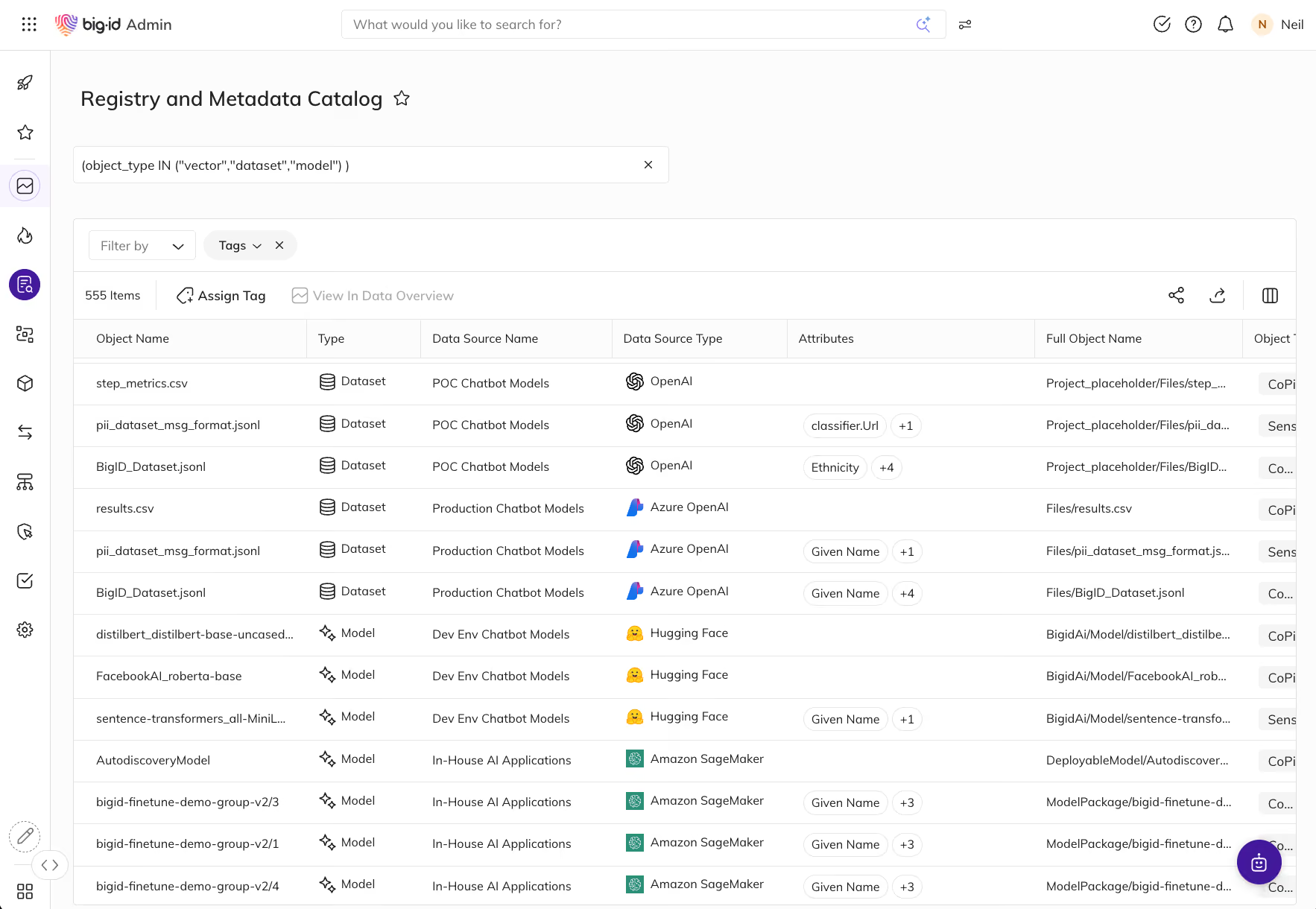
BigID is a data security and AI governance platform that discovers and inventories AI assets, including models, agents, datasets, and prompts, across cloud and hybrid environments. It maps how data flows through AI pipelines, enforces access and usage policies, and applies controls to data used for training and inference.
The platform tracks lineage from ingestion to output, monitors interactions between users, agents, and data, and identifies risks across models, access, and usage.
Key features:
- AI asset discovery: Finds and maps AI models, copilots, training datasets, prompts, and third-party tools, including unsanctioned and shadow AI, to eliminate blind spots across the enterprise
- AI security posture management: Detects AI service misconfigurations, scores AI risk, and surfaces access issues across models, data, and agent interactions
- Shadow AI detection: Identifies unauthorized models, agents, and exposed API keys operating across cloud runtimes, applications, and AI tooling
Pros:
- In-depth discovery and scanning for unstructured data stands out compared to competitors
- Custom classifiers and AI-powered classification handle large and varied data environments well
Cons:
- Pricing is significantly higher than comparable tools and may be hard to justify for smaller teams
- Data mapping, automation workflows, and privacy incident management need improvement
User testimonial
“I would rate the customer support a six because you cannot directly reach out to L3 or L2 support if there's a major issue. Their standard procedure requires going through L1 first, which can be time-consuming.” User review
Crowdstrike
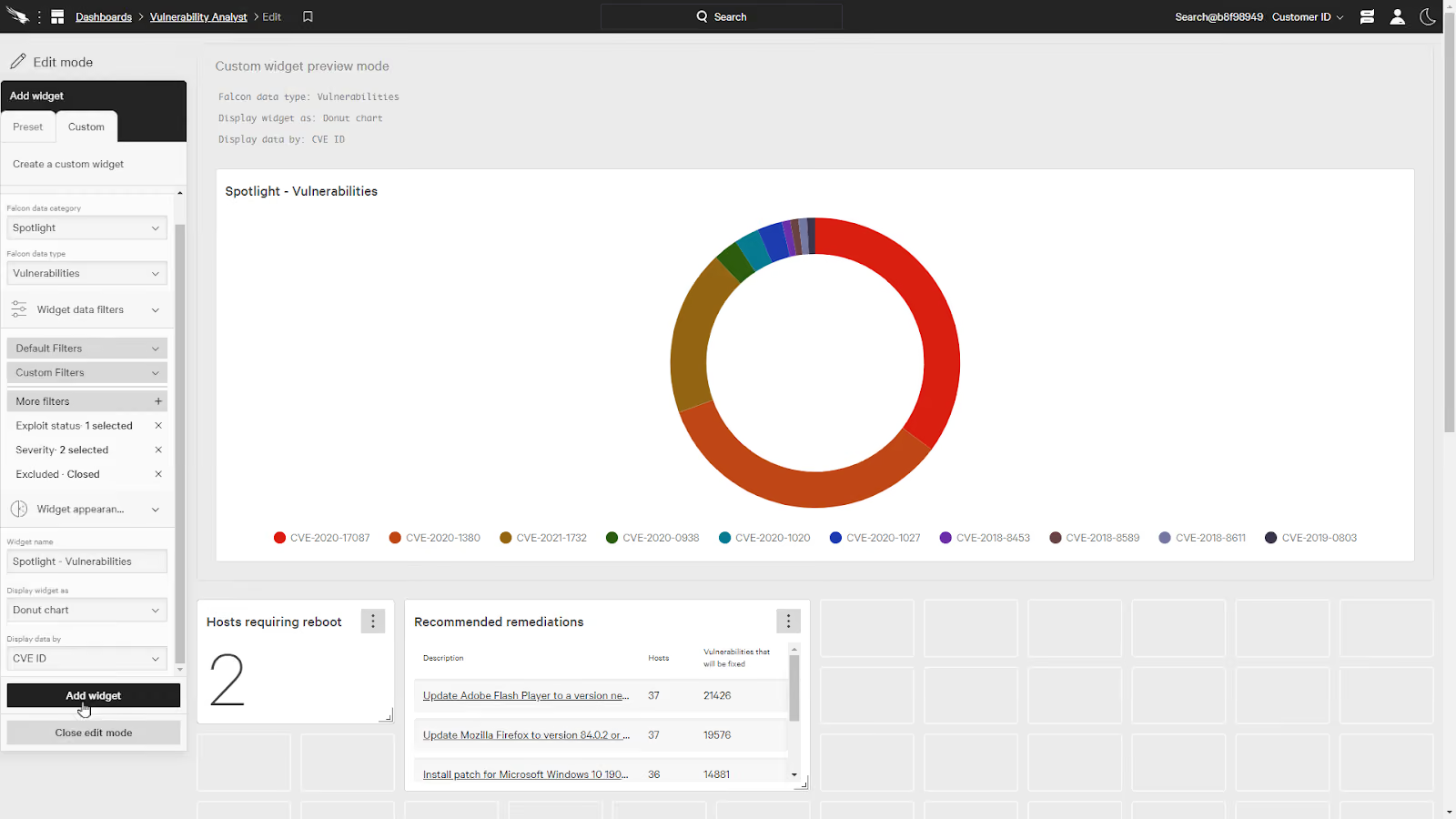
CrowdStrike Falcon Cloud Security provides AI security posture management as part of its cloud security platform, focusing on visibility, risk detection, and protection across AI services and workloads. It identifies AI models, services, and dependencies across cloud environments, including embedded and unsanctioned AI usage, and detects risks such as misconfigurations, vulnerable packages, and exposed artifacts.
Key features:
- AI asset visibility: Discovers sanctioned and unsanctioned AI services, embedded AI usage, and AI-related packages across cloud environments without agents
- AI model scanning: Proactively scans AI models for hidden malware, trojanized models, backdoors, and adversarial manipulations in containerized environments before deployment
- AI security dashboard: Provides real-time visibility and centralized control over AI workloads in the cloud, including policy enforcement and sensitive training data tracking
Pros:
- Lightweight agent delivers real-time threat detection with minimal system impact
- Cloud-native architecture makes deployment and management straightforward across distributed environments
Cons:
- Advanced modules and add-on features come at a steep cost that can strain budgets
- New users face a steep learning curve when navigating the full feature set
User testimonial
“One thing I dislike about CrowdStrike Falcon is that some of the advanced features can feel a bit overwhelming for new users, and the pricing can be on the higher side. However, once you get familiar with the platform, its strong protection, speed, and visibility definitely make up for those initial challenges” G2 review
Microsoft Defender for Cloud
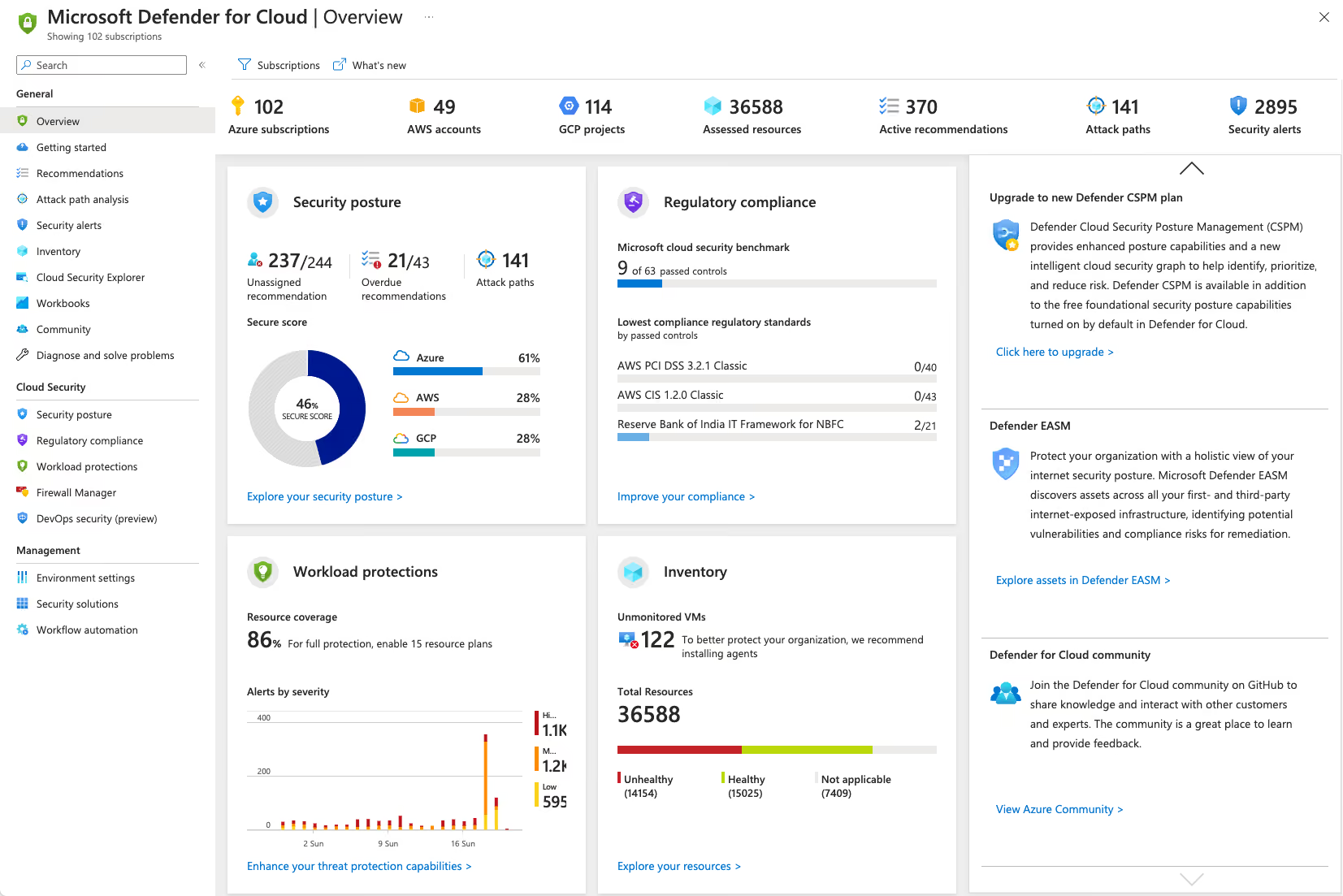
Microsoft Defender for Cloud is a cloud-native application protection platform that provides visibility and security across hybrid and multi-cloud environments, including AI workloads. It identifies risks such as misconfigurations, vulnerabilities, and exposure across infrastructure, applications, and AI systems, then prioritizes and remediates them through built-in workflows.
Microsoft Defender for Cloud integrates security across the application lifecycle from development to runtime, connects with tools like Microsoft Sentinel and Microsoft Defender XDR, and supports threat detection, response, and posture management across cloud and AI environments.
Key features:
- AI Bill of Materials (BOM): Builds and maintains a detailed inventory of AI application components, data, and artifacts from code to cloud
- AI security recommendations: Issues guidance on identity, data security, and internet exposure to help teams prioritize and remediate AI-related risks
- Attack path analysis: Connects AI risk findings across infrastructure, identities, and data to uncover how vulnerabilities could be exploited
Pros:
- Single console covers workloads across Azure, AWS, and GCP without switching tools
- Deep integration with the Microsoft security ecosystem reduces complexity for Microsoft-heavy environments
Cons:
- Alert fatigue is a common complaint due to high volumes of false positives
- Pricing structure is complex and can get expensive if not carefully managed
User testimonial
“The initial setup and configuration can feel quite complex, especially for teams that don’t have dedicated cloud security expertise.” G2 review
Orca AI‑SPM
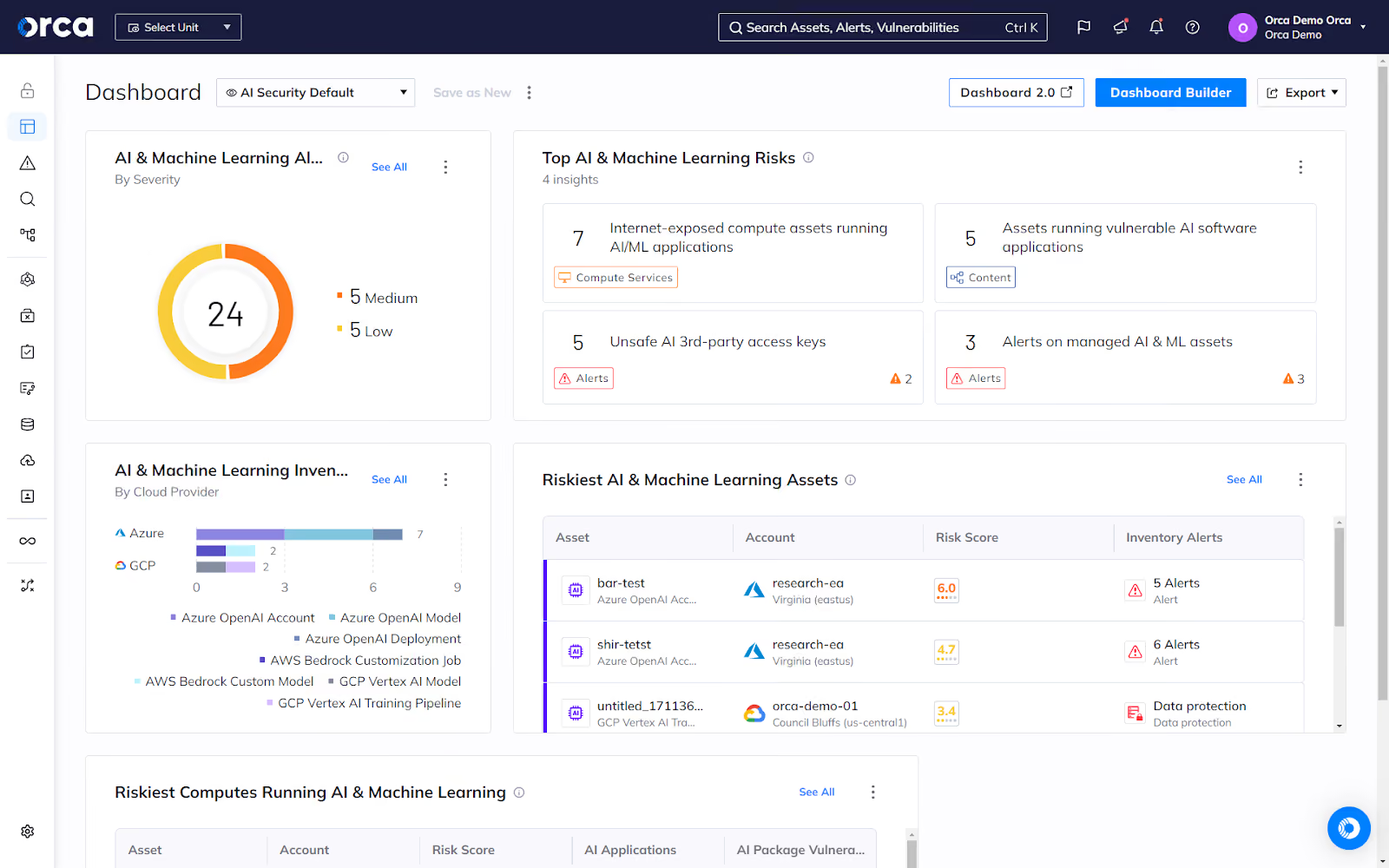
Orca Security provides AI security posture management as part of its cloud security platform, focusing on visibility, configuration risk, and data exposure across AI environments. It discovers AI models, services, and software packages across cloud environments, including shadow AI, and builds an inventory with associated risks.
Orca scans for misconfigurations, exposed access keys, and vulnerable dependencies, while also detecting sensitive data in training datasets and models.
Key features:
- Sensitive data detection in AI pipelines: Scans training data and models to detect sensitive information such as personal or regulated data.
- Exposed key and token detection: Finds leaked API keys and access tokens in code repositories and cloud environments.
- Vulnerability and dependency analysis: Maps AI-related packages and dependencies to identify vulnerable components and prioritize remediation.
Pros:
- Agentless deployment and fast onboarding without installing agents on workloads
- Comprehensive visibility across cloud environments, including vulnerabilities, misconfigurations, and exposed data
Cons:
- High volume of alerts and false positives can lead to alert fatigue
- Interface and navigation can be complex, especially for new users
User testimonial
“At the beginning, we received many alerts until we adjusted our policies and the alert threshold to better match our environment and our actual risk level.” G2 review
Palo Alto
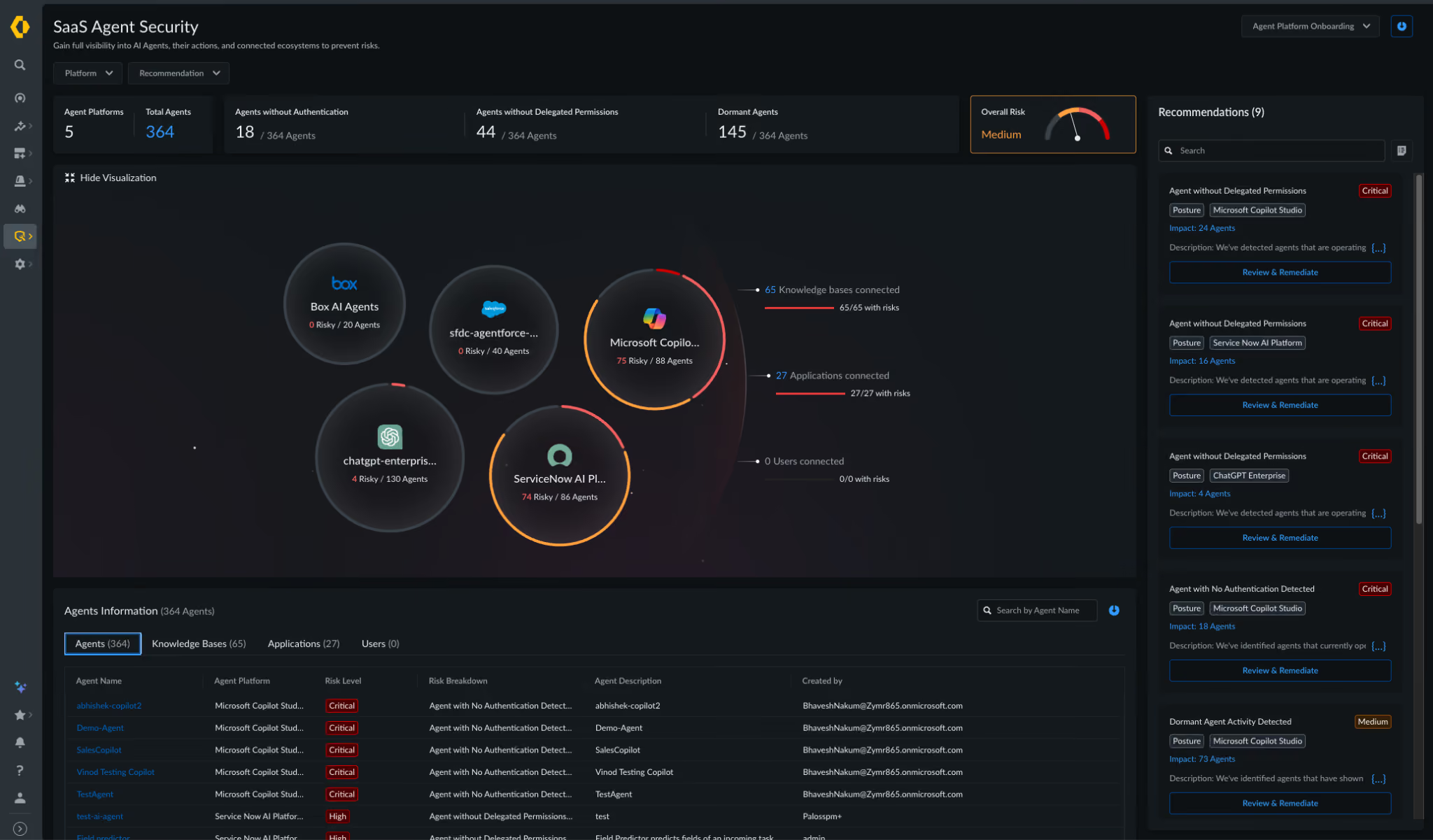
Palo Alto Networks Prisma AIRS is an AI security platform designed to secure AI systems across the entire lifecycle, from development to runtime. It provides visibility into AI agents, models, applications, and data, and applies controls to manage access, detect risks, and enforce policies. The software monitors AI behavior, identifies vulnerabilities and misconfigurations, and supports governance by aligning security controls across training, deployment, and live AI interactions.
Key features:
- AI model scanning: Scans third-party AI models for vulnerabilities, including model tampering, malicious scripts, and deserialization attacks, before deployment
- Posture management: Identifies excessive permissions, sensitive data exposure, platform misconfigurations, and access misconfigurations across the AI ecosystem on an ongoing basis
- AI red teaming: Runs automated penetration tests against AI applications and agents using an adaptive red-team agent that simulates real-world attack behavior
Pros:
- Multi-cloud visibility from a single pane of glass makes managing security across environments more manageable
- Prepackaged compliance policies are accurate and provide clear remediation guidance
Cons:
- Pricing and licensing are expensive and need a clearer, more competitive structure
- Different tools within the platform feel disjointed, and the correlation between modules needs work
User testimonial
“Prisma Cloud's preventative approach to cloud security can be complex, especially for features like automated certificates. These require specific access permissions for Prisma Cloud, introducing dependencies and additional configuration steps.” User review
Reco
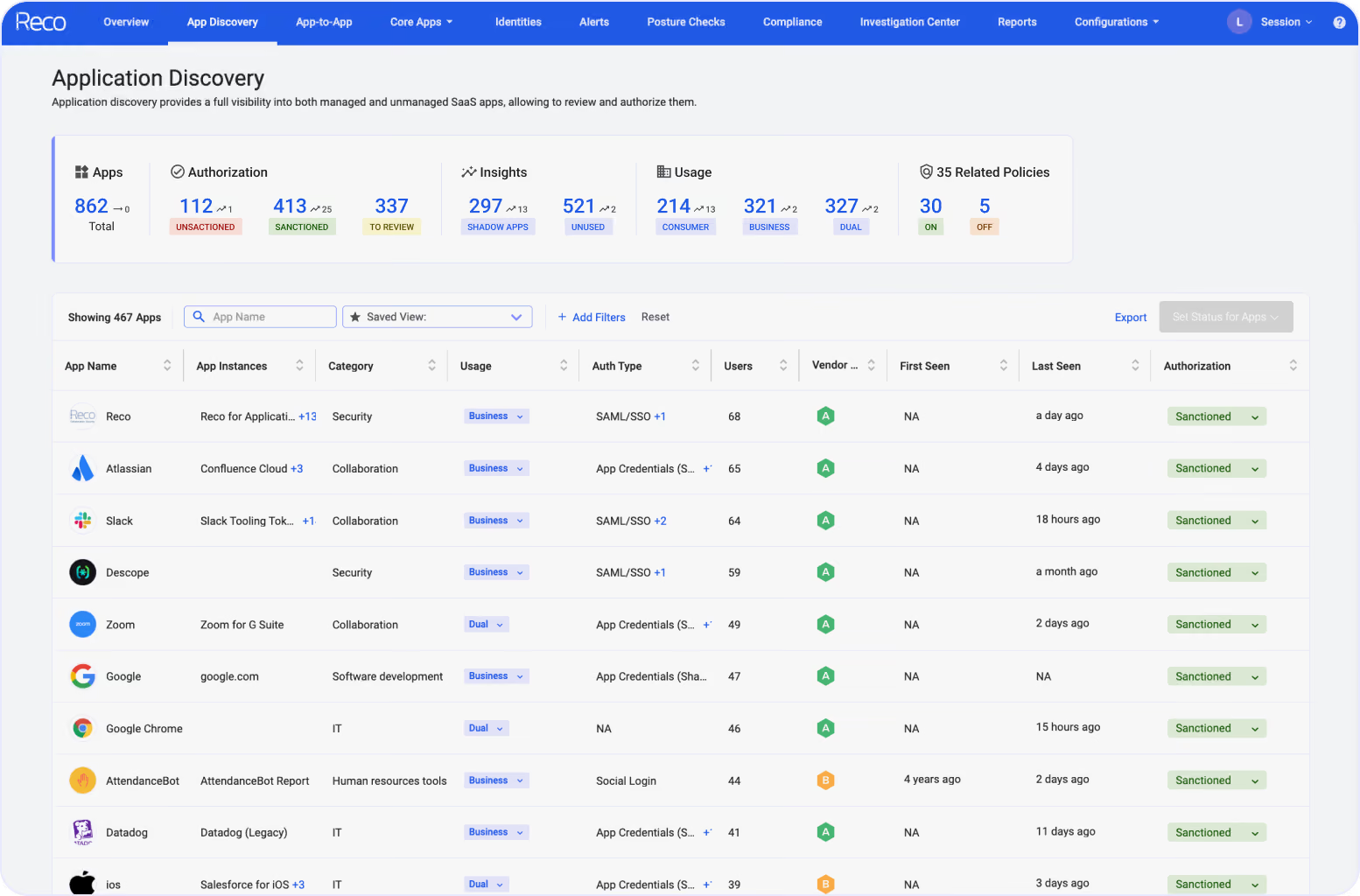
Reco is a SaaS security platform that governs AI usage, agents, and integrations across enterprise SaaS environments. It continuously discovers every AI tool, agent, and copilot operating across the SaaS stack, including personal ChatGPT accounts and embedded AI features in existing applications, and monitors how they access and interact with data. Reco connects SaaS applications and uses a knowledge graph to correlate events across platforms and surface identity-aware risk insights.
Key features:
- AI and shadow AI discovery: Finds every AI tool, agent, copilot, and SaaS-embedded AI feature in use across the organization, including unsanctioned tools operating outside IT oversight
- Agentic AI security: Monitors AI agents for excessive permissions, unauthorized data access, and suspicious behavior across SaaS platforms
- Posture management: Continuously monitors SaaS configurations, detects drift, maps findings to compliance frameworks including SOC 2, ISO 27001, NIST, and HIPAA, and flags violations
Pros:
- Full visibility into SaaS apps, AI agents, and shadow tools gives security teams a clear picture of their environment
- Customer support is responsive and the platform is straightforward to set up and integrate
Cons:
- Limited remediation capabilities, with more focus on alerting than action
- Formal SLA tiers are limited compared to larger enterprise security vendors
User testimonial
“While Reco excels in visibility and automation, its potential limitations might include handling highly customized or niche SaaS applications with non-standard APIs, and like all automated systems, it requires careful tuning to avoid excessive or inaccurate alerts.” G2 review
Securiti.ai
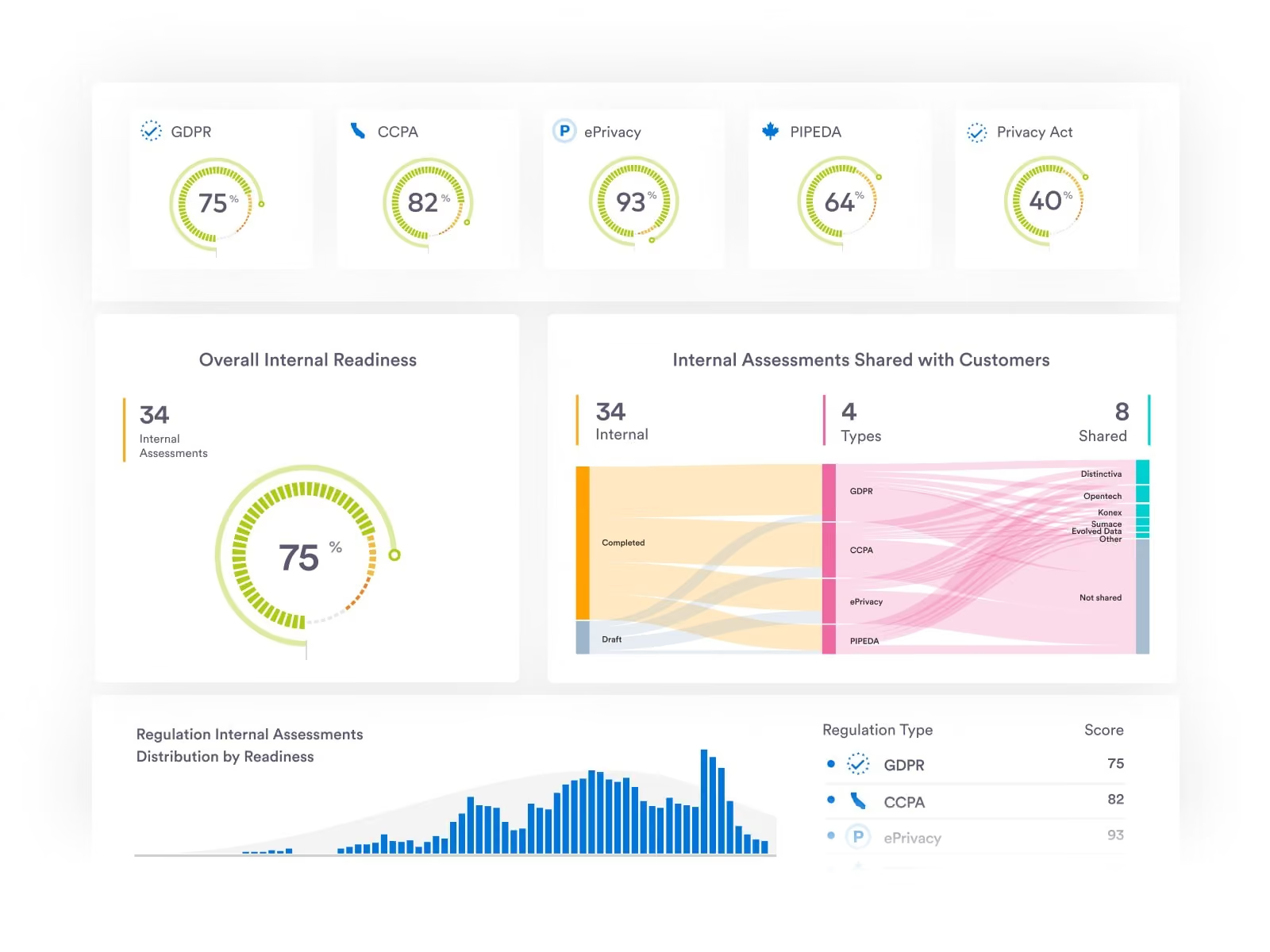
Securiti is a data security and AI governance platform that provides centralized visibility and control over data and AI systems across hybrid, multi-cloud, and SaaS environments. It uses a unified data intelligence layer to discover and classify data, map access and data flows, and enforce governance, privacy, and security controls. Securiti supports AI use cases by monitoring how data is used in models, agents, and copilots, applying policies to manage access and usage, and aligning controls with compliance frameworks while coordinating workflows across security, privacy, and governance teams.
Key features:
- AI asset discovery: Automatically discovers and catalogs sanctioned and shadow AI models, copilots, and agents across hybrid multicloud and SaaS environments
- AI security posture management: Assesses AI risk posture against the OWASP Top 10 for LLMs, detects model and agent vulnerabilities, controls access, and flags sensitive data usage within AI systems
- LLM firewall: Monitors prompts, data retrieval, and model responses using context-aware controls to protect AI systems from manipulation and unauthorized data access
Pros:
- Data Command Graph gives a centralized view of data assets, users, systems, and policies in one place
- Customer support is responsive and proactive in helping teams work through implementation challenges
Cons:
- Steep learning curve for new features slows initial implementation and requires extensive training
- Integration with existing systems takes extra time and effort and doesn't always connect smoothly
User testimonial
“Connecting Securiti with internal global systems can take some time. Integration across multiple regions and platforms sometimes requires additional coordination and setup effort.” G2 review
SentinelOne
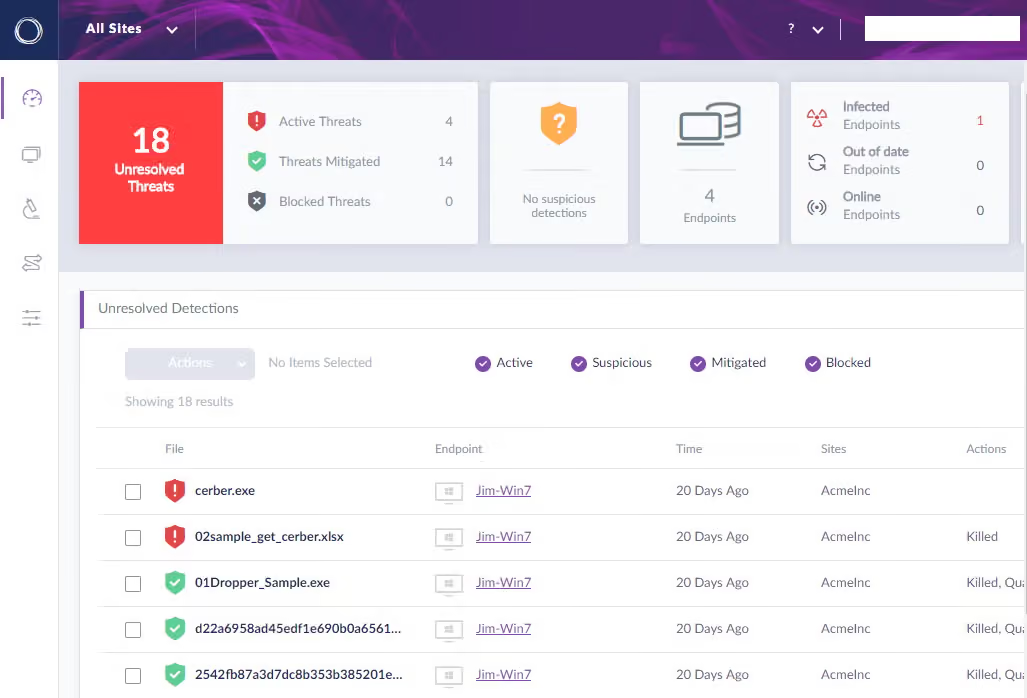
SentinelOne's Singularity Cloud Security is an AI-powered cybersecurity platform that provides visibility, detection, and response across cloud workloads and identity systems. It collects and analyzes security data across environments to identify threats, monitor activity, and automate response actions. It covers infrastructure such as virtual machines, containers, networks, and user identities, and applies real-time detection and remediation to address risks across the enterprise security stack.
Key features:
- AI-powered CSPM and DSPM: Combines cloud and data security posture management to continuously identify misconfigurations, excessive permissions, and exposed sensitive data
- Cloud workload protection: Secures virtual machines, containers, and Kubernetes environments across public, private, and hybrid cloud deployments
- Identity threat detection: Monitors Active Directory and Entra ID to detect credential misuse and identity-based attacks, including non-human identities
Pros:
- Provides real-time visibility, automated threat detection, and unified monitoring across cloud workloads
- Supports multi-cloud environments with attack path analysis and integration into existing security workflows
Cons:
- Requires complex setup and policy configuration, with a learning curve for advanced features
- Needs ongoing alert tuning due to false positives and has some interface and usability limitations
User testimonial
“SentinelOne Singularity Cloud Security can be a bit complex to set up and learn. It may show some false alerts that need tuning. The platform can feel heavy and expensive for smaller teams. The dashboard and UI could be more user friendly in some areas.” G2 review
Symmetry Systems
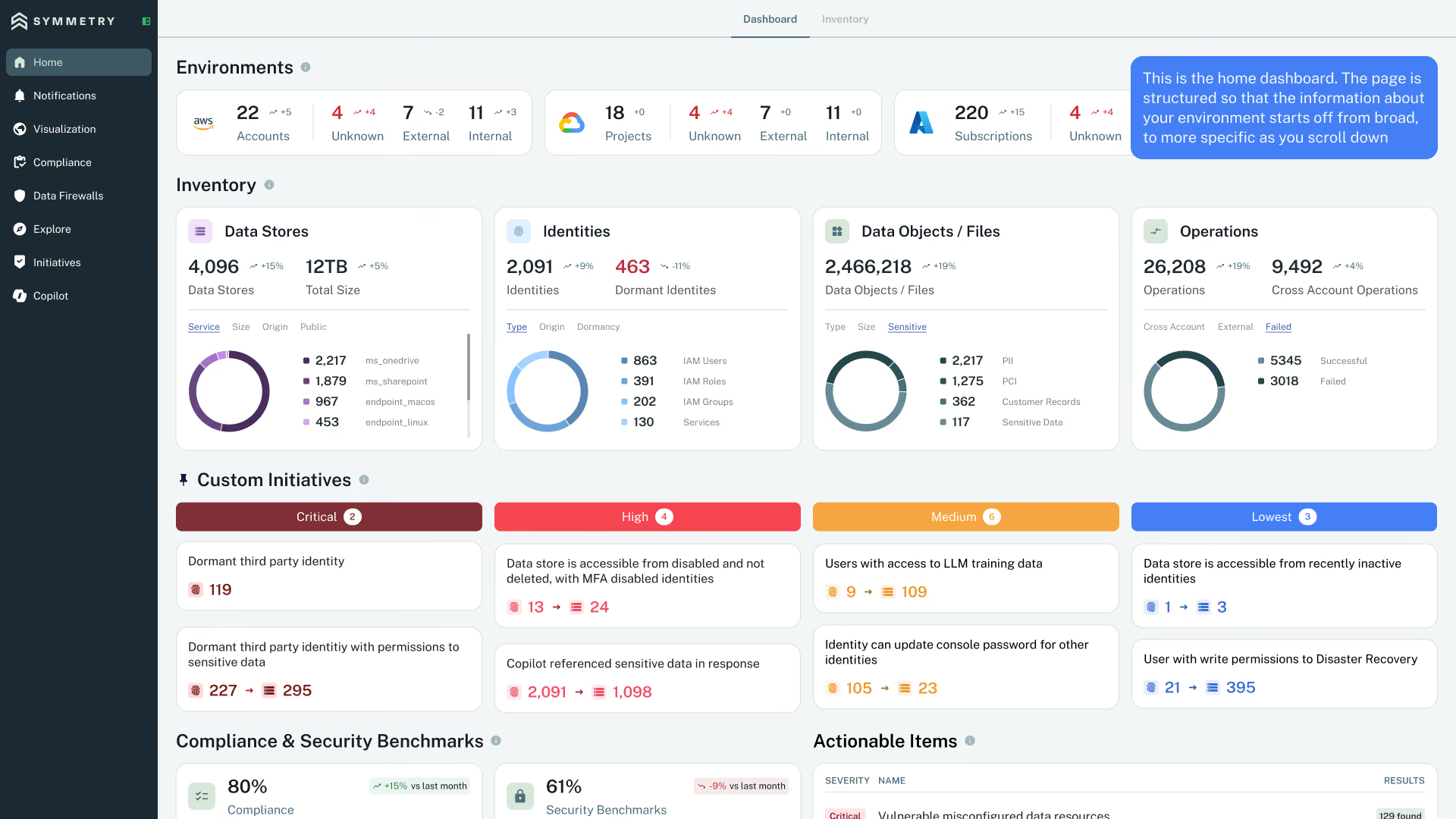
Symmetry Systems is a data and AI security platform that unifies visibility across data, identities, and AI agents to manage access and risk. It discovers and classifies sensitive data across cloud, SaaS, and on-prem environments, maps which human and non-human identities can access it, and applies controls to enforce least-privilege access. The platform monitors data usage and AI interactions in real time, detects abnormal behavior, and supports remediation by adjusting permissions and enforcing policies across data and AI systems.
Key features:
- DataGuard DSPM: Continuously discovers and classifies sensitive data across cloud, SaaS, and on-premises environments and maps every data asset to the identities and permissions that can access it
- AIGuard: Governs every AI agent, copilot, LLM, and model in the environment, maps what data they can reach, and enforces sanctioning workflows and data access boundaries
- Identity and data graph: Connects data assets to every human identity, service account, AI agent, and third-party vendor through permissions and operations to show exactly who or what can reach sensitive data
- AnomalyDetect: Surfaces data exfiltration, insider threats, and abnormal AI behavior in near real time as events occur
Pros:
- Provides visibility into sensitive data, identity access, and real-time activity across cloud and on-prem environments
- Supports multi-cloud environments with data discovery, classification, and identity-aware threat detection
Cons:
- Requires time for initial setup, onboarding, and learning the platform
- Has limitations around integrations, cost, and the maturity of certain features
User testimonial
“Could be better, could improve integration issues and user experience.” User review
Wiz
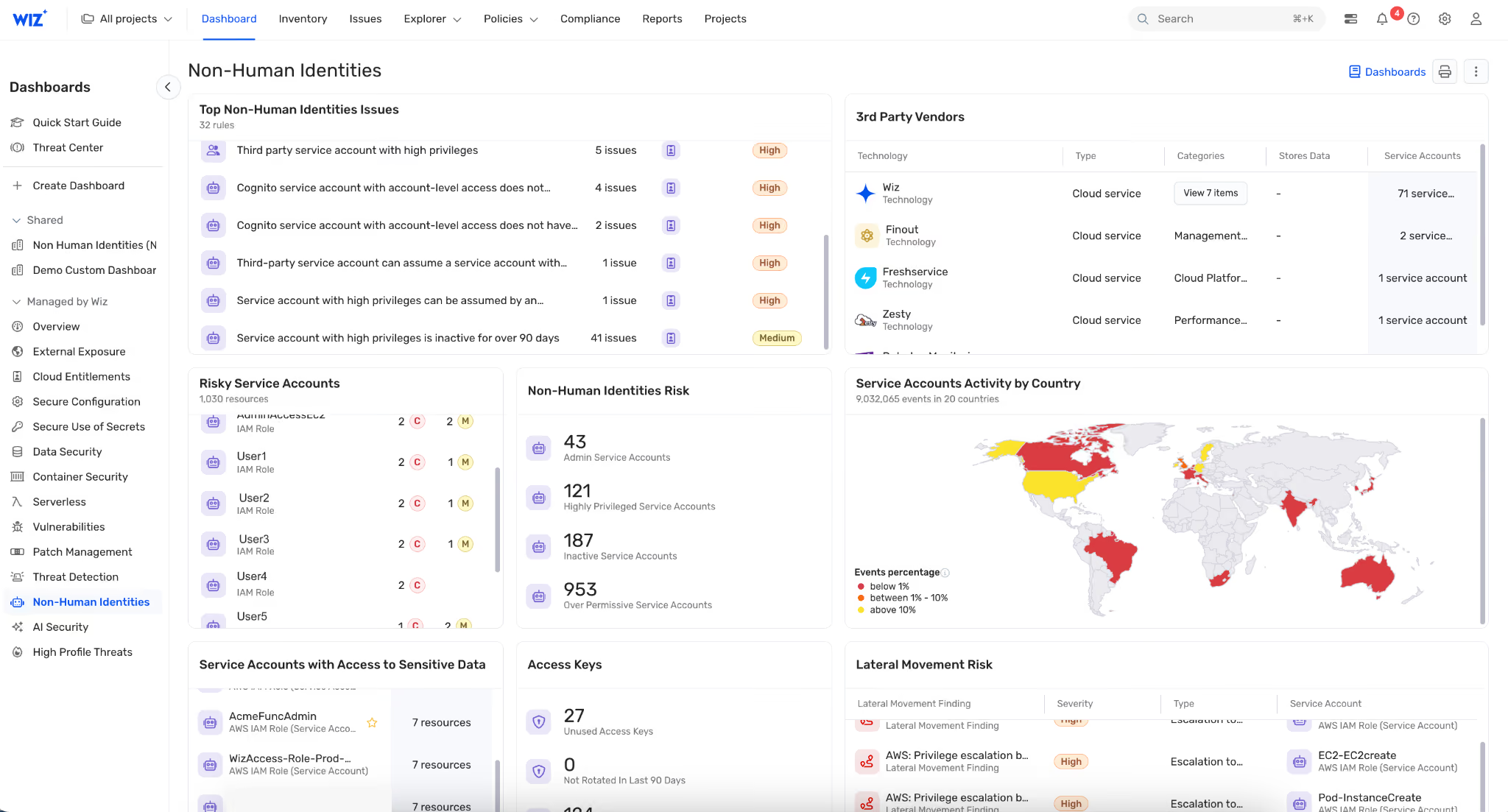
Wiz is a cloud and AI security platform that provides visibility and risk management across AI models, pipelines, data, and services. It discovers AI assets across cloud environments, maps how they connect to infrastructure and data, and identifies risks such as misconfigurations and sensitive data exposure. Wiz analyzes attack paths across identities, workloads, and AI systems, monitors runtime behavior, and supports remediation by prioritizing risks and guiding response actions within a unified security graph.
Key features:
- Wiz Security Graph for AI: Maps AI models, agents, identities, data, and workloads to uncover attack paths and show how risks connect across the environment
- AI service misconfiguration detection: Enforces secure configuration baselines for AI services using built-in rules and identifies policy violations in IaC before deployment
- DSPM for AI: Extends data discovery and classification into AI training and inference pipelines to surface unprotected datasets and overly permissive access
- AI agent discovery and security: Discovers and catalogs AI agents across cloud providers and SaaS platforms, validates configuration baselines, and monitors agent behavior for drift and suspicious activity
Pros:
- Agentless deployment connects and gives immediate visibility across cloud environments
- Security Graph visualizes attack paths clearly and helps teams focus on risks
Cons:
- AI-SPM policies and AI-specific risk context need more development to keep pace with the fast-moving AI security space
User testimonial
“I'd like to see more rapid development in the AI Security / AI-SPM domain. Since this is a fast-evolving area, providing more out-of-the-box policies and deeper context for AI-related risks would be a welcome improvement to an otherwise flawless product.” G2 review
Common Challenges in Implementing AI-SPM
AI-SPM closes critical gaps, but most organizations hit implementation obstacles along the way. Teams face visibility issues, integration friction, and a fast-moving threat landscape that outpaces traditional controls.
Lack of Visibility and “Shadow AI”
Many teams don’t know where AI is being used or what data it can access. Employees often adopt public GenAI tools without approval, creating blind spots across the environment. About 69% of organizations suspect or have evidence that employees are using prohibited public GenAI tools. Without visibility, you can’t assess risk or enforce policy.
Integration and Technical Hurdles
AI security needs to connect with your broader security stack and existing workflows, but many organizations haven’t reached that point yet. Research projects that by 2028, more than 50% of enterprises will use AI security platforms to secure third-party AI services and custom-built applications. This signals that most teams are still working through integration challenges today.
Misconfigurations and Resource Control
AI agents often run with excessive permissions and limited oversight. Most identity frameworks weren’t designed to govern non-human actors. Cyera’s research found that 96% of enterprise permissions are unused, broad privileges that AI agents can exploit at machine speed. This leaves AI agents outside standard controls, increasing the risk of misconfigurations and exposure of sensitive data.
Rapid Innovation and Nascent Technology
AI evolves faster than most security programs can adapt. New tools, models, and use cases appear constantly, each introducing new risks. By 2028, 25% of enterprise GenAI applications will experience at least five minor security incidents per year, up from 9% in 2025. This pace of change makes it difficult to establish consistent controls without dedicated AI security capabilities.
Future Trends in AI SPM Tools
AI-SPM is still a young category, but it’s maturing quickly. As AI adoption accelerates across enterprises, the tools built to govern and secure it are evolving to keep up. By 2030, 33% of IT work will be spent remediating AI data debt to secure AI. Here’s where the category is heading:
- Agentic AI will become the primary focus: As autonomous agents replace one-off AI queries, security teams will need to govern systems that act, decide, and chain tasks together, not just respond to prompts.
- AI-SPM and DSPM will converge: Governing AI access and governing sensitive data are the same problem. Expect more platforms to unify both into a single control plane.
- Identity governance will extend to machines: Non-human identities, including service accounts, agents, and API keys, will get the same scrutiny as human users as organizations recognize how much access they carry.
- Compliance requirements will get more specific: The EU AI Act and NIST AI RMF are just the start. More frameworks targeting AI systems directly are coming, and AI-SPM tools will need to automatically map controls to them. Through 2027, manual AI compliance processes will expose 75% of regulated organizations to fines exceeding 5% of their global revenue.
- Red teaming will become routine: Automated adversarial testing against AI applications will shift from a specialty exercise to a standard part of the security lifecycle.
- Runtime protection will mature: Real-time monitoring of what AI systems are doing, not just how they're configured, will become standard as agentic deployments scale.
- Shadow AI will stay a top challenge: As new models and tools launch constantly, discovery will need to keep pace with how fast employees adopt them.
Secure Your AI with the Best AI-SPM Tools
AI moves fast. Agents get deployed, models get connected, and employees find new tools, often before security teams know any of it is happening. The result is a growing attack surface that traditional tools weren't built to see, let alone control.
AI-SPM gives security teams the visibility to close that gap. The right platform tells you what AI systems exist in your environment, what data they can reach, how they're behaving, and where your biggest risks are. Cyera covers all of this in one platform, combining AI-SPM, runtime protection, and data-centric governance so you can discover, govern, and protect your AI environment without stitching together multiple tools. Customers see results fast. Cass Information Systems deployed in under two weeks and achieved a 5x increase in sensitive data discovered, 10–30% storage savings, and 20% cost savings in data protection.
Book a demo with Cyera to see how your organization can take control of its AI security posture.
AI-SPM Tools FAQs
What is the difference between AI security and AI governance?
AI security focuses on protecting AI systems and the data they access from threats such as breaches, misuse, and attacks. It includes controls like access enforcement, monitoring, and threat detection.
AI governance focuses on how AI is used across the organization. It defines policies, accountability, compliance requirements, and acceptable use. Governance answers who can use AI and under what conditions, while security enforces those rules and protects the underlying data and systems.
How can AI tools pose security risks?
AI tools introduce security risks because they require broad access to data and often operate with limited oversight. Agents and copilots can access sensitive systems, process large volumes of data, and generate outputs that may expose that data.
Risks also come from prompt injection and misuse. Attackers can manipulate inputs to influence how an AI system behaves, which can lead to unauthorized data access or leakage. Without proper controls, organizations may not detect these issues until after an incident occurs.
How can AI be used to improve threat prevention?
AI can strengthen threat prevention by analyzing large volumes of data faster than manual processes. It helps identify unusual behavior, detect anomalies, and surface risks earlier in the attack lifecycle.
Security teams can also use AI to automate response actions, prioritize alerts, and reduce noise. When combined with strong data controls and governance, AI improves detection accuracy and helps teams respond to threats more efficiently.

Get your AI Security Assessment



.svg)