
Practice data minimization by only collecting, processing, and storing necessary data
Reduce your data attack surface by eliminating redundant, obsolete, and unnecessary data across environments.
99%
More shadow data visibile and classified with Cyera
71%
More confidential data visible and classified with Cyera
56%
Less excessive access to sensitive data with Cyera
Read the full study
Beseitigen unnötig Datenspeicherung
Werden redundante, veraltete und triviale (ROT-)Daten nicht gelöscht, entstehen erhebliche und unnötige Risiken und Kosten. Cyera unterstützt Sie dabei, Daten, die keinen geschäftlichen, regulatorischen oder betrieblichen Zweck mehr erfüllen, kontinuierlich zu erkennen und sicher zu entfernen.

Discover & classify ROT data at scale
Identify redundant data across cloud and on-prem systems at scale so you can confidently remove what’s unnecessary and meet regulatory requirements.
Enforce retention & defensible deletion
Automatically flag data retention issues to enforce defensible deletion and minimize unnecessary storage.
Retain only relevant, compliant data
Reduce data security and privacy risks by ensuring only relevant and compliant data is retained.
Datenminimierung ist eine modernes Gebot
Die meisten Unternehmen speichern weit mehr Daten als nötig, was die Anfälligkeit für Angriffe und die Kosten erhöht und zu einem potenziellen Umsatzverlust von 12 % beiträgt. Cyera erkennt unnötige Daten und hilft Ihnen so, Ihre Angriffsfläche zu verringern, die Compliance zu verbessern und die Speicherkosten zu optimieren.
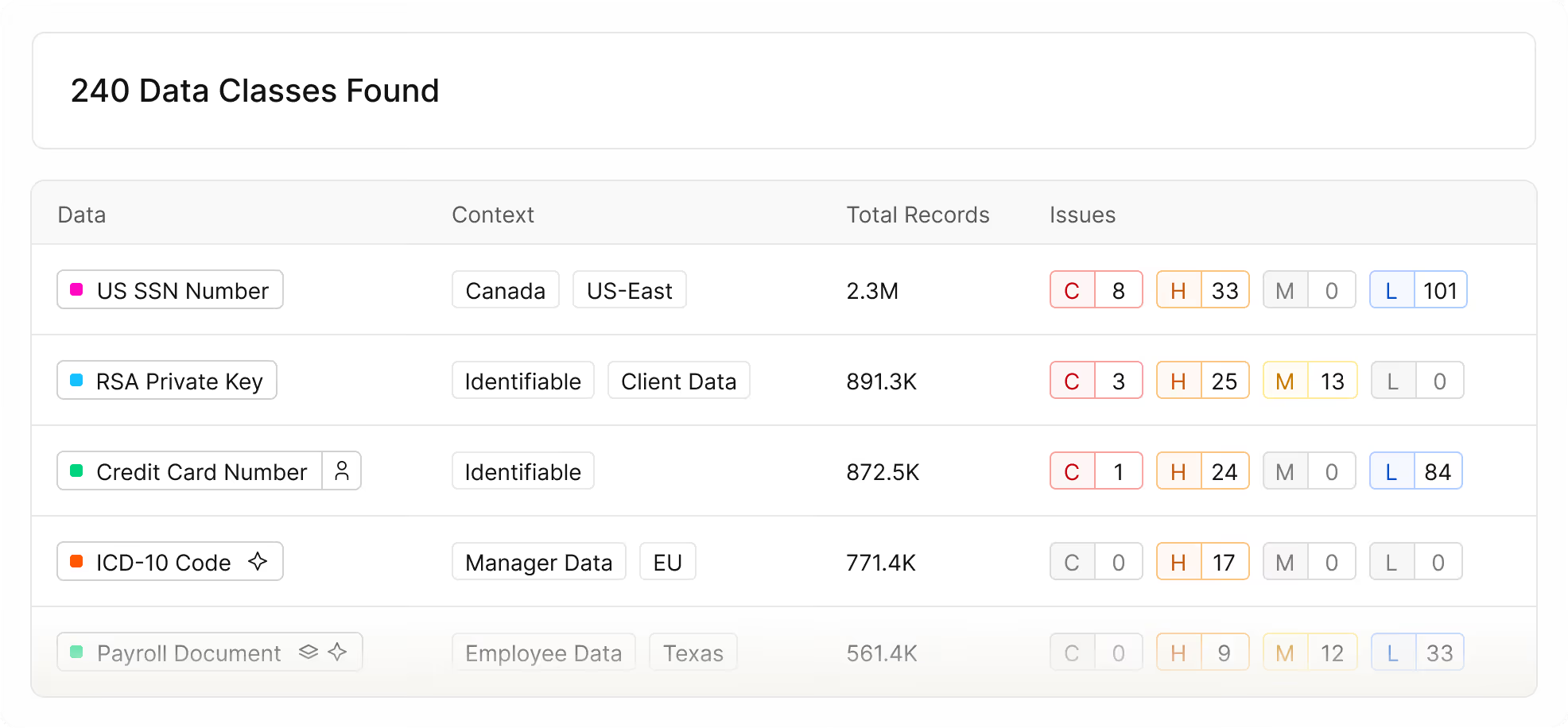
Only backup data that matters
Focus backups on the data that truly matters. Identify outdated, irrelevant, or orphaned backups and remove what no longer serves a business or compliance purpose, reducing blind spots and unnecessary storage costs.
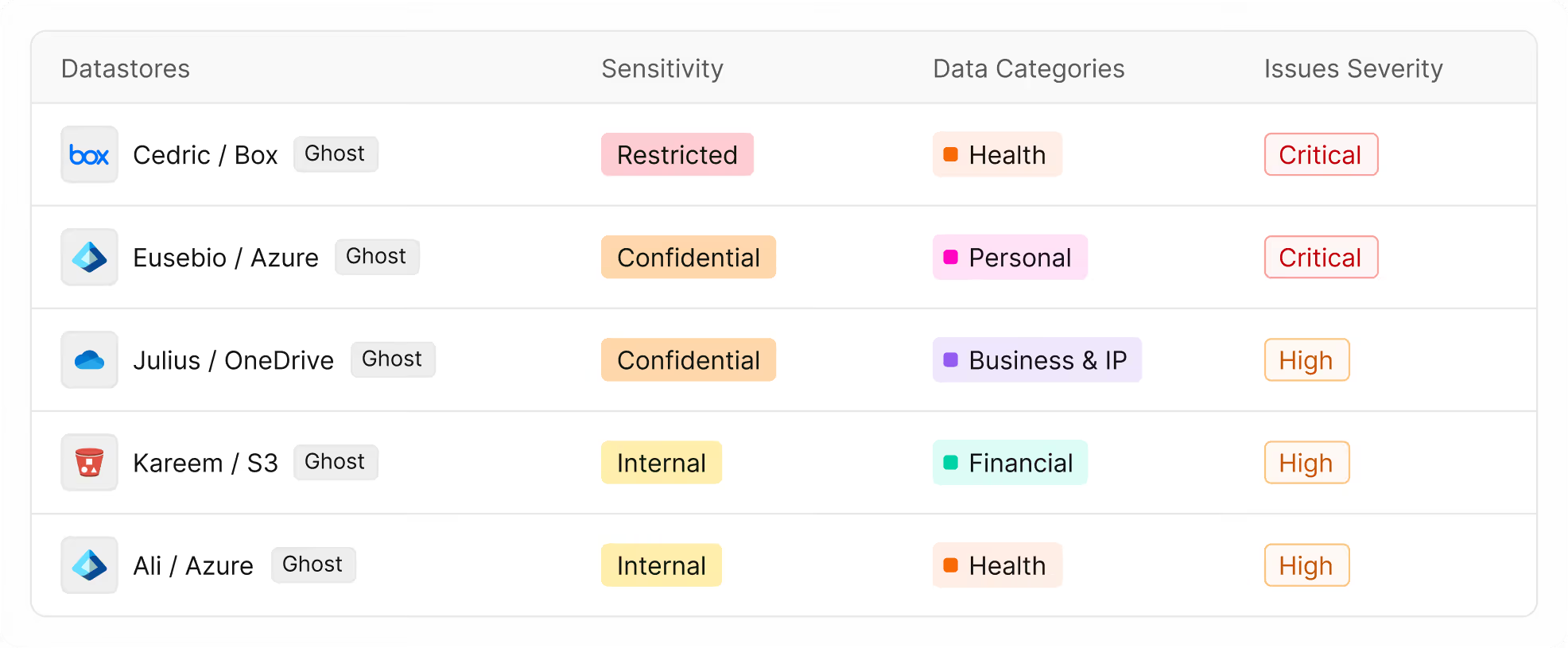
Find dark data in unmanaged drives
Locate, secure, and remove mismanaged cloud storage and personal drives containing sensitive or unnecessary data. Enforce policies that prevent data sprawl and reduce costs by retiring unused or misconfigured storage.
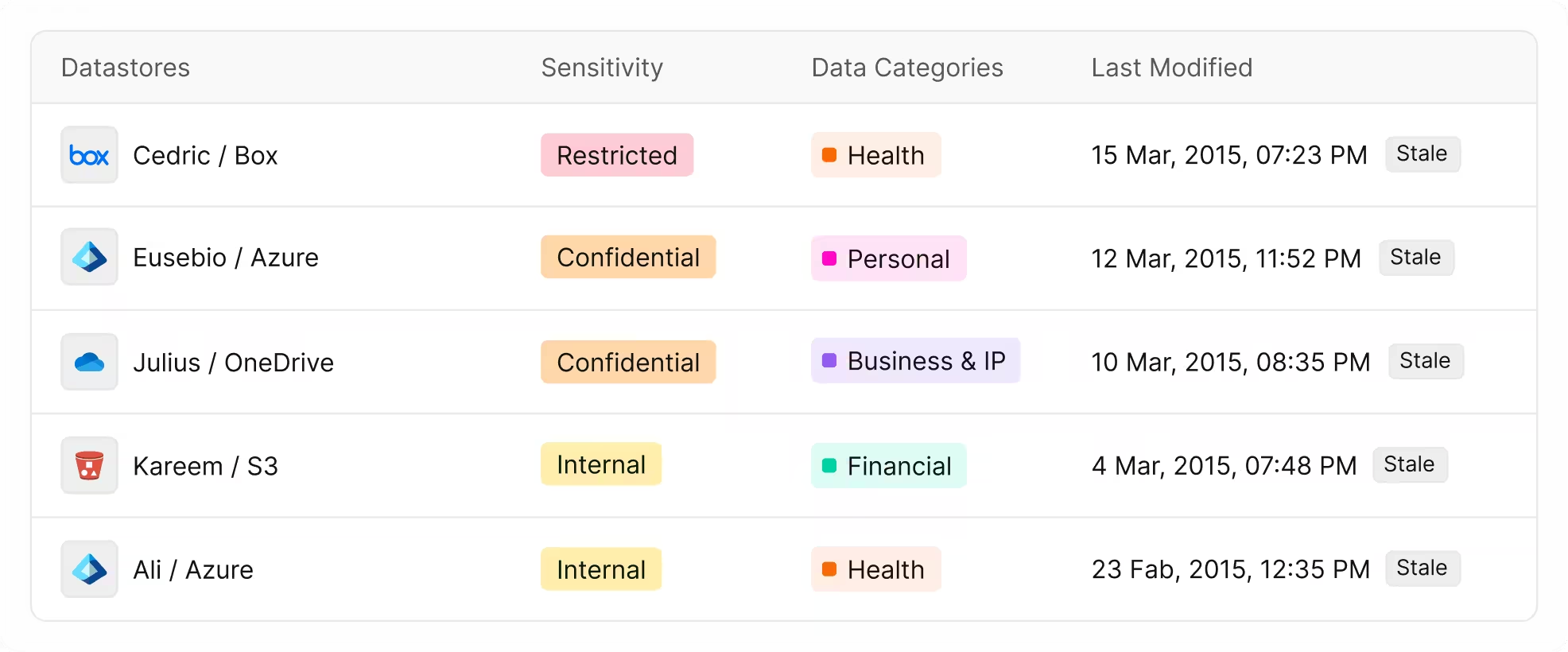
Optimize spend by identifying unused VMs and databases
Reduce storage and infrastructure costs by identifying unused resources you no longer need. Remove decommissioned systems and ensure only essential resources remain active to strengthen governance and lower spend.

Häufig gestellte Fragen
Cyera automatically scans cloud and on-prem data stores using agentless discovery and AI-powered classification. It analyzes content, context, sensitivity, and usage patterns to surface ROT data—including redundant files, stale records, orphaned backups, and unused instances—so you can confidently remove what’s unnecessary.
Yes. Cyera maps data assets to your organizational and regulatory retention requirements, flags violations, and recommends defensible deletion actions. This helps teams consistently remove unnecessary data while maintaining compliance with frameworks such as GDPR, CCPA, HIPAA, and internal governance policies.
Cyera uncovers data stored in unmanaged drives, personal storage, orphaned systems, and misconfigured cloud environments. By illuminating where sensitive or unnecessary data lives, Cyera enables you to remediate risk, eliminate shadow storage, and prevent new sources of data sprawl.
Cyera connects with your backup systems, data warehouses, ticketing tools, and security stack to streamline remediation and lifecycle management. It highlights unnecessary or outdated backups, identifies sensitive data stored in unmanaged copies, and helps align your retention policies with operational and regulatory requirements.



.svg)