
Picture this: an employee asks their internal AI chatbot a routine question. The assistant does its job. It pulls from documents, databases, emails, and everything else it has access to return a helpful answer. The problem is somewhere in that response is a confidential HR record the employee was never supposed to see.
The AI didn't fail. It did exactly what it was built to do. The problem was the data it had access to.
This is the scenario most organizations aren't preparing for. They're focused on new and novel parts of AI security such as models, infrastructure, and AI-based attacks. But the real risk is in the data the AI can reach. And the reality for most companies embracing AI, is that their data is simply not ready for it.
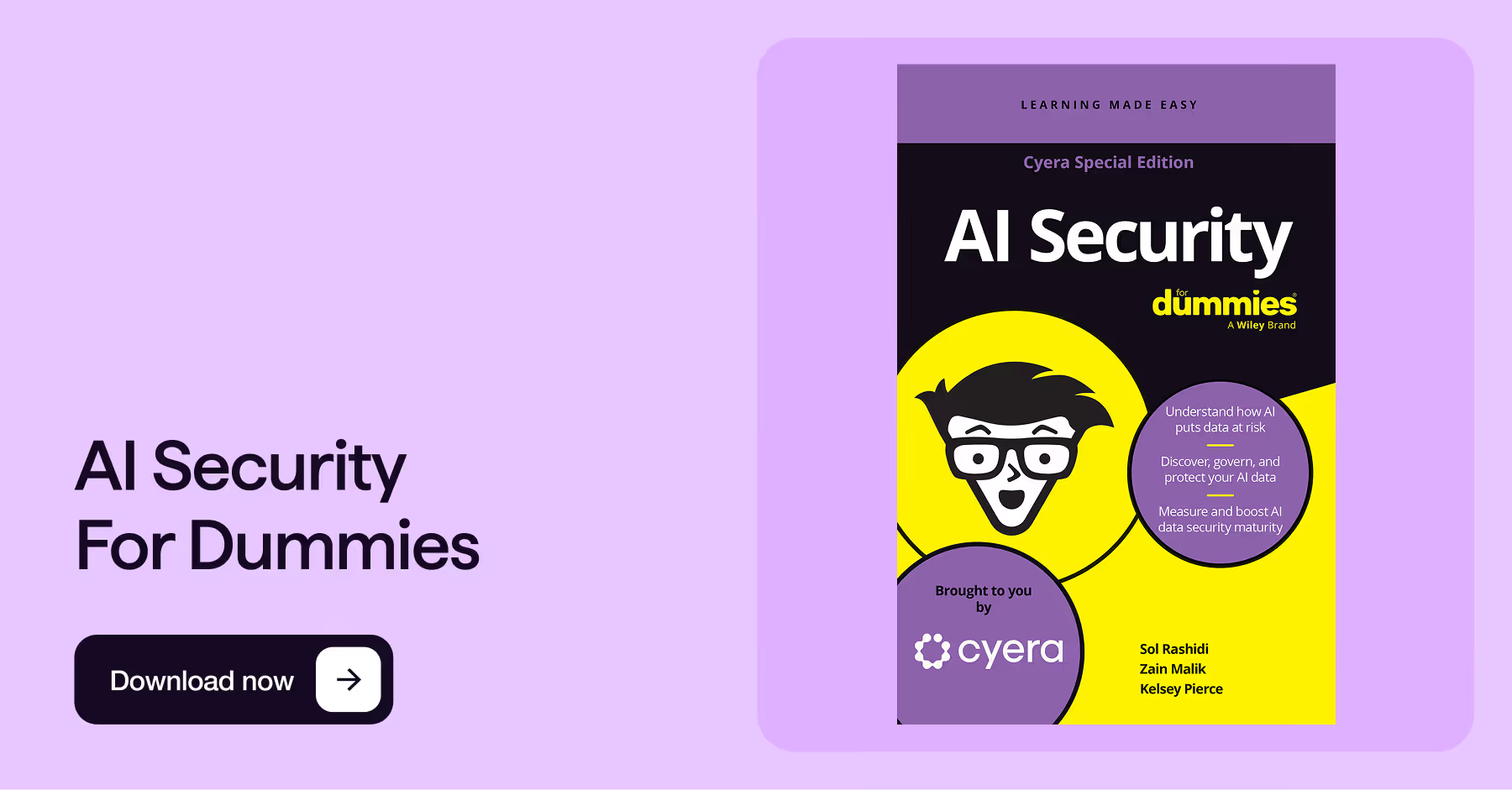
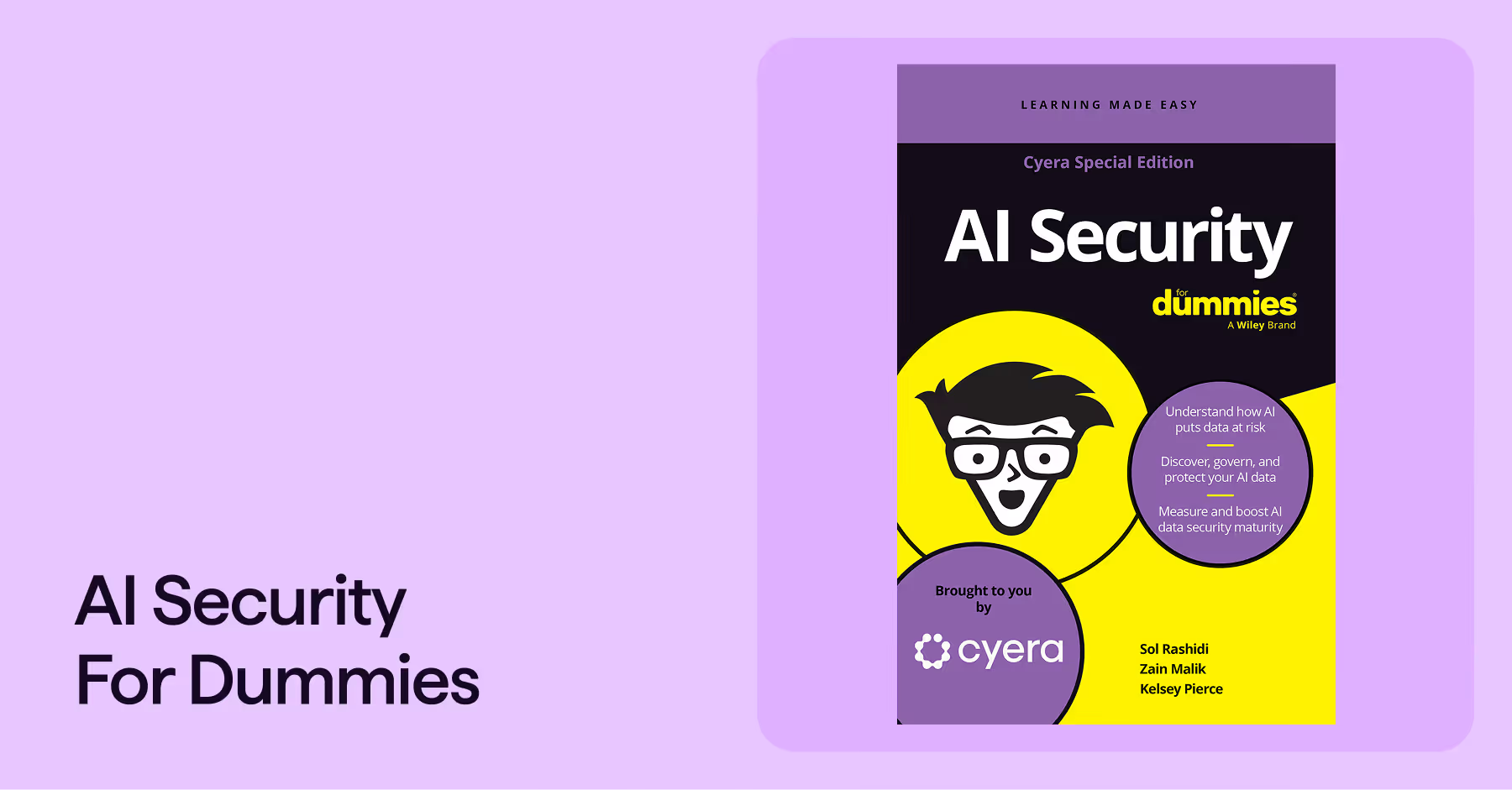
This is the central hypothesis in AI Security for Dummies, Cyera Special Edition. Our view is simple: AI is only as good as the underlying data it learns and draws from. Everything it does goes back to reliable data. Secure the data first. The AI security follows.
It’s a simple concept. But most organizations still haven't acted on it. Part of the problem is that AI doesn't behave like traditional software.
A single prompt can pull together data from various documents, APIs, databases, and more at a speed and scale that traditional security tools were never designed to account for. And that’s a major problem as 84 percent of enterprise data is already flowing through AI tools, and nearly 72 percent of those tools are classified as high or critical risk.
Another part of the problem is that AI comes in many forms. Broadly speaking it can be grouped into three categories: public AI (ChatGPT, Gemini, Perplexity, and other tools anyone can access from a browser), embedded AI (typically subscription based such as Microsoft Copilot, the AI built into your CRM, your help desk, your analytics platform), and homegrown AI (internal chatbots, RAG systems, autonomous agents your team built or assembled). Each has a different risk profile. Most organizations have all three running simultaneously, and they each have different risk scenarios.
Most organizations start in the same place: they don't actually know what AI they're running. Not the full picture. Discovery is almost always humbling — tools across business units, AI features switched on by default inside SaaS platforms, agents deployed by teams who figured they'd sort out the security later. Getting visibility isn't glamorous work. It's also the only work that makes everything else possible.
From there, the order matters. You can't set meaningful access controls until you know what you're controlling. You can't catch model drift or data misuse until you've defined what normal looks like. You can't respond to an incident cleanly until someone has written the playbook to give a repeatable motion that goes through all the proper checks.
The stage most organizations skip entirely is proof. Not the internal confidence that things are locked down, but documented, verifiable evidence that your AI systems are behaving the way you claim. Audit logs. Data lineage. Clear accountability. Regulators are starting to ask for it. So are enterprise customers. Building it retroactively, after the fact, under pressure — that's a bad place to be.
None of this requires mastering the underlying technology. It requires understanding the shape of the problem well enough to build a plan. That's what the book is for.
[Download AI Security for Dummies, Cyera Special Edition →]

Get your AI Security Assessment



.svg)