.avif)

Data security solutions have become essential as organizations handle more sensitive data across cloud, SaaS, and on-prem systems. A single breach can be costly, with the global average reaching $4.44 million.
At the same time, data no longer stays in one place. It moves across apps, users, and environments, often without clear visibility. Security teams need to know where data lives, who can access it, and how to reduce risk without slowing down daily work.
This article covers the best data security solutions available today, what features matter most, and how to choose the right platform for your organization.
Key Takeaways:
- Data security solutions help organizations discover, classify, and control sensitive data across cloud, SaaS, and on-prem environments
- Strong visibility into data location, access, and movement is essential for reducing risk and preventing breaches
- Most platforms combine core capabilities like data discovery, access control, data loss prevention, and risk detection
- Compliance requirements from regulations like General Data Protection Regulation (GDPR), Health Insurance Portability and Accountability Act (HIPAA), and California Consumer Privacy Act (CCPA) continue to drive adoption
Data Security Solutions: Quick Overview
Data security solutions vary widely, from tools focused on a single function, such as data loss prevention (DLP), to platforms that provide full visibility and control across environments.
We selected the solutions below based on their ability to discover and classify sensitive data, enforce access controls, reduce risk, support compliance, integrate with existing security stacks, and scale across cloud, SaaS, and on-prem systems.
To build this list, we reviewed product documentation, feature sets, and publicly available technical resources. We also analyzed verified user feedback from platforms like G2 and Gartner Peer Insights to understand real-world performance, usability, and limitations.
What Is a Data Security Solution?
Data security solutions protect sensitive data from unauthorized access, misuse, or loss. They help organizations find where data lives, understand its classification, and control who can access it across cloud, SaaS, and on-prem systems.
These solutions go beyond basic protection, such as encryption or firewalls. They focus on the data itself. That includes discovering sensitive information, classifying it, monitoring its movement, and enforcing policies that reduce risk in real time.
Most modern platforms combine several capabilities into a single place. Some of their features include data discovery, classification, access control, DLP, and risk detection. Together, they give security teams a clear view of their data and the ability to act quickly when risks appear.
The Role of Data Security in Compliance
Data security plays a central role in meeting modern compliance requirements. About 85% of companies say compliance has become more complex over the past three years. Security teams need tools that can track data across all environments and automatically apply the right policies.
Regulations such as GDPR, HIPAA, and CCPA require organizations to know where sensitive data resides, control access to it, and protect it at all times. In many environments, access is broader than it needs to be. Research shows that 96% of enterprise permissions go unused, leaving large amounts of data exposed and unmonitored.
Failing to control that access can lead to major financial penalties, with GDPR fines reaching €6 billion across cases.
Modern data security solutions help close this gap. They give teams a clear view of sensitive data, flag risks, and enforce controls in real time. Teams can respond to audits more quickly and reduce the risk of costly violations.
Best Data Security Solutions
The strongest data security solutions provide teams with clear visibility into where sensitive data resides, who can access it, and how it moves across environments. They also make it easier to act on risk with built-in controls, automation, and integrations with existing security tools. Here are the best data security solutions:
Cyera

Cyera is an AI-native data security platform built for enterprises managing large, complex data environments. It focuses directly on the data, continuously discovering and classifying sensitive information across cloud, SaaS, and on-prem systems, then linking that data to identities and access paths to surface real risk.
The platform brings data security posture management (DSPM), AI security, access governance, and remediation into a single control plane. Teams get fast visibility into sensitive data and can take action without relying on manual audits or fragmented tools. Deployment takes minutes, and organizations can start seeing results in less than a day.
Cyera also supports compliance by mapping data and controls to frameworks such as GDPR, HIPAA, and PCI DSS, helping teams identify violations and close gaps quickly. Continuous monitoring flags new risks as data moves or changes, keeping organizations audit-ready without manual tracking.
Cyera also delivers a personalized report on your organization’s data and AI security posture. It highlights key risks and next steps so teams can quickly understand where they stand and what to fix first.
Key features:
- AI-powered DSPM: Discovers and classify sensitive and proprietary data across cloud, SaaS, and on-prem environments, with identity and access context tied to each dataset
- AI security and AI-SPM controls: Detects sanctioned and shadow AI tools, govern how humans and AI agents access data, and reduce the risk of real-time data leakage
- Omni DLP engine: Reduces alert noise, prioritizes meaningful risks, and recommends tuned policies that lower false positives
- Access trail visibility: Tracks how sensitive data is accessed across users and AI systems to support investigations and audit readiness
- Agentless deployment: Deploys quickly without agents and scan large-scale environments with minimal operational impact
- Automated remediation workflows: Fixes risks with one-click actions, built-in guardrails, and integrations with existing tools and workflows
CrowdStrike
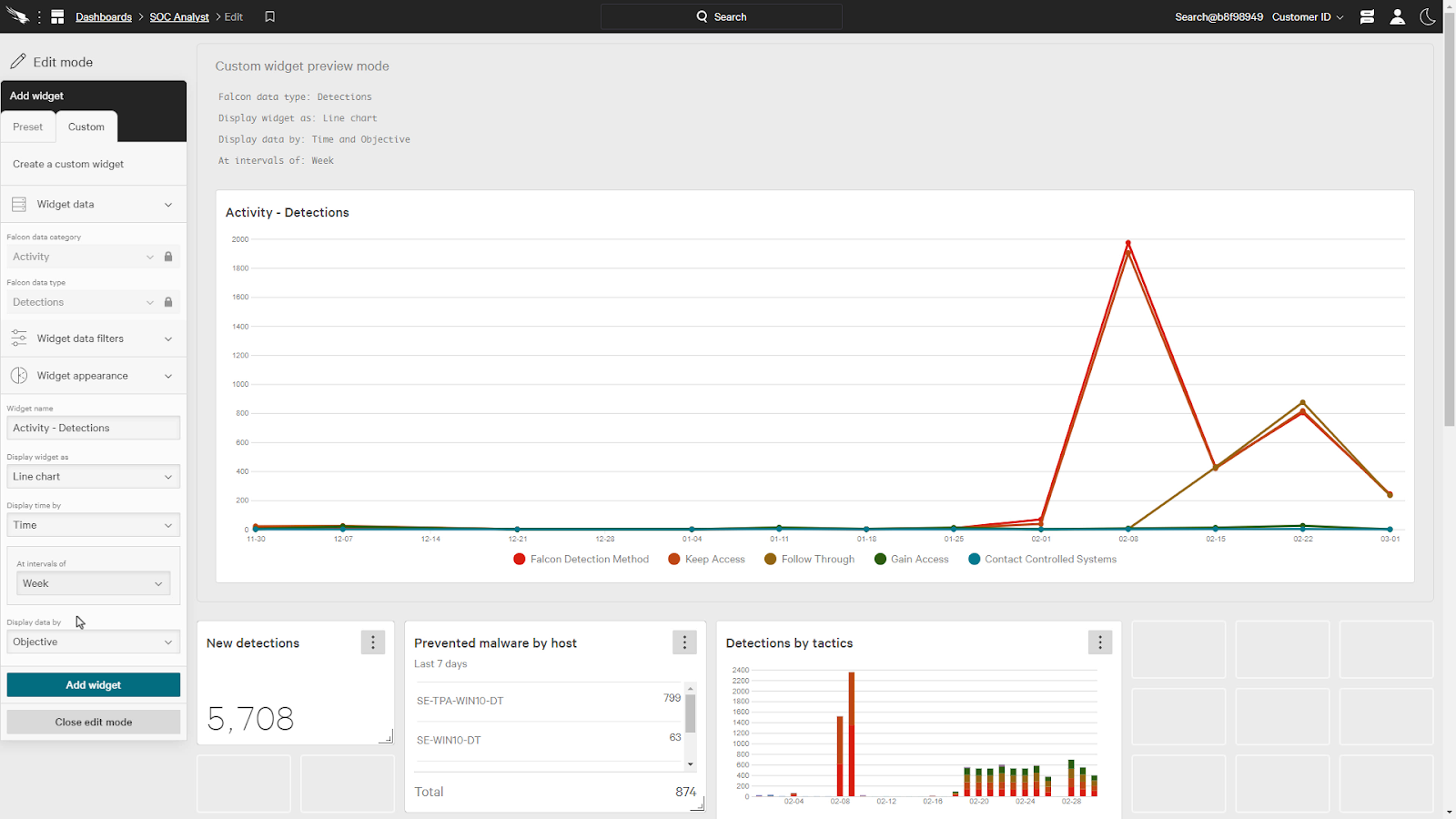
CrowdStrike provides a cloud-native security platform that focuses on threat detection and response across devices, identities, and cloud workloads. Its Falcon platform uses AI and threat intelligence to monitor activity, detect attacks, and respond to incidents across environments.
Key features:
- Threat intelligence and hunting: Uses adversary intelligence to identify attack patterns and track emerging threats
- Identity protection: Secures human and non-human identities to prevent credential-based attacks
- Cloud and workload security: Extends protection to cloud environments and workloads
Forcepoint

Forcepoint is a data security platform centered on DLP across cloud, web, email, and network environments. Its platform combines data discovery, classification, and policy enforcement with real-time controls that adapt to user behavior and risk signals, giving teams visibility into how data moves and the ability to enforce consistent protection across environments
Key features:
- AI-driven classification: Identifies and classifies structured and unstructured data using AI models with business context
- Real-time risk-based enforcement: Adjusts policies based on user behavior and contextual risk signals to prevent data loss
- Compliance policy management: Applies pre-built templates and classifiers aligned to global regulations and industry requirements
- Data detection and response: Monitors data activity to detect potential exfiltration and respond to threats as they occur
IBM Guardium

Guardium is a data security platform designed to protect sensitive data across hybrid and multi-cloud environments. It discovers, classifies, and monitors data across databases, cloud systems, and on-prem infrastructure, while applying analytics and automation to detect threats and support compliance. IBM Guardium also includes capabilities for vulnerability assessment, encryption management, and real-time monitoring to address both current and emerging risks.
Key features:
- Data discovery and classification: Identifies and classifies sensitive data across cloud, on-prem, and hybrid environments
- Real-time activity monitoring: Tracks data access and usage to detect suspicious behavior and potential threats
- Vulnerability assessment: Scans databases to identify and remediate security weaknesses before exploitation
- Data detection and response: Prioritizes threats and supports automated responses to reduce risk
Imperva
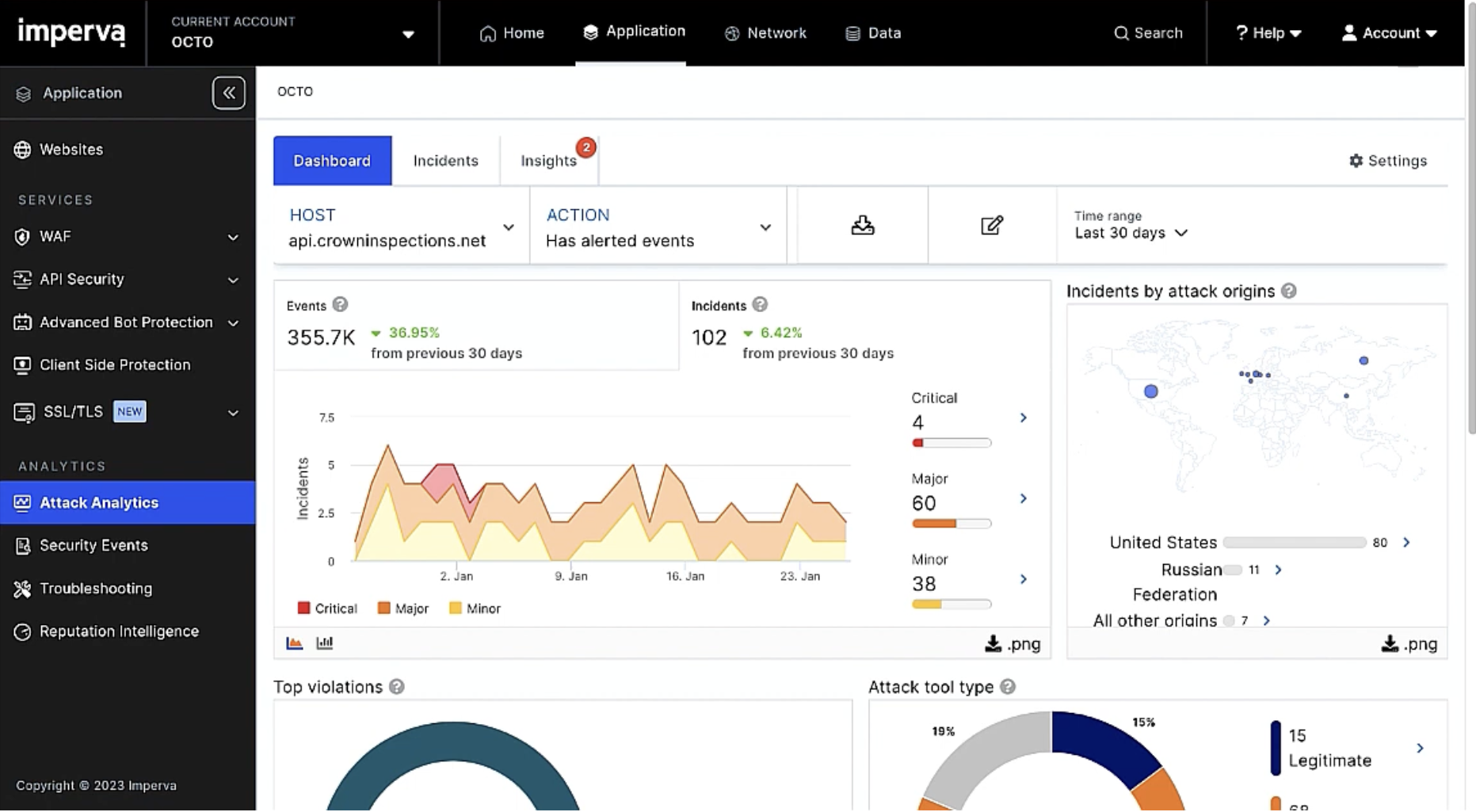
Imperva provides a data security platform designed to protect sensitive data across on-prem, cloud, and hybrid environments. It focuses on data discovery, classification, activity monitoring, and threat detection, giving security teams visibility into where data resides, how it is accessed, and where risk exists. Imperva combines analytics, policy enforcement, and integrations to support compliance and security operations across modern data architectures.
Key features:
- Data discovery and classification: Identifies sensitive data across databases, cloud platforms, and hybrid environments
- Activity monitoring and analytics: Tracks data access and usage to detect anomalies and potential threats
- Risk detection and response: Uses analytics to surface high-risk activity and support incident response
- Unified data security platform: Combines discovery, protection, and compliance controls in a single system
Microsoft Purview

Microsoft Purview is a data security, governance, and compliance platform that helps organizations manage and protect data across cloud, SaaS, and on-prem environments. It provides visibility into where data lives, how it is used, and the risks it poses, while applying policies and controls throughout the data lifecycle. Microsoft Purview brings together data discovery, classification, risk management, and compliance tools into a unified system designed to support modern data environments and AI-driven workflows.
Key features:
- Data discovery and classification: Identifies and classifies sensitive data across cloud and on-prem systems
- DLP: Monitors and prevents unauthorized sharing of sensitive data across apps and browsers
- DSPM: Provides visibility into data risks and policy effectiveness across the data estate
- Insider risk management: Detects and investigates risky user behavior related to data access and usage
Netskope

Netskope provides a cloud-native platform that combines data security, networking, and access control across cloud, SaaS, web, and private applications. It protects data as it moves across users, devices, and services, using context-aware policies and a zero trust model to control access and reduce risk.
Key features:
- Cloud and SaaS data protection: Monitors and protects sensitive data across cloud apps, SaaS platforms, and web traffic
- Zero trust access control: Applies identity and context-based policies to control access to data and applications
- AI-driven threat detection: Analyzes user and entity activity to identify risky behavior and potential threats
- Unified platform architecture: Combines security and networking services in a single cloud-delivered system
Prisma Cloud
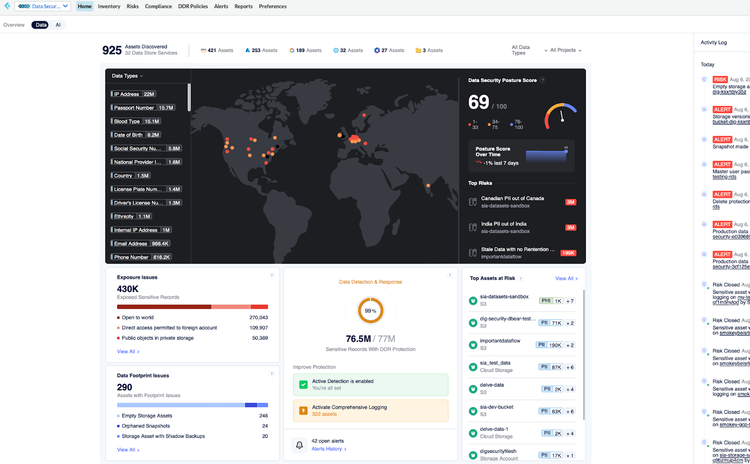
Palo Alto Networks Prisma Cloud is a cloud security platform designed to protect applications, infrastructure, and data across the full development lifecycle. It provides visibility into risks across code, cloud environments, and runtime systems, helping teams identify vulnerabilities, monitor activity, and respond to threats. Prisma Cloud uses analytics and automation to prioritize risks and support security operations across multi-cloud and AI-driven environments .
Key features:
- Cloud security posture management: Identifies misconfigurations and risks across cloud infrastructure and environments
- Runtime threat detection: Monitors workloads and applications to detect and respond to active threats
- Code and pipeline security: Scans code, dependencies, and CI/CD pipelines to identify vulnerabilities before deployment
- AI-driven risk prioritization: Analyzes risk context to help teams focus on the most critical exposures
Trend Micro Data Security

Trend Micro Data Security, part of the Trend Vision One platform, helps organizations discover, classify, and protect sensitive data across cloud, SaaS, and on-prem environments. It provides visibility into where data resides, how it is accessed, and where risks exist, while using analytics and automation to detect threats and support response actions.
Key features:
- Risk and threat detection: Uses anomaly detection to identify insider threats, compromised accounts, and unusual access patterns
- Exposure management: Maps sensitive data to vulnerable systems and potential attack paths
- Centralized data security platform: Provides a single console for visibility, policy management, and investigation
Varonis
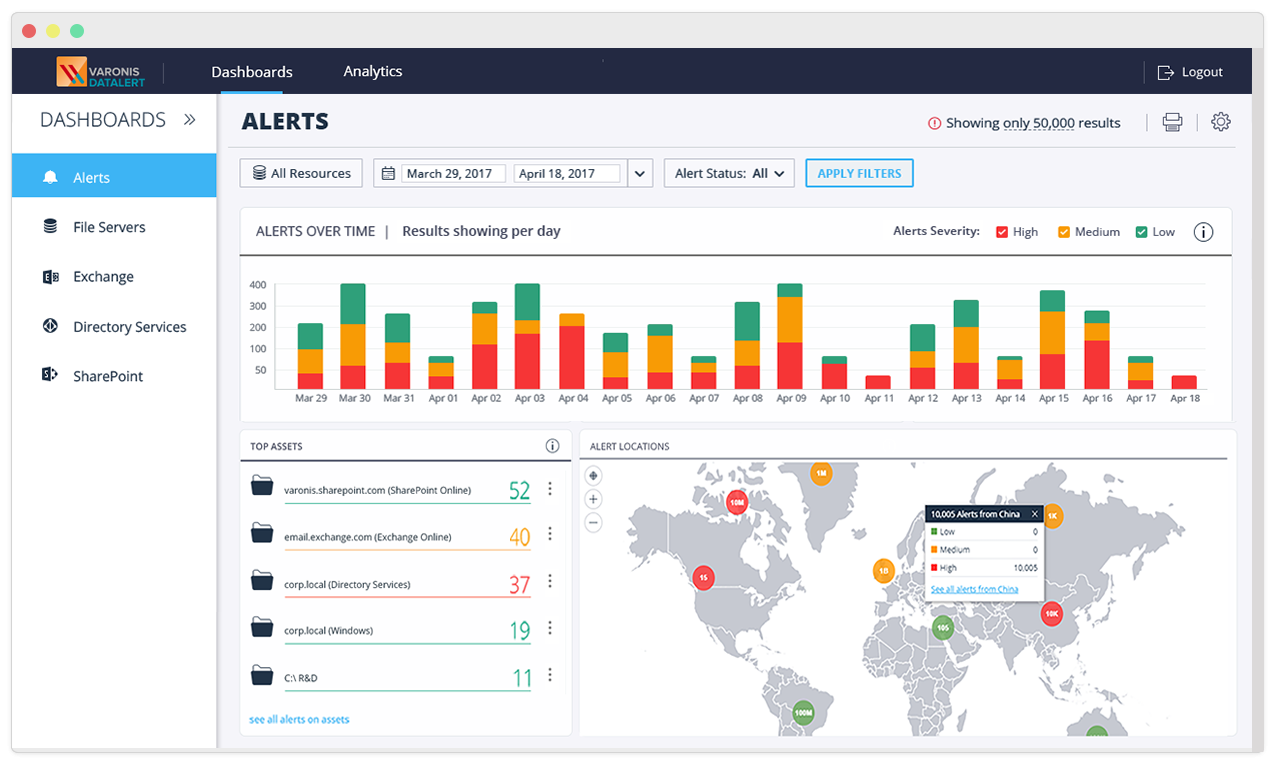
Varonis provides a data security platform that focuses on protecting sensitive data across cloud, SaaS, and on-prem environments. It continuously discovers and classifies data, monitors access and activity, and enforces access controls to reduce exposure. Varonis connects data security, threat detection, and access governance, helping teams identify risks and respond to threats across distributed and AI-driven environments.
Key features:
- Data discovery and classification: Identifies and classifies sensitive data across cloud, SaaS, and on-prem systems
- Access governance and control: Manages permissions and enforces least-privilege access across users and systems
- Real-time activity monitoring: Tracks data access and usage to detect suspicious behavior and insider threats
- Automated risk remediation: Reduces exposure by identifying and fixing misconfigurations and over-permissioned access
Velotix

Velotix provides a data access governance platform that focuses on controlling how users access sensitive data across enterprise environments. It connects data discovery, policy management, and access workflows into a single system, allowing organizations to enforce rules in real time while maintaining visibility into data usage.
Key features:
- Data discovery and visibility: Identifies and maps data assets across systems to provide a clear view of available data
- Policy-based access control: Enforces access decisions using dynamic, context-aware policies across data sources
- Automated access workflows: Manages data access requests with automated approvals and policy checks
- Real-time monitoring and governance: Tracks data usage and access activity to support compliance and audits
Wiz

Wiz provides a cloud security platform that connects code, cloud infrastructure, and runtime environments into a single security graph. It gives security teams visibility into assets, configurations, identities, and data, helping them identify risks and understand how exposures connect across systems. The platform provides continuous risk analysis, threat detection, and remediation, supporting security operations in multi-cloud and AI-driven environments.
Key features:
- Cloud security graph: Connects code, cloud, identities, and runtime data to provide contextual risk visibility
- Agentless risk discovery: Identifies vulnerabilities, misconfigurations, and exposed assets across cloud environments
- Attack path analysis: Maps how attackers could move across systems to reach sensitive data
- Runtime threat detection: Monitors cloud workloads and applications to detect and respond to threats
Zscaler Data Protection
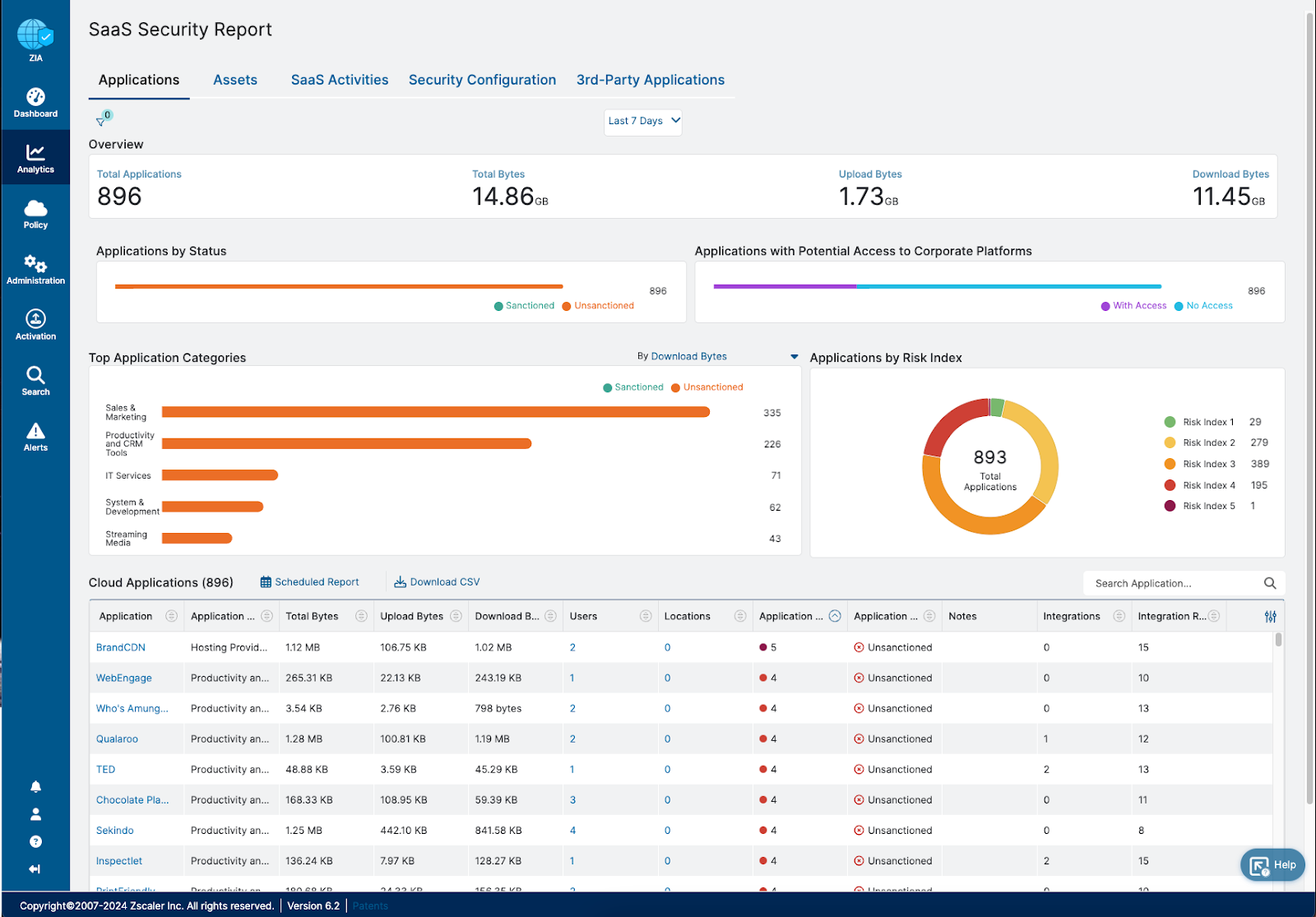
Zscaler Data Protection provides a cloud-delivered platform that secures sensitive data across web, email, SaaS, and cloud environments. It combines data discovery, classification, and DLP with real-time inspection and policy enforcement, giving teams visibility into how data moves and where risks exist.
Key features:
- Unified DLP: Protects data across web, email, SaaS, and cloud channels using a single policy framework
- Data discovery and classification: Identifies sensitive data and applies classification using multiple detection methods
- DSPM: Discovers data risks and misconfigurations across cloud and SaaS environments
- Real-time traffic inspection: Monitors and controls data in motion using inline inspection across channels
How to Choose the Right Data Security Solution
The right data security solution should fit your environment, reduce risk, and work with how your team already operates. Focus on tools that give clear visibility into data and make it easier to take action without adding overhead. Start by:
- Evaluating security features: Look for core capabilities like data discovery, classification, access control, and DLP. Make sure the platform can detect sensitive data and respond to risks in real time.
- Ensuring compliance and scalability: Confirm the solution meets the regulations you need to comply with and scales as your data grows across cloud, SaaS, and on-prem systems.
- Prioritizing usability and integration opportunities: Check how easily the platform connects with your existing stack, including SIEM, IAM, DLP, and ticketing systems. Strong integration keeps workflows consistent and reduces manual work.
- Assessing vendor reputation and support: Review customer feedback, support responsiveness, and product updates. Look for vendors that provide clear documentation and ongoing support as your needs evolve.
Protect Your Business With the Best Data Security Solution
Data moves constantly across cloud environments, SaaS tools, AI workflows, and third-party integrations. Every touchpoint creates risk and without clear visibility into where sensitive data lives and who can access it, security decisions rely on guesswork.
A breach affects more than budgets. It disrupts operations, triggers regulatory pressure, and erodes customer trust. Recovery can take months. Strong data security reduces that risk by helping teams act before issues turn into incidents.
The right platform gives full visibility across your data estate and links sensitive data to the identities and access paths that reach it. Cyera delivers a data-first approach built for modern enterprise environments, enabling organizations to gain visibility in less than a day, scan petabytes of data at scale, and achieve 95%+ classification precision. It helps teams discover, govern, and protect sensitive data across cloud, SaaS, and on-prem systems without adding operational overhead.
Book a demo with Cyera to take control of your data security.
Data Security Solutions FAQs
How do you evaluate the reliability of data security solutions?
You should focus on how well the solution performs in real environments and whether it helps your team act on risk without added complexity.
- Check data accuracy and coverage: Ensure it finds and classifies sensitive data across cloud, SaaS, and on-prem systems with minimal false positives
- Review risk detection and response: Confirm it identifies real risks and supports fast, practical remediation actions
- Validate integrations: Make sure it connects with SIEM, identity and access management, DLP, and ticketing systems
- Assess vendor trust and support: Review customer feedback, product updates, and the quality of documentation and support
What are the types of data security?
Data security covers several layers, each designed to protect data at different stages and locations.
- Encryption: Protects data at rest and in transit by converting it into unreadable formats without authorized keys
- Access control: Limits who can view or use data based on roles, identities, and permissions
- DLP: Monitors and blocks sensitive data from being shared, transferred, or exposed without approval
- Data discovery and classification: Identifies where sensitive data lives and labels it based on risk and compliance requirements
- Backup and recovery: Ensures data can be restored quickly after loss, corruption, or cyberattacks
- Masking and tokenization: Replaces sensitive data with anonymized values to reduce exposure while keeping it usable
What are the three pillars of the CIA triad?
The CIA triad refers to three core principles that guide data security: confidentiality, integrity, and availability.
- Confidentiality: Keeps sensitive data accessible only to authorized users through controls like encryption, access permissions, and identity management
- Integrity: Maintains accurate and unchanged data by using validation checks, audit logs, and controlled updates
- Availability: Ensures data stays accessible when needed with reliable systems, backups, and recovery processes
What are the key features to look for in a data security solution?
Focus on features that give clear visibility into data and help your team reduce risk without slowing down daily work.
- Data discovery and classification: Identifies where sensitive data lives and labels it based on risk and compliance needs
- Access control and governance: Controls who can access data and enforces least-privilege policies across users and systems
- DLP: Monitors and stops unauthorized sharing or movement of sensitive data across endpoints, cloud, and SaaS
- Risk detection and remediation: Surfaces high-risk exposures and supports fast, practical actions to fix them
- Integration with existing tools: Connects with SIEM, identity and access management, DLP, and ticketing systems to keep workflows consistent
- Scalability across environments: Supports cloud, SaaS, and on-prem systems without gaps in visibility or performance

Get your AI Security Assessment

.png)

.svg)