12 meilleures plateformes de sécurité des données d'IA et comment choisir la bonne
Points clés :
- L'adoption de l'IA élargit la surface d'attaque au sein du cloud, des solutions SaaS, des API et des modèles tiers, rendant la sécurité centrée sur les données indispensable.
- Les plateformes de sécurité des données IA offrent aux entreprises une visibilité sur l'emplacement des données sensibles et sur la manière dont les systèmes, agents et utilisateurs d'IA interagissent avec elles.
- Une sécurité robuste des données IA combine découverte continue, gouvernance des accès basée sur l'identité, détection des menaces spécifiques à l'IA et remédiation automatisée.
- Toutes les plateformes de sécurité IA ne répondent pas aux mêmes besoins ; les organisations doivent donc choisir en fonction de leur environnement de données, de leur maturité en matière d'IA et de leur profil de risque.
.avif)
L'intelligence artificielle (IA) est étroitement liée aux données d'entreprise. Les organisations intègrent des modèles au stockage cloud, aux applications SaaS, aux bases de données internes et aux plateformes d'analyse pour automatiser les flux de travail, générer des informations et accélérer la prise de décision à l'échelle de l'entreprise.
Les contrôles de sécurité, cependant, sont souvent ajoutés après coup. Selon le rapport d'IBM sur le coût d'une violation de données, 97 % des organisations ayant subi un incident de sécurité lié à l'IA ne disposaient pas de contrôles d'accès appropriés à l'IA.
Sans une visibilité continue sur les données, les accès et les usages, les systèmes d'IA peuvent interagir avec des dossiers clients sensibles, des données financières, du code source ou de la propriété intellectuelle à travers de multiples environnements. À mesure que l'adoption de l'IA se généralise dans les unités commerciales, les équipes de sécurité ont besoin d'un moyen de savoir où résident les données sensibles, qui peut y accéder et comment les outils d'IA interagissent avec elles.
Une plateforme de sécurité des données IA offre cette visibilité. Elle aide les organisations à surveiller l'exposition des données, à gérer les accès et à réduire les risques à mesure que l'IA s'intègre aux opérations quotidiennes. Dans ce guide, nous passons en revue certaines des meilleures plateformes de sécurité des données IA et expliquons comment choisir la solution adaptée aux grandes entreprises gérant des environnements complexes et riches en données.
Top des plateformes de sécurité des données IA : Bilan rapide
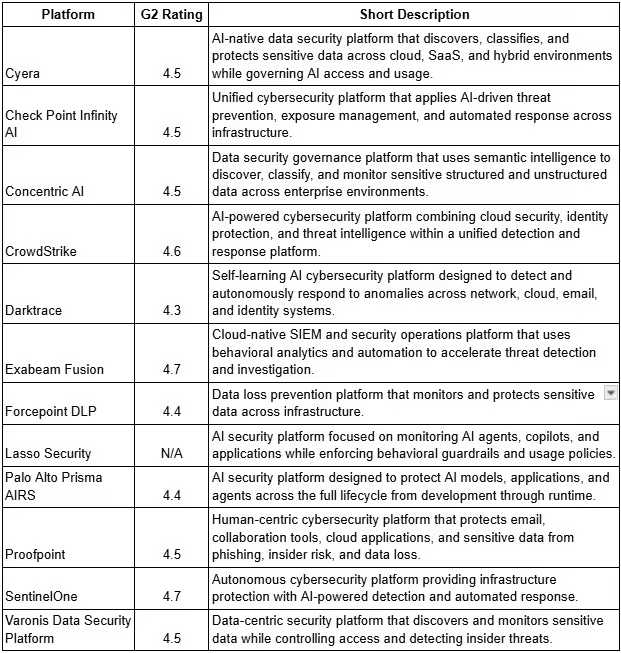
Voici les meilleures plateformes de sécurité des données IA basées sur leurs capacités en matière de découverte de données, de précision de classification, de surveillance, de gouvernance, de puissance d'intégration et de présence globale sur le marché.
Pour établir cette liste, nous avons évalué les fournisseurs en utilisant de multiples sources et critères. Cela inclut l'examen de la documentation produit et des supports des fournisseurs pour comprendre les capacités fondamentales de chaque plateforme, notamment la manière dont elles découvrent, classifient et sécurisent les données utilisées dans les systèmes d'IA. Nous avons également analysé des plateformes d'avis tierces indépendantes comme G2 pour évaluer l'expérience réelle des utilisateurs en matière de déploiement, d'utilisabilité et de support.
Une attention particulière a été portée aux fonctionnalités de plus en plus critiques pour sécuriser les environnements pilotés par l'IA, notamment la visibilité sur les données accessibles par l'IA, la gouvernance des jeux de données d'entraînement et des copilotes, l'intégration aux écosystèmes de sécurité plus larges, ainsi que la capacité à surveiller et contrôler l'utilisation des données sensibles par les systèmes d'IA.
Qu'est-ce que la sécurité des données liées à l'IA ?
La sécurité des données liées à l'IA désigne l'ensemble des contrôles, processus et technologies utilisés pour protéger les données qui alimentent les systèmes d'intelligence artificielle. Cela inclut les données d'entraînement, les jeux de données de réglage fin, les requêtes (prompts), les résultats générés par les modèles et les environnements de stockage sous-jacents où résident les informations sensibles.
La sécurité des données liées à l'IA consiste à savoir quelles données sensibles existent dans vos environnements cloud et SaaS, à comprendre qui peut y accéder et à surveiller la manière dont les outils d'IA les utilisent. À mesure que les organisations intègrent l'IA dans leurs flux de travail et leurs applications, cette visibilité devient essentielle pour réduire l'exposition des données, prévenir les utilisations abusives et maintenir la conformité. De nombreuses organisations assurent cette visibilité grâce à la gestion de la posture de sécurité de l'IA (AI-SPM), qui aide à identifier les systèmes d'IA, à évaluer leur accès aux données sensibles et à détecter les configurations ou les modèles d'utilisation à risque.
Composants clés de la sécurité des données liées à l'IA
- Protection des données d'entraînement et d'exécution : Les modèles d'IA sont entraînés sur de grands volumes de données, qui incluent souvent des dossiers clients sensibles, des informations financières, de la propriété intellectuelle ou des données réglementées. Les organisations doivent avoir une visibilité sur les données utilisées pour l'entraînement et le réglage fin, sur les personnes qui y ont accès et sur la classification et la protection appropriées de ces données. Les données d'exécution, telles que les requêtes en temps réel, les appels API et les résultats générés, doivent également être surveillées pour empêcher tout accès non autorisé ou toute exposition involontaire.
- Intégrité et sécurité des modèles : Les modèles d'IA peuvent être modifiés, réentraînés ou influencés de manière à introduire des risques. Des contrôles doivent être mis en place pour restreindre les personnes autorisées à modifier les modèles, mettre à jour les configurations ou déployer de nouvelles versions. La journalisation, le contrôle de version et les processus de gestion des changements permettent de garantir que les modèles se comportent comme prévu et ne sont pas compromis.
- Sécurité des entrées/sorties : Chaque interaction avec un système d'IA génère un risque. Les entrées peuvent contenir des données sensibles ou des instructions malveillantes, tandis que les sorties pourraient exposer des informations confidentielles si elles ne sont pas correctement contrôlées. Des mécanismes de surveillance et de filtrage aident à prévenir les fuites de données et à réduire le risque de réponses dangereuses ou non conformes.
- Gestion du cycle de vie des données : Les données utilisées dans les systèmes d'IA façonnent directement les résultats des modèles, c'est pourquoi elles doivent être gouvernées dès leur collecte jusqu'à leur archivage ou leur suppression. Cela inclut l'application de politiques de rétention, la gestion des accès dans le temps et la garantie de conformité aux réglementations telles que le RGPD ou aux normes spécifiques à votre secteur. Des contrôles clairs du cycle de vie réduisent l'exposition à long terme et limitent l'accumulation inutile de données.
Pourquoi les entreprises ont-elles besoin d'un logiciel de sécurité des données pour l'IA ?
Les systèmes d'IA ont désormais un accès direct aux données de l'entreprise dans le cloud, les environnements SaaS et les systèmes internes. À mesure que les organisations intègrent l'IA dans leurs flux de travail, leurs produits et leurs systèmes décisionnels, elles multiplient les voies par lesquelles les données sensibles peuvent être consultées, traitées ou exposées.
En 2026, les chercheurs de Cyera ont découvert une vulnérabilité critique dans la plateforme d'automatisation n8n (CVE-2026-21858) qui permettait aux attaquants de lire des fichiers arbitraires sur les serveurs affectés et, à terme, d'exécuter du code. La plateforme connecte souvent des bases de données internes, du stockage cloud, des API et des flux de travail pilotés par l'IA au sein d'un environnement d'automatisation unique. Une compromission de ce type de système peut exposer des identifiants, des documents internes, des clés API et d'autres données sensibles liées aux opérations de l'entreprise.
Détection et réponse avancées aux menaces
Les attaquants utilisent l'IA pour agir plus rapidement et avec une plus grande précision. Elle permet une reconnaissance automatisée, du phishing hautement ciblé et une identification rapide des erreurs de configuration et des données exposées. Les défenses périmétriques traditionnelles ne sont pas conçues pour suivre cette évolution.
Les plateformes de sécurité des données pour l'IA aident les équipes à détecter rapidement les modèles d'accès anormaux, les identités aux privilèges excessifs et l'exposition de données à haut risque. En combinant la découverte de données, la classification et le contexte d'identité, elles font ressortir les risques importants et permettent des réponses plus rapides et mieux ciblées.
Risques liés au cycle de vie de l'IA
Le risque commence bien avant le déploiement. Des données sensibles intègrent souvent les pipelines d'entraînement et de réglage fin sans visibilité ni contrôle clairs. Une fois intégrées dans un modèle, ces données deviennent difficiles à tracer ou à supprimer. Et ces risques sont déjà présents dans les environnements d'entreprise. De nombreuses organisations signalent que leurs systèmes d'IA accèdent à plus de données que nécessaire en raison d'autorisations trop larges et d'une surveillance limitée.
Le risque persiste pendant l'exécution. Les systèmes d'IA se connectent à des bases de données, des applications SaaS, des API et des sources de connaissances internes pour générer des résultats. Chaque connexion introduit de nouvelles voies par lesquelles des données sensibles peuvent être consultées, utilisées à mauvais escient ou exposées.
Gouvernance des données et conformité
Les réglementations telles que le RGPD s'appliquent toujours lorsque des données sont utilisées pour entraîner, régler ou alimenter des systèmes d'IA. Les organisations ont besoin d'une visibilité continue sur les données utilisées, leur emplacement et les personnes qui y ont accès.
Le logiciel de sécurité des données IA facilite cette démarche en découvrant et en classifiant en continu les données sensibles, en cartographiant les accès des identités humaines et machines, et en identifiant les risques d'exposition. Cela permet d'obtenir une vue claire et auditable de la gestion des données au sein des environnements pilotés par l'IA.
Efficacité opérationnelle
L'IA accroît la complexité d'environnements déjà fragmentés. Les données, les identités et les chemins d'accès sont répartis entre le cloud, le SaaS et les systèmes sur site, rendant la supervision manuelle difficile à mettre à l'échelle.
Les plateformes de sécurité des données IA regroupent la découverte, la classification et l'analyse des accès au sein d'une couche unique. Cela réduit les efforts manuels, raccourcit les cycles d'investigation et aide les équipes à se concentrer sur les risques à fort impact plutôt que sur des alertes peu pertinentes.
Meilleures plateformes de sécurité des données IA
Toutes les plateformes de sécurité IA ne résolvent pas les mêmes problèmes. Certaines se concentrent sur les menaces réseau, tandis que d'autres se spécialisent dans la sécurité des modèles ou le filtrage des contenus générés par l'IA. Pour les grandes entreprises gérant des volumes massifs de données sensibles, le véritable défi réside dans la visibilité et le contrôle sur les environnements cloud, SaaS et hybrides.
Le bon choix dépend de la manière dont votre organisation utilise l'IA, de la complexité de votre patrimoine de données et de votre visibilité actuelle sur les données sensibles et les risques d'accès.
Cyera
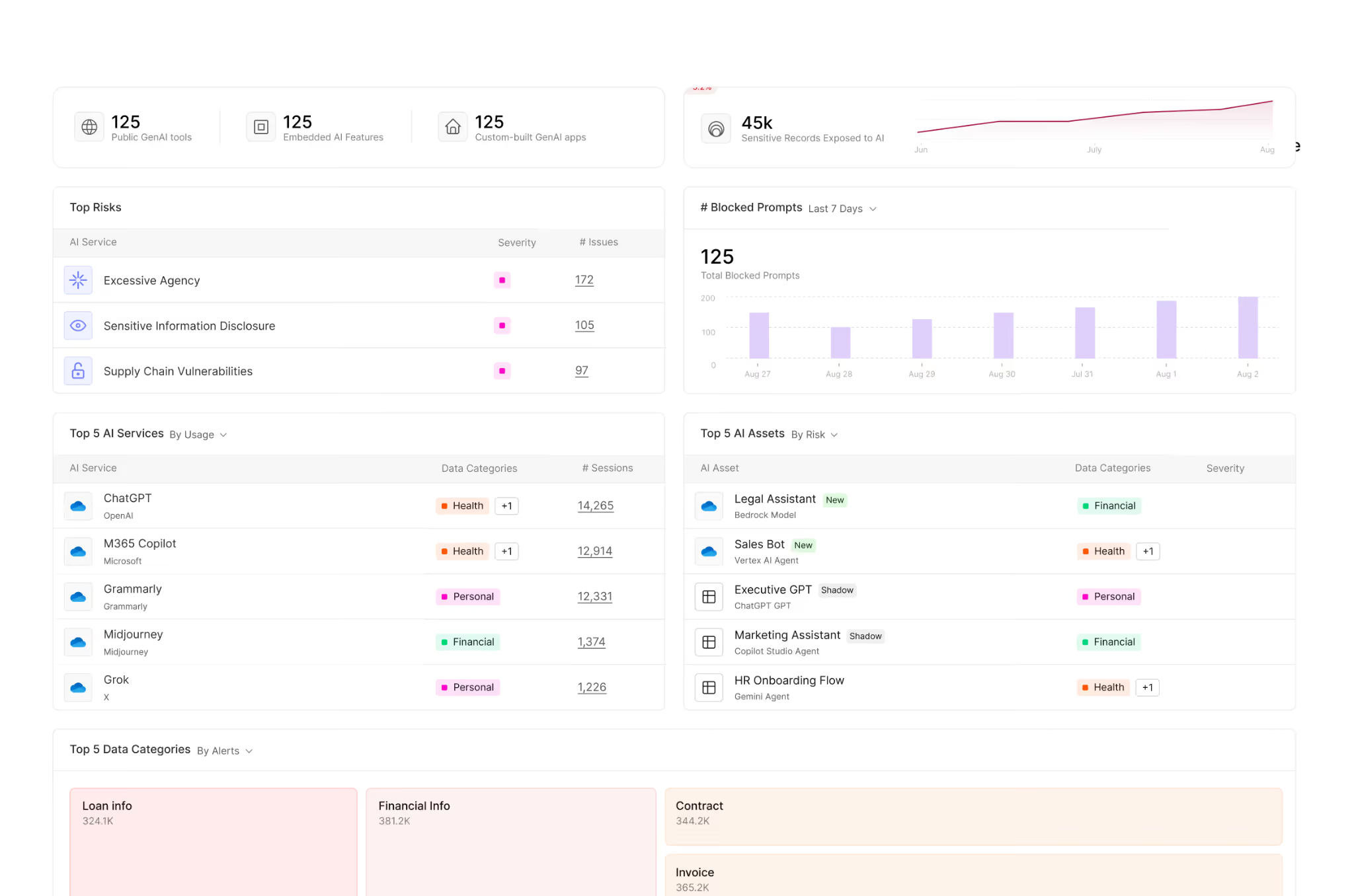
Cyera est une plateforme de sécurité des données nativement conçue pour l'IA, destinée aux grandes entreprises opérant dans des environnements multi-cloud complexes. Elle découvre et classifie en continu les informations sensibles et propriétaires sur les systèmes cloud, SaaS et sur site, puis relie ces données aux identités et aux chemins d'accès pour révéler les risques réels.
La plateforme intègre la gestion de la posture de sécurité des données (DSPM), des contrôles de sécurité pour l'IA, la gouvernance des accès et une remédiation automatisée au sein d'un plan de contrôle unifié. Avec une précision de classification supérieure à 95 %, une analyse à l'échelle du pétaoctet et un déploiement offrant une visibilité en moins d'une journée, Cyera permet aux organisations de découvrir, gouverner et protéger leurs données sensibles dans des environnements hybrides tout en réduisant l'exposition liée à l'IA à sa source.
Cyera propose également une évaluation de la sécurité des données IArapide, en trois minutes, fournissant un rapport PDF personnalisé avec des informations sur l'état de préparation de votre organisation en matière d'IA et de sécurité des données. Le rapport met en évidence les points de vigilance clés et suggère des étapes concrètes, aidant les équipes à identifier leurs lacunes et leurs points forts pour mieux protéger les données sensibles.
Fonctionnalités clés :
- DSPM alimenté par l'IA: Découvre et classifie automatiquement les données sensibles et propriétaires dans les environnements cloud, SaaS et sur site, en associant les données aux identités, aux chemins d'accès et au contexte de risque
- AI Guardian et AI-SPM: Détecte les outils d'IA autorisés et clandestins, régit la manière dont les humains et les agents IA accèdent aux données sensibles et aide à prévenir les fuites de données en temps réel causées par l'IA
- Omni DLP: Utilise un moteur unique piloté par l'IA pour réduire le bruit lié à la DLP, hiérarchiser les alertes pertinentes et recommander des politiques optimisées qui diminuent les faux positifs
- Traçabilité des accès: Suit chaque point de contact avec les données sensibles, qu'il s'agisse d'humains ou de systèmes d'IA, pour faciliter les enquêtes, la détection des menaces internes et la préparation aux audits
- Découverte sans agent: Se déploie en quelques minutes sans agent et analyse rapidement les environnements cloud, SaaS et hybrides pour faire ressortir les expositions de données à haut risque
- Remédiation automatisée: Permet une remédiation des risques en un clic avec des garde-fous intégrés et s'intègre aux flux de travail et aux plateformes d'automatisation existants
Témoignages d'utilisateurs :
« La mise en œuvre de la solution de gouvernance des données Cyera a considérablement amélioré notre visibilité et notre contrôle sur les données sensibles, nous aidant à combler les lacunes en matière de conformité, à réduire la prolifération des données et à appliquer des politiques de sécurité cohérentes dans toute l'organisation. » Sean Mullins, CISO, Cass Information Systems
« Le produit est excellent et ne cesse de s'améliorer, mais ce qui est le plus impressionnant, ce sont les personnes chargées de nous assister. Notre expert métier et notre responsable de compte sont tous deux excellents et traitent rapidement tous les problèmes ou préoccupations que nous rencontrons. » Avis d'utilisateur
Check Point Infinity AI
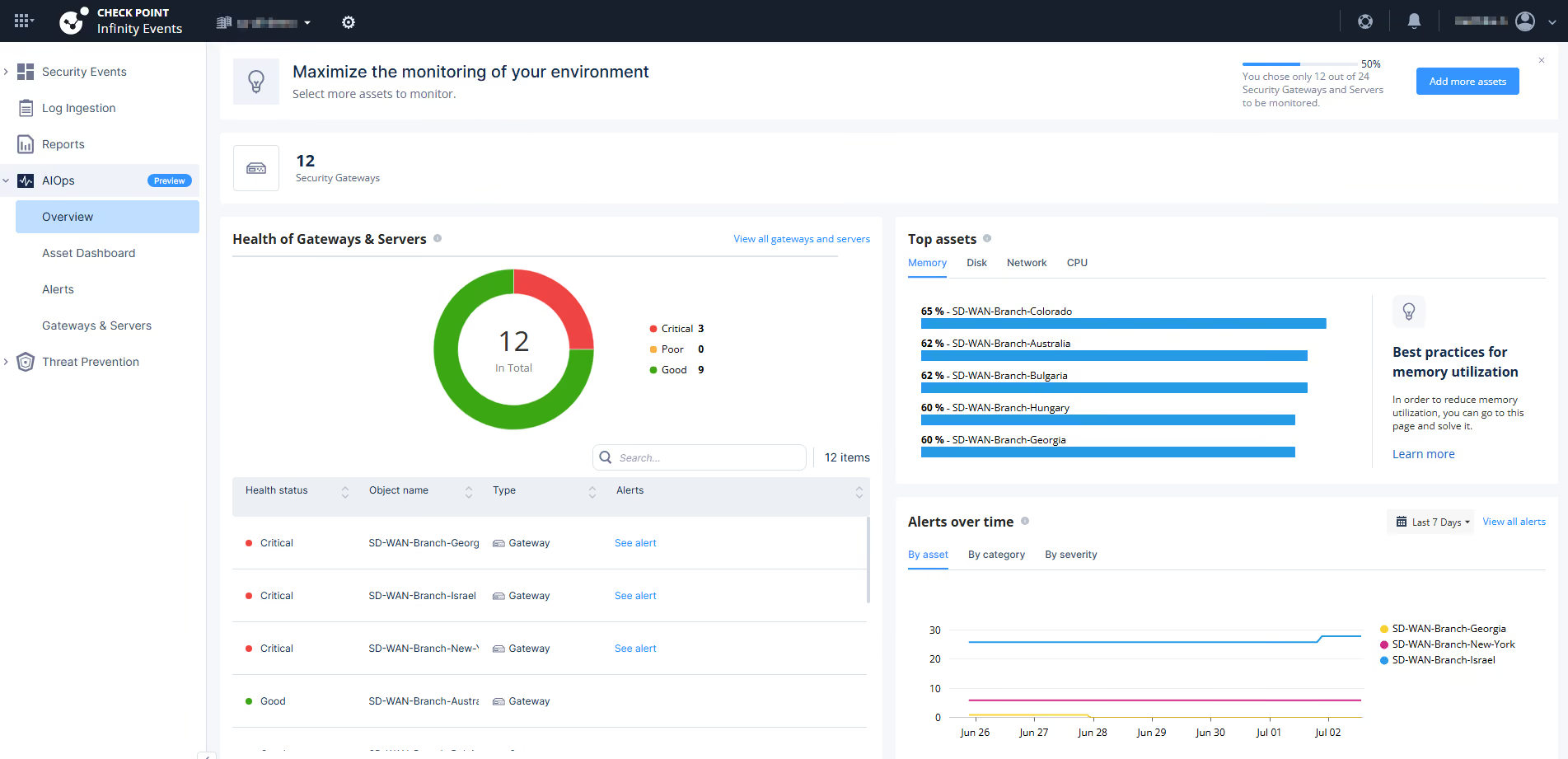
Check Point Infinity AI fait partie de la plateforme Infinity de Check Point, qui intègre les opérations réseau, cloud, e-mail et de sécurité au sein d'une architecture de sécurité unique. Ses capacités d'IA sont intégrées à l'ensemble de la plateforme pour soutenir la prévention des menaces, la réponse automatisée, la gestion des expositions et les opérations de sécurité unifiées.
Infinity AI vise à réduire la complexité des environnements hybrides en regroupant les contrôles dans un portail de gestion unique. Elle applique l'IA à la détection des menaces, à l'automatisation des politiques, à la priorisation des vulnérabilités et à l'orchestration inter-produits, aidant ainsi les entreprises à gérer les risques dans leurs environnements réseau, cloud, espace de travail et opérations de sécurité.
Fonctionnalités clés :
- Plateforme de sécurité unifiée: Regroupe les opérations réseau, cloud, e-mail et de sécurité dans un portail de gestion unique
- Prévention des menaces basée sur l'IA: Utilise une analyse pilotée par l'IA pour détecter et bloquer les logiciels malveillants, le phishing, les intrusions et les menaces avancées dans les environnements hybrides
- Playbooks de réponse automatisée: Permet des flux de travail d'atténuation automatisés entre les produits et les outils de sécurité tiers
- Gestion des expositions : Priorise les vulnérabilités et les risques en fonction des renseignements sur les menaces et de l'analyse contextuelle
- Prise en charge du pare-feu hybride maillé: Fournit une gestion unifiée pour les pare-feux cloud, virtuels et sur site au sein des environnements hybrides
Témoignage utilisateur :
« L'intégration transparente de la plateforme Check Point Infinity entre les environnements sur site et cloud est ce qui ressort le plus. Elle garantit une protection cohérente, que les charges de travail s'exécutent dans des centres de données, des clouds privés ou chez des fournisseurs de cloud public, ce qui est essentiel pour les architectures hybrides. » Avis utilisateur
Concentric AI
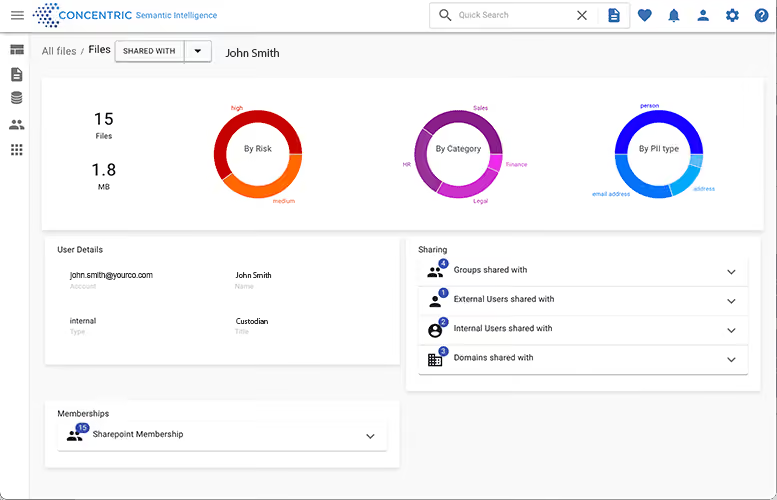
Concentric AI propose une plateforme de gouvernance de la sécurité des données basée sur sa technologie Semantic Intelligence. Cette plateforme est conçue pour découvrir, classifier et surveiller les données sensibles dans les environnements cloud et sur site, y compris les plateformes SaaS telles que Microsoft 365, Google Workspace, Slack, Snowflake et Jira.
Concentric AI se concentre sur la découverte automatisée des données, la gouvernance des accès et la prévention des pertes de données (DLP) basée sur la catégorie. Elle utilise une IA contextuelle pour identifier les données réglementées, telles que les informations personnelles (PII) et financières, gérer la rétention, répondre aux exigences de confidentialité et surveiller les flux de données entre les systèmes, y compris les applications d'IA générative.
Fonctionnalités clés :
- Classification par intelligence sémantique : Utilise une IA contextuelle pour découvrir et catégoriser les données structurées et non structurées dans les environnements cloud et sur site
- Gestion de la posture de sécurité des données : Identifie les données sensibles au repos et offre une visibilité sur les expositions et les lacunes en matière de gouvernance
- Gouvernance des accès aux données : Surveille les autorisations d'accès et aide à corriger les excès de privilèges dans les environnements d'entreprise
- DLP basée sur la catégorie: Applique des contrôles conscients des données pour réduire l'exposition en se basant sur la catégorie de contenu plutôt que sur la simple correspondance de modèles
- Contrôles de sécurité pour l'IA générative: Surveille et régit les interactions de données au sein des outils et applications d'IA générative
Témoignage utilisateur :
« Une configuration assez importante est nécessaire pour démarrer, mais c'était indispensable pour garantir les meilleurs résultats possibles avec le produit. » Avis utilisateur
CrowdStrike
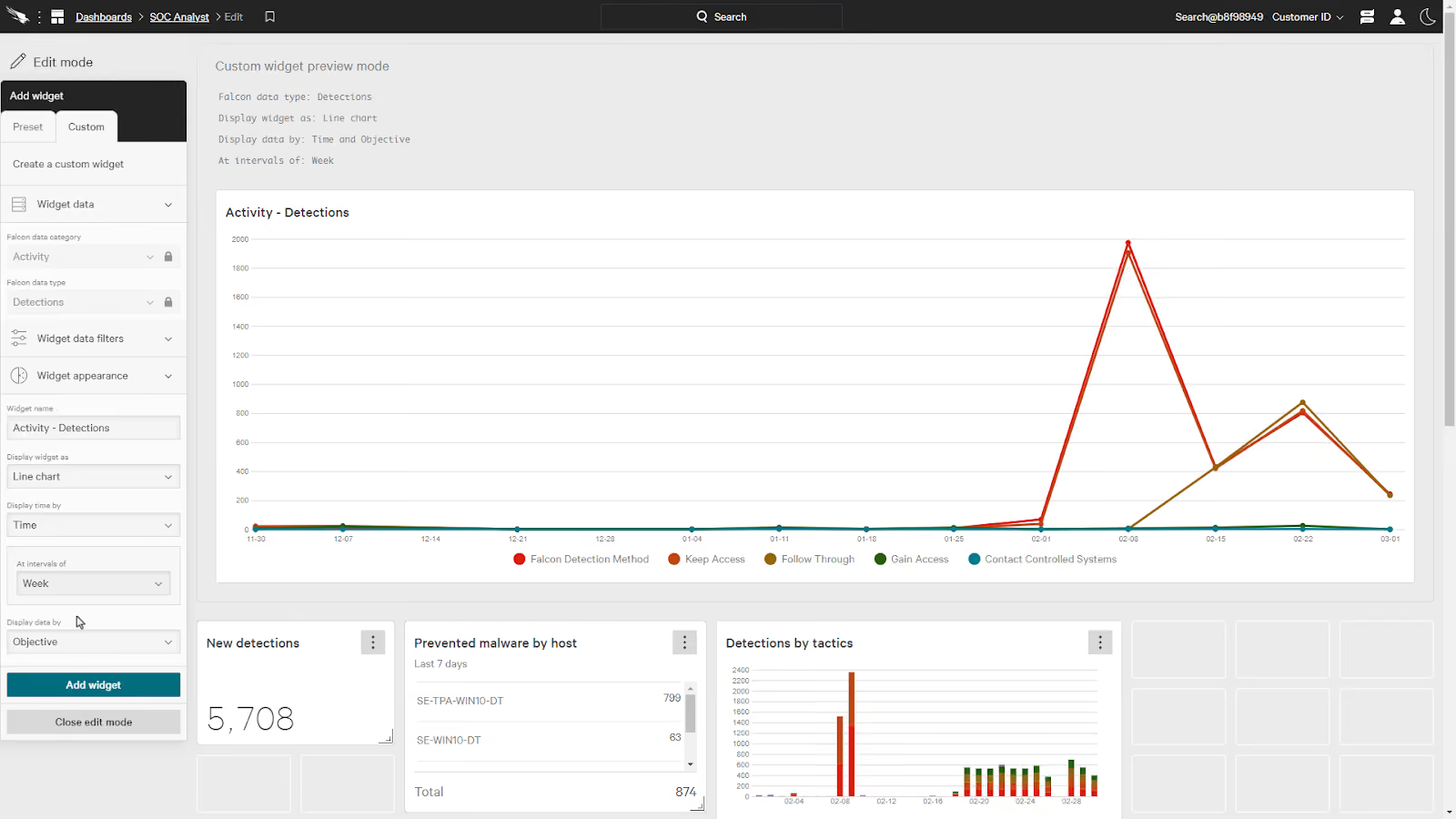
CrowdStrike propose une sécurité optimisée par l'IA via sa plateforme Falcon, qui regroupe la sécurité cloud, la protection des identités, le renseignement sur les menaces et les opérations de sécurité. La plateforme s'articule autour d'une couche de données unifiée appelée Enterprise Graph, qui corrèle la télémétrie provenant des appareils, des utilisateurs, des charges de travail cloud et des applications.
CrowdStrike positionne Falcon comme une plateforme de sécurité agentique conçue pour sécuriser les environnements d'IA ainsi que les infrastructures traditionnelles. Ses capacités s'étendent à l'analyse des modèles d'IA, à la protection des identités humaines et non humaines, à la détection et à la réponse étendues, ainsi qu'à l'automatisation par l'IA au sein du centre des opérations de sécurité.
Fonctionnalités clés :
- Automatisation du SOC par l'IA: Utilise Charlotte AI et des agents prêts à l'emploi pour assister les flux de travail de triage, d'investigation et de réponse aux alertes
- Sécurité cloud et CNAPP: Offre une protection unifiée, avec ou sans agent, pour les environnements cloud, incluant l'analyse des modèles d'IA et la protection des charges de travail
- Protection des identités: Sécurise les identités humaines, non humaines et liées à l'IA pour contrer l'utilisation abusive des identifiants et les attaques basées sur l'identité
Témoignage utilisateur :
« Excellentes performances et visibilité, outil très fiable. J'aimerais juste avoir un emplacement unique où centraliser toutes mes détections. » Avis utilisateur
Darktrace
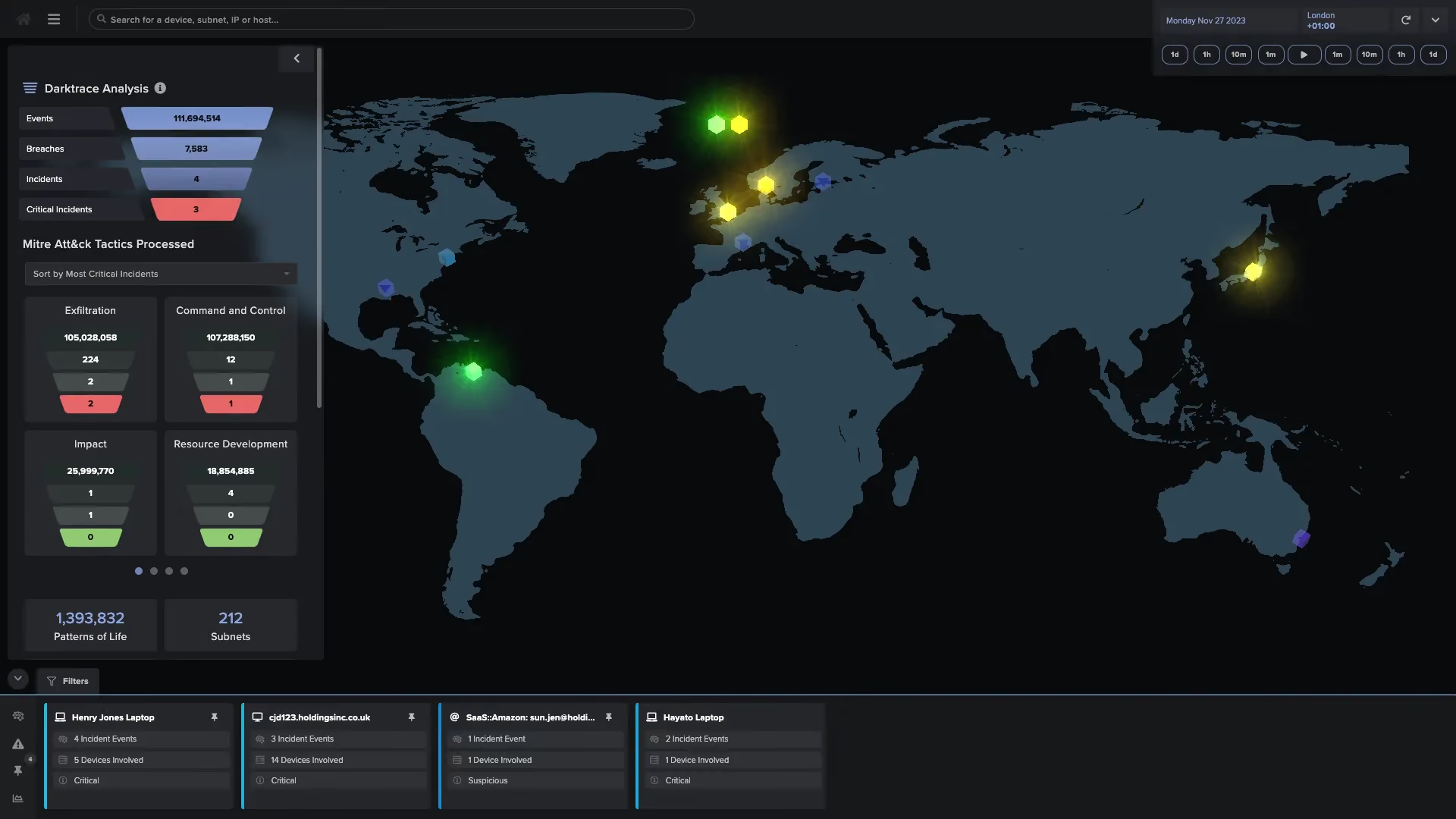
Darktrace propose une plateforme de cybersécurité nativement basée sur l'IA, conçue pour assurer une détection en temps réel et une réponse autonome sur les réseaux, le cloud, les e-mails, les identités, l'OT et les environnements d'IA. Sa plateforme ActiveAI Security utilise une IA auto-apprenante qui établit un modèle de l'activité normale d'une organisation et identifie les écarts pouvant signaler un risque.
Darktrace applique cette approche à tous les domaines, notamment via des capacités de sécurité de l'IA axées sur la surveillance de l'utilisation de l'IA et la détection d'activités anormales impliquant des données, des modèles et des flux de travail pilotés par l'IA. La plateforme corrèle les signaux à travers l'entreprise pour offrir une visibilité sur les vecteurs d'attaque et soutenir l'investigation et la réponse dans les environnements hybrides.
Fonctionnalités clés :
- Détection par IA auto-apprenante: Modélise le comportement normal des utilisateurs, des appareils, des charges de travail cloud et des applications pour identifier les activités anormales
- Réponse autonome: Prend des mesures automatisées pour contenir ou neutraliser les menaces en fonction de politiques et de seuils de risque prédéfinis
- Contrôles de sécurité pour l'IA: Surveille les applications et les flux de travail basés sur l'IA pour détecter les utilisations abusives, les accès anormaux et les risques liés aux données
- Détection et réponse réseau (NDR): Analyse le trafic réseau pour identifier les déplacements latéraux, les activités de commande et de contrôle, ainsi que tout autre comportement suspect
- Surveillance de la sécurité cloud: Observe l'activité dans les environnements hybrides et multicloud pour détecter les risques liés à la configuration et aux accès
Témoignage utilisateur :
« Les détections sont précises et directes ; cependant, l'interface utilisateur semble un peu complexe lorsque trop de détections sont liées entre elles. De plus, la capacité d'analyser les paquets au sein de votre réseau est utile. » Avis utilisateur
Exabeam Fusion
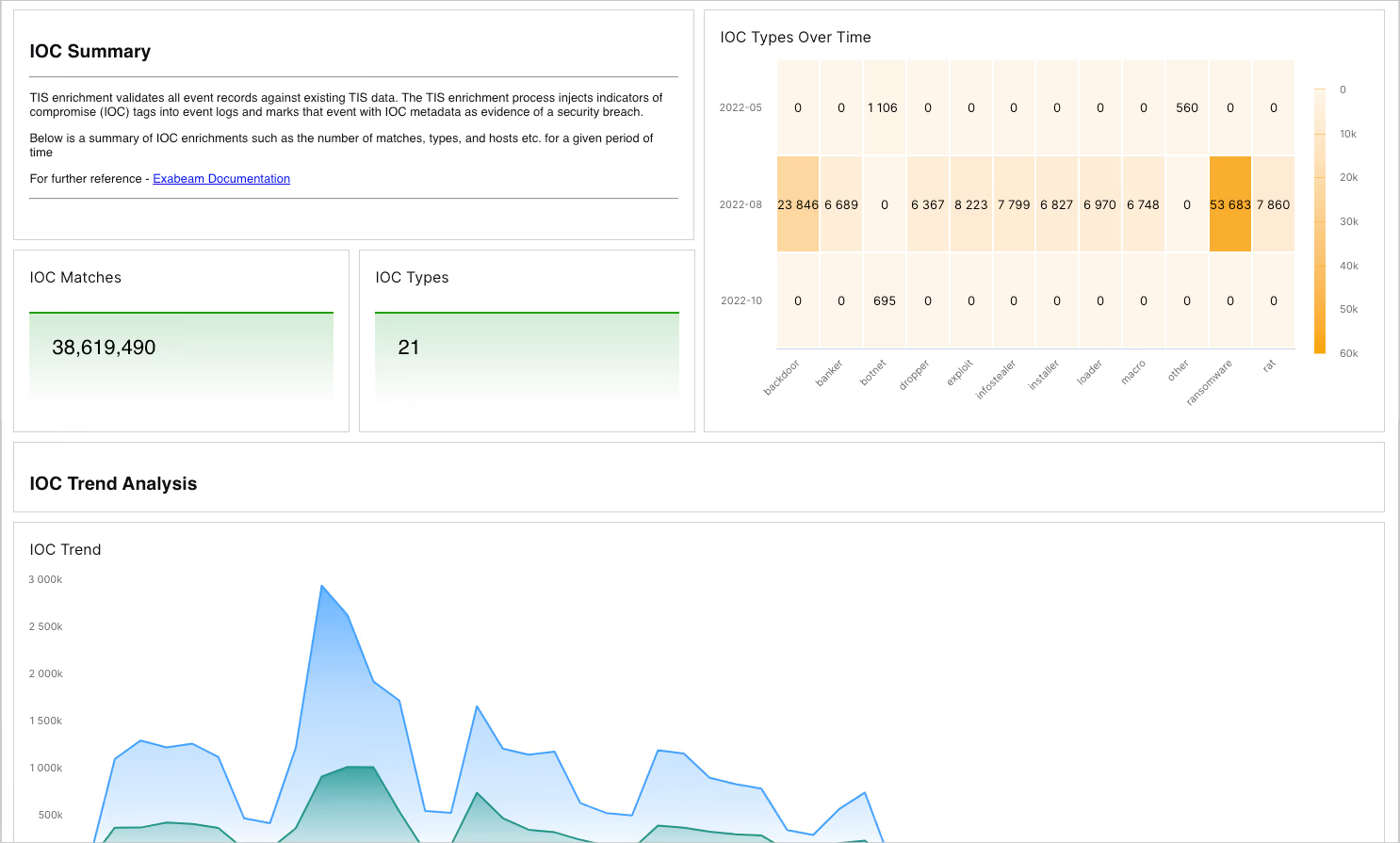
Exabeam propose une plateforme d'opérations de sécurité native dans le cloud, conçue pour prendre en charge la détection, l'investigation et la réponse aux menaces (TDIR). Sa plateforme New-Scale Fusion combine SIEM, analyse comportementale, gestion des journaux et automatisation au sein d'un environnement unifié pour les équipes de sécurité.
La plateforme applique l'IA et l'automatisation à l'ensemble des flux de travail de sécurité, notamment l'ingestion de journaux, l'analyse du comportement des utilisateurs et des entités (UEBA), la détection des menaces internes et les playbooks de réponse automatisés. Les agents Exabeam Nova assistent les équipes dans les tâches de triage, d'investigation et de reporting, tandis que la plateforme s'intègre aux outils tiers via des API et une automatisation basée sur des standards.
Fonctionnalités clés :
- SIEM natif dans le cloud: Ingère, analyse, normalise et recherche de grands volumes de données de journaux avec un stockage évolutif et des performances de requête élevées
- Analyse comportementale (UEBA): Établit des lignes de base de l'activité des utilisateurs et des entités pour identifier les comportements anormaux, y compris les menaces internes et l'utilisation abusive d'identifiants
- Agent Exabeam Nova: Applique l'automatisation basée sur l'IA pour faciliter le triage, l'investigation, la synthèse des cas et l'orchestration des flux de travail
- Automatisation basée sur des standards: Utilise l'automatisation low-code et les intégrations API pour rationaliser la détection et la réponse à travers de multiples outils de sécurité
- Contexte des entités et score de risque: Agrège les données provenant de divers systèmes pour créer des profils contextuels des utilisateurs, des appareils et des actifs afin de prioriser les risques
Témoignage utilisateur :
« Une offre de détection des menaces en temps réel correcte de la part de LogRhythm » Avis utilisateur
Forcepoint DLP
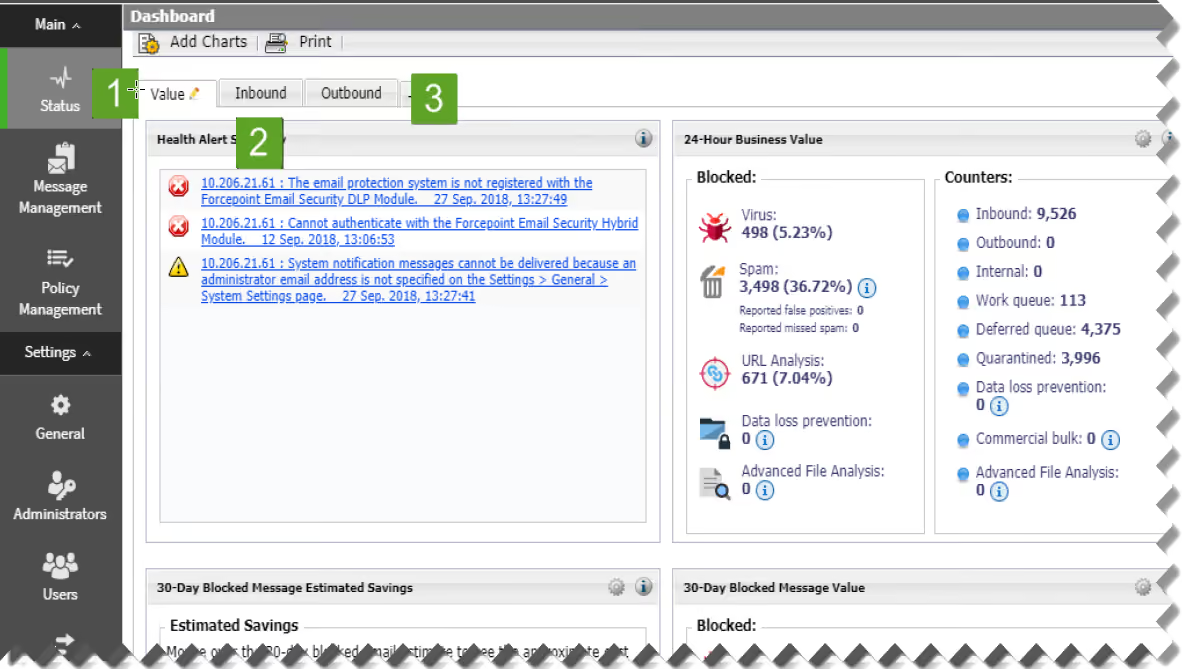
Forcepoint DLP est une plateforme de prévention des pertes de données conçue pour surveiller et contrôler l'utilisation des données sensibles sur les réseaux, les applications cloud et les e-mails. Elle offre une gestion unifiée des politiques et des rapports sur l'ensemble des environnements, avec des options de déploiement dans le cloud ou sur site.
La plateforme comprend une vaste bibliothèque de classificateurs et de modèles de conformité pour répondre aux exigences réglementaires mondiales. Forcepoint applique un contexte comportemental et une automatisation pilotée par l'IA pour identifier les données sensibles, appliquer les politiques et ajuster les contrôles en fonction de l'activité des utilisateurs et des signaux de risque.
Fonctionnalités clés :
- Classification par IA: Utilise l'IA et la technologie d'empreinte numérique pour identifier et classer les données sensibles structurées et non structurées
- Application contextuelle des politiques: Ajuste l'application des politiques en fonction du comportement de l'utilisateur, du niveau de risque et de la sensibilité des données
- Console de gestion unifiée: Centralise la configuration, la surveillance et le reporting pour les déploiements cloud et sur site
- Contrôles des données pour l'IA générative: Applique des politiques DLP aux outils d'IA générative pour prévenir le partage non autorisé de données
Témoignage utilisateur :
« C'est une solution adaptée aux grandes organisations disposant d'environnements informatiques complexes. Elle est très utile pour protéger les données et peut être personnalisée selon la politique de l'entreprise. Le principal inconvénient est son coût élevé, ce qui la rend difficile d'accès pour les petites structures. Ce logiciel est complexe pour un nouvel utilisateur. » Avis utilisateur
Lasso Security
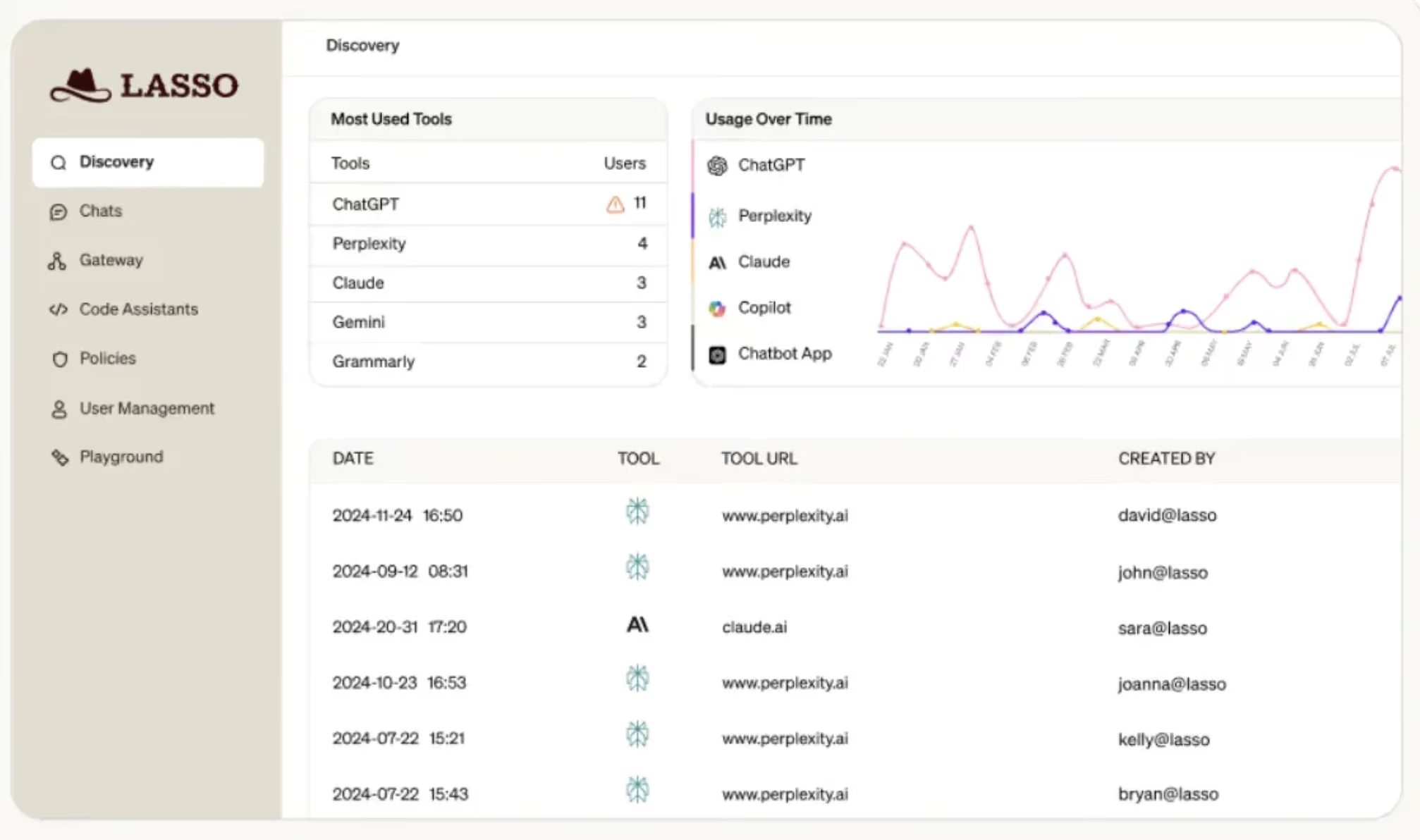
Lasso Security est une plateforme de sécurité dédiée à l'IA, axée sur la gouvernance et la protection de l'utilisation de l'IA, des agents IA et des applications IA au sein de l'entreprise. Elle offre une visibilité sur les outils d'IA autorisés et le « shadow AI », applique des garde-fous comportementaux et surveille les systèmes d'IA, de la phase de développement jusqu'à l'exécution.
La plateforme repose sur ce que Lasso appelle l'« Intent Security », qui analyse l'intention derrière les actions des agents plutôt que de se limiter à des règles statiques. Elle prend en charge le contrôle de l'utilisation de l'IA, la sécurité des agents et la protection des applications via une interface unique.
Fonctionnalités clés :
- Contrôle de l'utilisation de l'IA: Découvre et surveille les outils, modèles et agents d'IA dans toute l'entreprise pour éliminer le « shadow AI » et faire respecter les politiques
- Tests de sécurité des agents: Simule des attaques réelles, telles que l'injection de prompts et l'empoisonnement de mémoire, pour identifier les vulnérabilités des agents et des copilotes
- Détection basée sur l'intention: Analyse le comportement et l'intention des agents pour détecter les actions malveillantes ou risquées au sein des systèmes d'IA non déterministes
- Protection des applications IA: Applique des garde-fous et des spécifications comportementales pour contrôler la manière dont les applications IA accèdent aux données et aux systèmes externes
Témoignage utilisateur :
« Ils mettent l'accent sur l'IA et le coffre-fort de sécurité, tout en abordant certains des domaines clés pour notre activité. » Avis utilisateur
Palo Alto Prisma AIRS
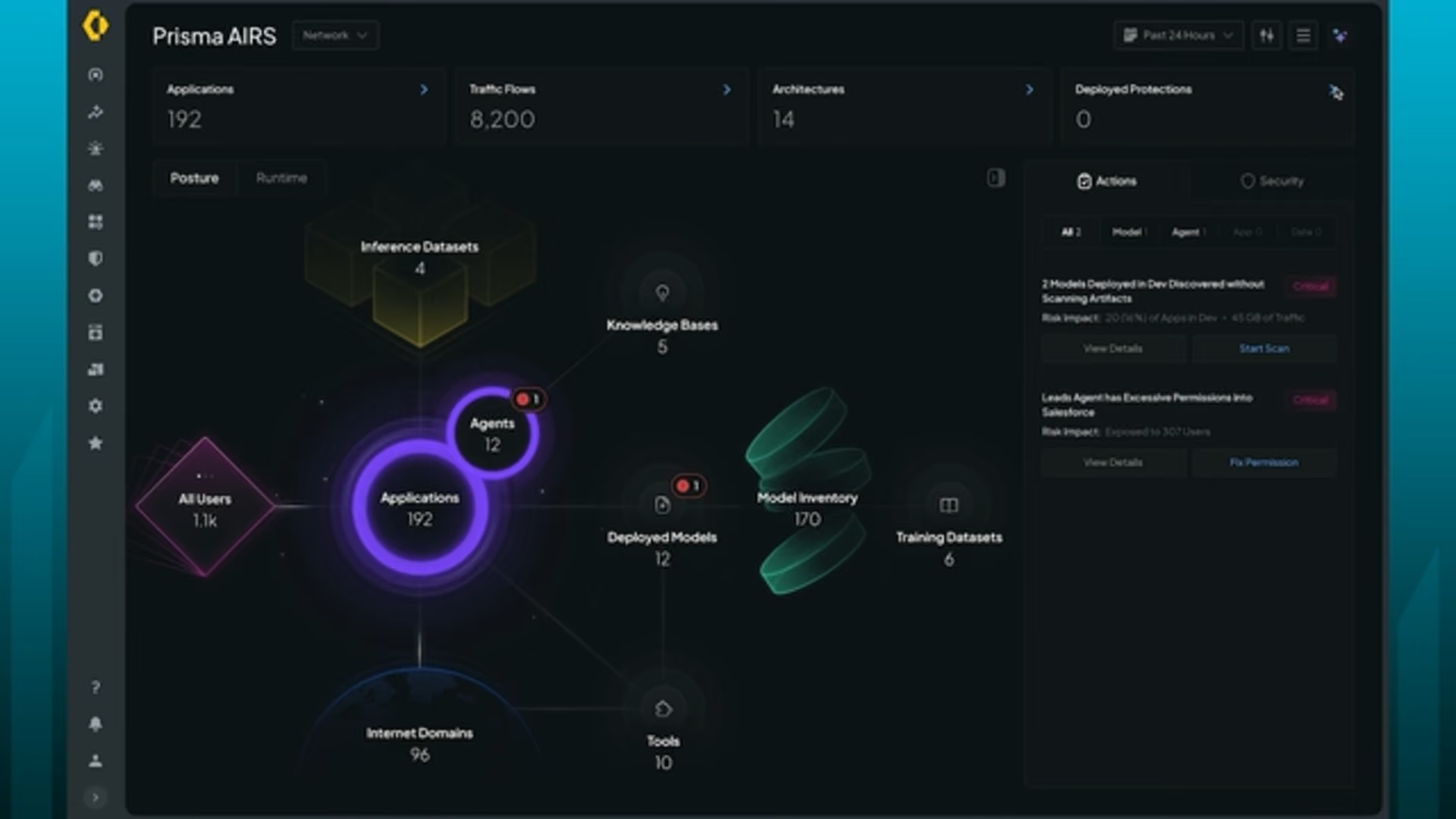
Prisma AIRS est une plateforme de sécurité IA conçue pour protéger les applications, modèles, agents et données d'IA tout au long de leur cycle de vie, du développement à l'exécution. Elle offre des contrôles centralisés pour la sécurité des modèles d'IA, la protection à l'exécution, le red teaming, la gestion de la posture et la sécurité des agents au sein d'une plateforme unique. Elle s'intègre aux environnements cloud et réseau existants pour aider les organisations à découvrir leurs actifs IA, évaluer les risques et appliquer des protections sur l'ensemble de leurs systèmes basés sur l'IA.
Fonctionnalités clés :
- Sécurité des modèles d'IA: Analyse les modèles d'IA et de ML avant leur déploiement pour détecter les vulnérabilités, notamment les menaces de désérialisation, le code malveillant intégré et la falsification de modèles.
- Pare-feu d'exécution IA: Protège les applications et modèles d'IA contre les injections de requêtes (prompt injection), les fuites de données sensibles, les sorties non sécurisées, les dénis de service sur les modèles et autres menaces à l'exécution.
- API d'exécution IA: Intègre des contrôles de sécurité directement dans les applications pour analyser les requêtes et les réponses des modèles de manière programmatique et signaler les violations de politique.
- Sécurité des agents IA: Sécurise les agents IA contre l'usurpation d'identité, la manipulation de la mémoire et l'utilisation abusive d'outils.
Témoignage utilisateur :
« Ce que j'apprécie le plus, c'est la facilité avec laquelle il identifie et classifie les appareils connectés sans avoir besoin d'agents ou d'une saisie manuelle fastidieuse. L'intégration avec les pare-feux Palo Alto existants est également un atout majeur. La tarification peut être un obstacle pour les environnements plus petits. C'est une solution davantage adaptée aux moyennes et grandes entreprises. La classification initiale des appareils peut parfois être un peu trop générique ou imprécise. » Avis utilisateur
Proofpoint
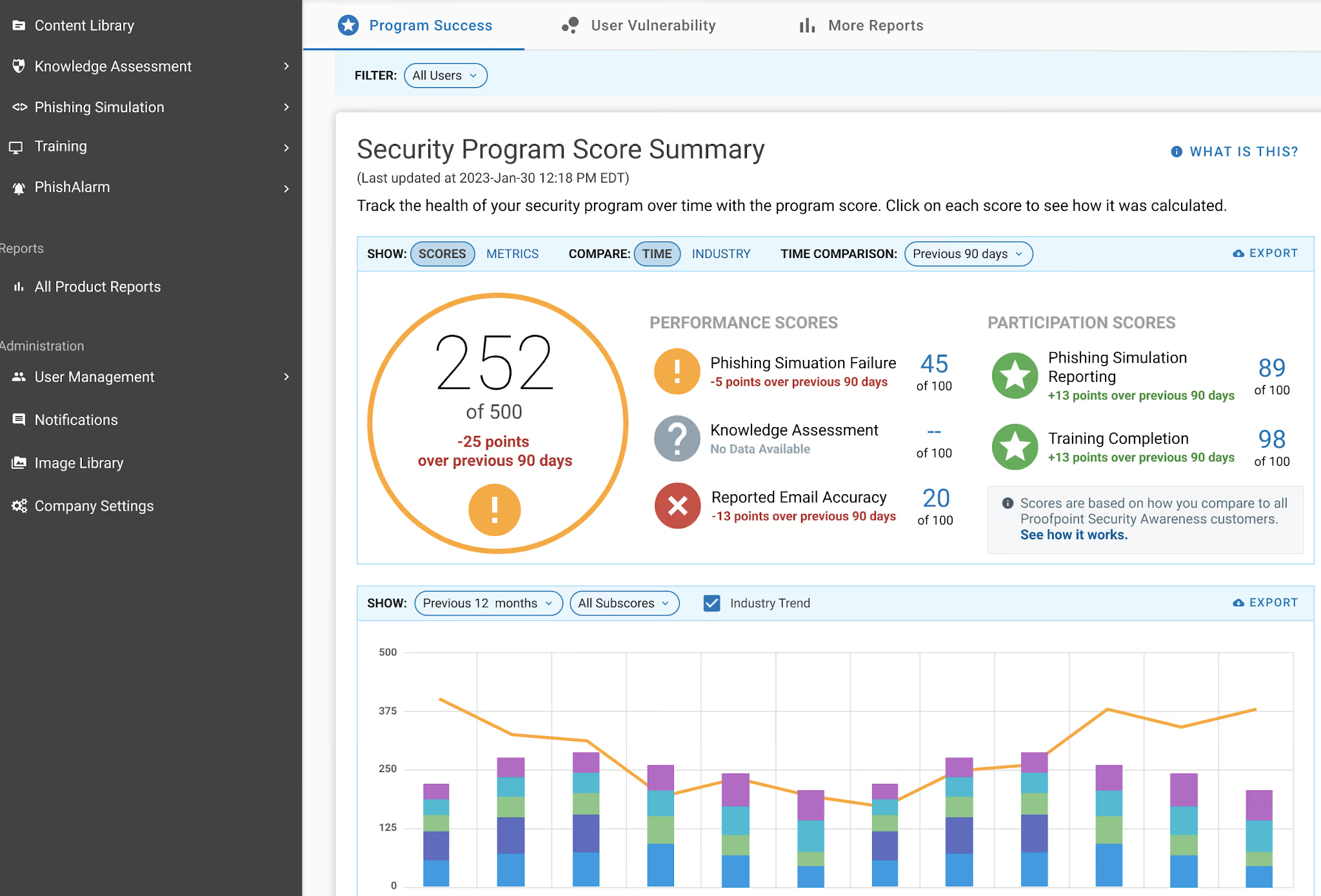
Proofpoint est une plateforme de sécurité centrée sur l'humain et les agents, dédiée à la protection des e-mails, des outils de collaboration, des applications cloud, des données et des agents IA. Elle est conçue pour sécuriser la manière dont les personnes et les agents IA interagissent avec les informations sensibles au sein des espaces de travail numériques modernes. En combinant protection contre les menaces, sécurité des données et gouvernance, elle permet de lutter contre la compromission d'e-mails professionnels, le phishing, les risques internes, la perte de données et les usages abusifs de l'IA dans les environnements collaboratifs.
Fonctionnalités clés :
- Sécurité des e-mails et de la collaboration: Détecte et bloque le phishing, la compromission d'e-mails professionnels, les logiciels malveillants et les menaces pilotées par l'IA sur les plateformes d'e-mail et de messagerie.
- Sécurité et gouvernance des données: Offre une visibilité sur l'emplacement des données sensibles, sur qui ou quoi y a accès, et sur la manière dont elles sont utilisées dans les outils cloud et collaboratifs.
- Prévention des pertes de données: Empêche la fuite de données sensibles par les utilisateurs, les comptes compromis et les outils d'IA grâce à l'application de politiques et à l'inspection du contenu.
- Protection des espaces de travail agents: Étend les contrôles aux agents IA interagissant avec les systèmes d'entreprise afin de réduire les risques d'utilisation abusive, d'exposition des données et de non-conformité.
Témoignage utilisateur :
« Proofpoint est un service très facile à utiliser, doté d'une équipe de support très réactive et d'une communauté solide. Il peut toutefois y avoir occasionnellement de légers délais dans le service de messagerie lors de l'établissement des bases de référence ou de la résolution de problèmes de domaine. » Avis des utilisateurs
SentinelOne
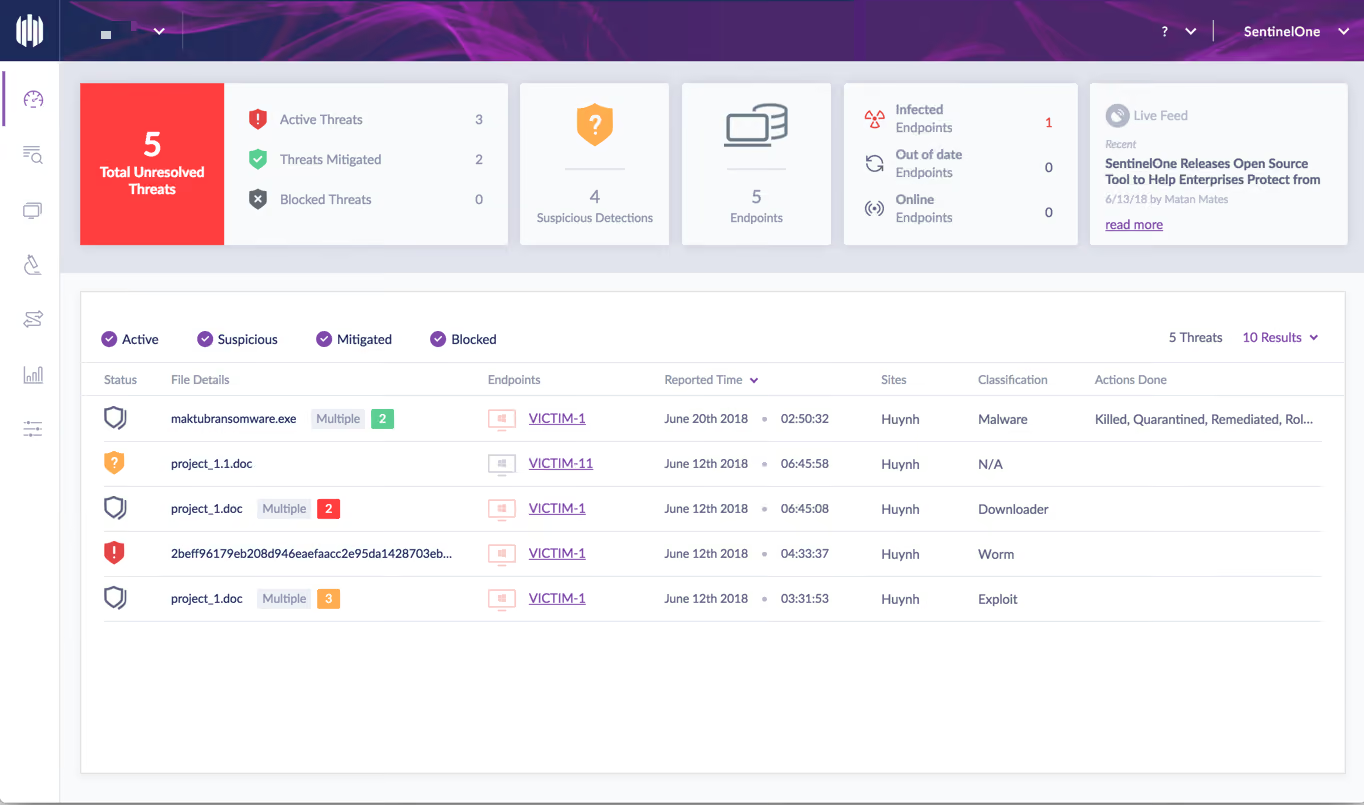
SentinelOne est une plateforme de cybersécurité basée sur l'IA qui unifie la sécurité du cloud, des identités et du réseau. Elle est conçue pour offrir une visibilité, une détection et une réponse automatisée sur l'ensemble des environnements d'entreprise depuis une console unique.
SentinelOne combine la sécurité des charges de travail cloud, la protection des identités, l'analyse pilotée par l'IA et la détection et réponse gérées pour aider les organisations à prévenir, détecter et répondre aux menaces en temps réel.
Fonctionnalités clés :
- Sécurité des charges de travail cloud: Sécurise les machines virtuelles, les conteneurs et les environnements Kubernetes dans les clouds publics, privés et hybrides
- Détection des menaces liées aux identités: Surveille l'infrastructure d'identité, telle qu'Active Directory et Entra ID, pour détecter l'utilisation abusive d'identifiants et les attaques basées sur l'identité
- Analyses basées sur l'IA et SIEM: Utilise la détection et l'analyse pilotées par l'IA pour enquêter sur les incidents et corréler les activités entre les différents domaines
- Réponse autonome: Automatise les actions de confinement et de remédiation à la vitesse de la machine sur l'ensemble des systèmes, du cloud et des surfaces d'identité
Témoignage client :
« Le déploiement chez le client a été simple. L'ergonomie du portail pourrait être améliorée. J'ai souvent remarqué que les informations n'y sont pas organisées de manière logique. » Avis utilisateur
Varonis
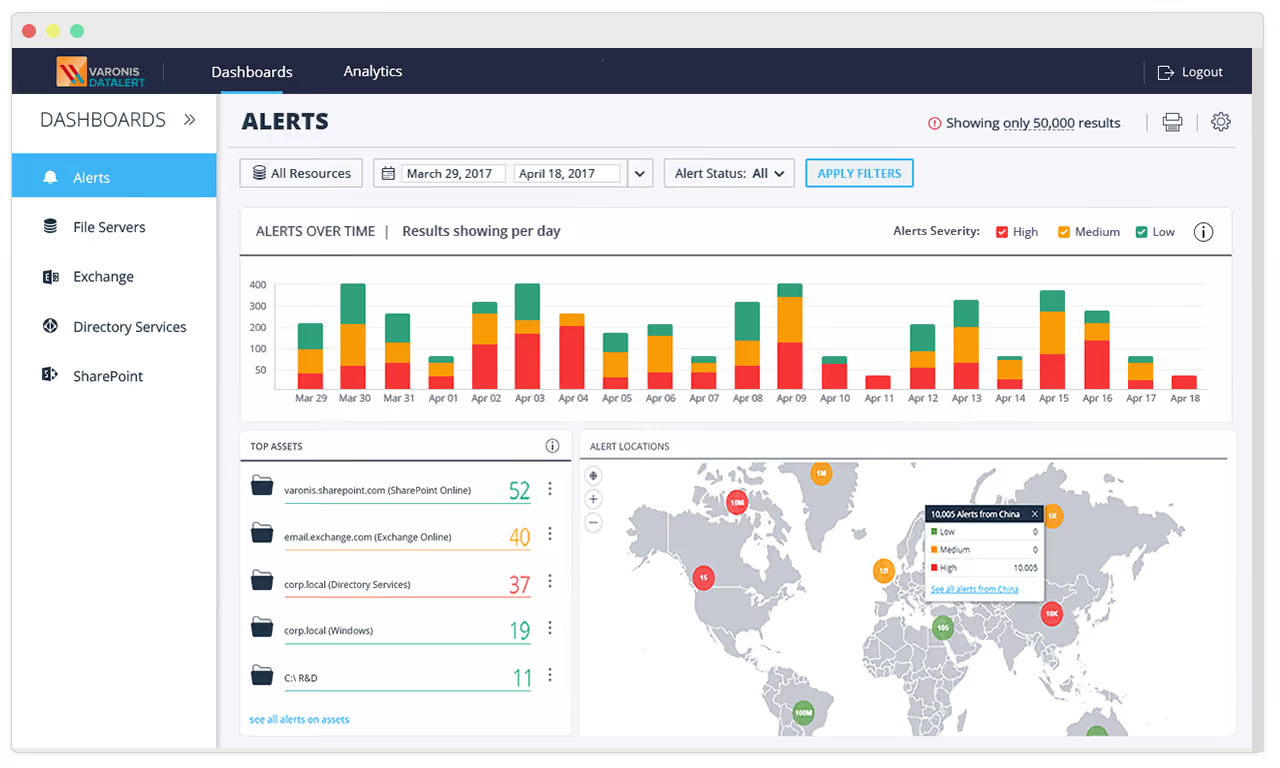
Varonis propose une plateforme unifiée de sécurité des données dédiée à la découverte, à la classification, à la surveillance et à la protection des données sensibles dans les environnements cloud, SaaS, sur site et hybrides. La plateforme centre la sécurité sur les données elles-mêmes, aidant les organisations à réduire leur exposition, à appliquer une gouvernance et à répondre automatiquement aux menaces.
Fonctionnalités clés :
- Découverte et classification des données: Analyse en continu les données structurées et non structurées dans le cloud, le SaaS et les centres de données, en utilisant une classification basée sur des règles et pilotée par l'IA
- Gestion de la posture de sécurité des données: Identifie les erreurs de configuration, les autorisations excessives et les données exposées afin de limiter le rayon d'action des menaces.
- Gouvernance de l'accès aux données: Supprime les utilisateurs disposant de privilèges excessifs, les comptes fantômes et les liens de partage risqués grâce à des politiques de remédiation automatisées.
- UEBA centrée sur les données: Détecte les comportements anormaux tels que les accès inhabituels aux fichiers, l'élévation de privilèges et les tentatives d'exfiltration de données.
- Prévention des pertes de données (DLP): Applique des étiquettes et fait respecter des politiques pour empêcher le partage ou l'utilisation abusive de données sensibles.
Témoignage utilisateur :
« C'est un bon produit, mais il nécessite beaucoup de personnalisation pour être réellement utile. » Avis utilisateur
Fonctionnalités clés à évaluer pour choisir un logiciel de sécurité des données IA
Choisir une plateforme de sécurité des données pour l'IA consiste à déterminer dans quelle mesure elle s'adapte à votre environnement de données, à votre stratégie d'adoption de l'IA et à votre profil de risque. Le bon logiciel doit vous offrir une visibilité claire, appliquer des contrôles sans ralentir l'activité et évoluer à mesure que l'utilisation de l'IA se développe. Recherchez les éléments suivants :
Visibilité et découverte des données
Une sécurité des données IA efficace commence par une connaissance précise des données dont vous disposez, de leur emplacement et de leur utilisation. Sans une visibilité continue sur le stockage cloud, les applications SaaS, les bases de données, les terminaux et les outils d'IA, des données sensibles peuvent facilement être exposées à l'insu des équipes de sécurité.
Une plateforme robuste doit découvrir et classer automatiquement les données structurées et non structurées, les associer aux utilisateurs et aux agents IA, et illustrer leur circulation à travers les systèmes. Elle doit également fournir un contexte sur la propriété, les niveaux d'accès et le partage externe afin que les équipes puissent évaluer l'exposition réelle, au-delà des simples résultats bruts.
Menaces de sécurité spécifiques à l'IA (AI-SPM)
Les systèmes d'IA introduisent des risques que les contrôles de sécurité traditionnels n'ont pas été conçus pour gérer. Les modèles peuvent être manipulés par injection de requêtes (prompt injection), les agents peuvent agir sur la base d'autorisations excessives et des données sensibles peuvent être exposées via des sorties générées ou des intégrations externes.
Une capacité de gestion de la posture de sécurité de l'IA doit identifier où les modèles, agents et applications d'IA sont déployés, évaluer leurs configurations et autorisations, et signaler les comportements à risque. Elle doit également surveiller l'activité en temps réel pour détecter les utilisations abusives, les violations de politiques et les manipulations adverses spécifiques aux flux de travail de l'IA.
Confidentialité et gouvernance des données
Les systèmes d'IA traitent souvent des données réglementées et sensibles, ce qui rend les contrôles de confidentialité essentiels. Lorsque des données sont utilisées dans des requêtes, des jeux d'entraînement ou des outils d'IA connectés, les organisations ont besoin de politiques claires régissant la manière dont ces données sont consultées, conservées et partagées.
Une plateforme robuste doit appliquer des contrôles d'accès basés sur les rôles, utiliser des étiquettes de données de manière cohérente et automatiser la remédiation des données surexposées ou mal configurées. Elle doit également aider à aligner l'utilisation de l'IA sur les normes de gouvernance internes et les réglementations externes, en offrant une visibilité claire sur qui a accédé à quelles données et dans quel but.
Infrastructure technique et performance
Les systèmes d'IA fonctionnent à grande vitesse et à grande échelle, souvent dans des environnements cloud et SaaS distribués. Les contrôles de sécurité doivent être capables de traiter d'importants volumes de données, d'appels API et d'interactions avec les modèles sans introduire de latence ni perturber les flux de travail.
Évaluez si la plateforme prend en charge les déploiements cloud-natifs et hybrides, s'intègre via des API et s'adapte pour gérer la surveillance et l'application des règles en temps réel. Elle doit assurer une protection cohérente dans tous les environnements tout en maintenant la performance, la fiabilité et l'efficacité opérationnelle.
Conformité et auditabilité
L'utilisation de l'IA touche souvent des données réglementées, ce qui signifie que les équipes de sécurité ont besoin de preuves claires sur la manière dont ces données sont consultées et protégées. Il ne suffit pas d'appliquer des contrôles ; vous devez également être en mesure de démontrer leur efficacité.
Une plateforme robuste doit conserver des journaux détaillés des accès aux données, des interactions avec l'IA, de l'activité des requêtes et des sorties, ainsi que des actions de remédiation. Elle doit également générer des rapports prêts pour l'audit et mapper les contrôles de sécurité aux cadres réglementaires, aidant ainsi les organisations à répondre aux exigences de conformité et à faire face aux audits ou aux enquêtes en toute confiance.
Gestion des vulnérabilités
Les environnements d'IA étendent la surface d'attaque aux modèles, API, agents et intégrations tierces. Chaque composant peut introduire des faiblesses, que ce soit par des configurations non sécurisées, des identifiants exposés, des dépendances vulnérables ou des failles intégrées dans des modèles tiers.
Une plateforme efficace doit évaluer ces risques en continu en analysant les modèles avant leur déploiement, en identifiant les erreurs de configuration et en surveillant les intégrations pour détecter toute exposition. Elle doit également prendre en charge les tests adverses ou le « red teaming » pour découvrir les faiblesses des applications et agents d'IA avant qu'ils ne puissent être exploités.
Ce que disent les Redditors sur les meilleures plateformes de sécurité des données IA
Nous avons analysé plusieurs fils de discussion Reddit pour voir quelles plateformes de sécurité des données IA sont recommandées par les professionnels. D'après les retours de plus de 70 professionnels de la sécurité de l'IA, Cyera, Varonis et CrowdStrike ont reçu les avis les plus positifs, tandis que Darktrace, Forcepoint DLP et Check Point Infinity AI ont suscité le sentiment le plus négatif.
Logiciels de sécurité des données IA avec les avis Reddit les plus positifs
- Cyera : Le sentiment est très largement positif pour Cyera : 88 % des professionnels de la sécurité de l'IA le recommandent, tandis que 12 % expriment un avis neutre ou lié à des besoins de paramétrage. Les utilisateurs de Reddit louent régulièrement sa découverte multi-cloud sans agent, la rapidité de sa classification des données sensibles et sa capacité à cartographier les interactions entre les outils d'IA et les données. Beaucoup soulignent qu'il permet de réduire rapidement les risques d'exposition sans submerger les équipes d'alertes inutiles.
- Varonis : Le sentiment est positif pour Varonis : 75 % des professionnels de la sécurité de l'IA le recommandent, tandis que 25 % mentionnent un excès d'alertes ou des limitations liées à l'écosystème Microsoft. Les utilisateurs soulignent sa force en matière de gouvernance des accès basée sur l'identité et de découverte de données sensibles, particulièrement dans les environnements fortement axés sur Microsoft. Certains notent qu'il peut être bruyant au départ, mais puissant une fois correctement configuré.
- CrowdStrike : Le sentiment est positif pour CrowdStrike : 72 % des professionnels de la sécurité de l'IA le recommandent, tandis que 28 % émettent un avis neutre. Les praticiens apprécient sa grande visibilité à l'exécution et ses capacités de détection lorsqu'il est intégré à des stratégies de sécurité des données plus larges.
Outils de sécurité des données IA ayant reçu des retours plus négatifs sur Reddit
- Check Point Infinity AI : Le sentiment est négatif pour Check Point Infinity AI : 60 % des professionnels de la sécurité de l'IA expriment des avis mitigés à critiques, contre 40 % d'avis positifs. Bien qu'il soit reconnu pour son exhaustivité, certains praticiens le jugent complexe à déployer et davantage axé sur une couverture de sécurité globale que sur une visibilité ciblée des données liées à l'IA.
- Darktrace : Le sentiment est négatif pour Darktrace : 62 % des professionnels de la sécurité de l'IA expriment des préoccupations, tandis que 38 % offrent des retours positifs ou neutres. Les critiques se concentrent sur la fatigue liée aux alertes, l'opacité des décisions prises par l'IA (« boîte noire ») et les besoins importants en paramétrage avant d'en tirer une réelle valeur.
- Forcepoint DLP : Le sentiment est négatif pour Forcepoint DLP : 65 % des professionnels de la sécurité de l'IA soulignent des difficultés, contre 35 % d'avis positifs. Les utilisateurs décrivent fréquemment les approches DLP traditionnelles comme bruyantes et difficiles à adapter aux flux de données spécifiques à l'IA, ce qui nécessite un ajustement constant des politiques.
Dans les fils de discussion Reddit analysés, les autres logiciels de sécurité des données IA mentionnés dans la liste ci-dessus n'ont été évoqués que brièvement, sans détails substantiels sur leur mise en œuvre, ou n'apparaissaient pas assez fréquemment pour permettre une classification fiable du sentiment.
Sources
https://www.reddit.com/r/fintech/comments/1q19een/best_ai_data_privacy_platform_for_2026/
https://www.reddit.com/r/fintech/comments/1quos2w/best_data_security_solutions_whats_actually_worth/
https://www.reddit.com/r/fintech/comments/1ox9voe/looking_for_ai_data_security_platform/
https://www.reddit.com/r/AskNetsec/comments/1qi8wjy/best_ai_data_security_platform_looking_for/
Protégez vos initiatives d'IA avec la meilleure plateforme de sécurité des données IA
L'IA se développe rapidement au sein des organisations, dépassant souvent la visibilité des équipes de sécurité. Les agents disposant de privilèges excessifs, les outils d'IA fantômes, les données mal classifiées et une gouvernance défaillante peuvent accroître discrètement votre exposition. La plateforme de sécurité des données IA adaptée vous aide à découvrir où se trouvent vos données sensibles, à comprendre qui ou quoi peut y accéder, à surveiller les interactions avec l'IA et à réduire les risques.
Cyera fournit un plan de contrôle unifié axé sur les données qui sécurise celles-ci au repos, en transit et en cours d'utilisation, en combinant DSPM, AI-SPM, gouvernance des accès et protection en temps réel dans les environnements cloud, SaaS et hybrides.
FAQ sur la plateforme de sécurité des données IA
Quels sont les problèmes de sécurité liés aux données IA ?
Les systèmes d'IA dépendent de volumes importants de données sensibles pour l'entraînement, le réglage fin et l'utilisation en temps réel. À mesure que ces données circulent entre les outils, les modèles, les API et les environnements cloud, le nombre de points d'exposition augmente, tout comme les risques. Les problèmes de sécurité courants incluent :
- Exposition de données sensibles : Des données confidentielles peuvent être utilisées dans des jeux d'entraînement ou des invites sans contrôles appropriés, entraînant des fuites involontaires.
- Accès aux privilèges excessifs : Les utilisateurs, les comptes de service ou les agents IA peuvent disposer d'un accès aux données plus large que nécessaire.
- Utilisation de l'IA fantôme: Les employés peuvent télécharger des informations sensibles dans des outils d'IA non autorisés, échappant ainsi à la surveillance informatique.
- Mauvaise classification des données : Un étiquetage médiocre ou une découverte incomplète rend difficile l'application des contrôles appropriés aux bonnes données.
- Injection d'invites et exfiltration de données : Les attaquants peuvent manipuler les entrées pour extraire des données sensibles des modèles ou des systèmes connectés.
- Risque lié à la chaîne d'approvisionnement des modèles : Les modèles tiers et les mises à jour fréquentes peuvent introduire des vulnérabilités affectant la manière dont les données sont traitées ou exposées.
Quels sont les composants clés de la sécurité de l'IA ?
La sécurité de l'IA se concentre sur la protection des données, des modèles et des agents d'IA tout au long de leur cycle de vie, du développement au déploiement et à l'utilisation en temps réel. Elle commence par la découverte et la classification des données sensibles afin que les organisations comprennent quelles informations sont utilisées et où elles se trouvent.
Elle inclut également la gouvernance des accès pour contrôler qui ou quoi, y compris les agents d'IA, peut accéder à ces données, ainsi que la sécurité des modèles pour détecter les vulnérabilités avant le déploiement. La surveillance à l'exécution est essentielle pour détecter en temps réel les injections de requêtes (prompt injection), les fuites de données et les comportements anormaux, tandis que le red teaming et l'application des politiques permettent de tester et de garantir une utilisation sûre de l'IA. Enfin, les capacités de journalisation et de reporting assurent la conformité et offrent une visibilité sur le fonctionnement des systèmes d'IA au sein de l'entreprise.
Quels sont les risques liés à la sécurité des données d'IA ?
Les risques liés à la sécurité des données d'IA découlent de la rapidité avec laquelle les systèmes d'IA accèdent, traitent et distribuent des informations sensibles dans des environnements multiples. Lorsque la gouvernance et la surveillance ne suivent pas le rythme de l'adoption, de petites failles peuvent entraîner une exposition à grande échelle.
L'un des risques majeurs est l'exfiltration de données, où des informations sensibles sont exposées involontairement via des requêtes, des sorties de modèles ou des applications connectées. Des agents d'IA disposant de privilèges excessifs peuvent accéder à beaucoup plus de données que prévu et agir automatiquement, augmentant ainsi l'impact potentiel d'une simple erreur de configuration.
Il existe également un risque lié à la chaîne d'approvisionnement des modèles, où les vulnérabilités des modèles tiers ou les mises à jour fréquentes modifient la manière dont les données sont traitées. Les injections de requêtes et les manipulations adverses peuvent inciter les modèles à divulguer des informations confidentielles ou à effectuer des actions non intentionnelles.
Sans une visibilité claire sur l'utilisation de l'IA, les organisations peuvent ignorer quels outils sont utilisés, à quelles données ils accèdent ou comment les résultats sont générés, ce qui accroît les risques en matière de sécurité et de réglementation.
Évaluez votre niveau de préparation en matière de sécurité des données d'IA avec ce test gratuit

Get your AI Security Assessment
.jpg)
.jpg)

.svg)