.avif)

Data loss prevention (DLP) software has become essential as data spreads across cloud apps, endpoints, and AI systems, yet many organizations still don’t know where sensitive data lives or how it’s being used. As a result, 83% of organizations reported at least one insider attack, with many incidents tied to mishandled or exposed data.
At the same time, employees are handling sensitive data in more ways than ever. They paste data into AI tools, upload files to SaaS platforms, share documents externally, and move information between systems. Each action creates a new risk point, and many of these interactions happen outside traditional security controls.
To handle these risks and prevent data breaches, organizations are adjusting their DLP approaches. Modern platforms combine DLP with data security posture management (DSPM), AI-driven classification, and continuous monitoring to improve visibility and control. In this guide, you’ll find the best data loss prevention software, along with key features, strengths, and trade-offs to help you choose the right solution.
Key takeaways:
- Data loss prevention software helps organizations reduce risk by controlling how sensitive data moves across endpoints, cloud platforms, and SaaS applications.
- Modern DLP solutions provide visibility into where sensitive data exists and how users interact with it, enabling more accurate detection and response.
- Effective DLP combines data discovery, classification, user behavior monitoring, and policy enforcement to prevent both accidental and intentional data exposure.
- Not all DLP solutions are built the same, so organizations should evaluate tools based on their data environment, integration needs, and level of security maturity.
Best DLP software: Quick overview
These data loss prevention solutions were selected based on their effectiveness in helping organizations discover, classify, and protect sensitive data across modern environments.
To develop this list, we reviewed each platform’s core capabilities, including data discovery methods, classification accuracy, policy enforcement, and endpoint, cloud app, and SaaS platform monitoring. We also considered how easy each tool is to deploy and manage, along with feedback from real users on sites like G2 to understand performance, usability, and support in practice.
We placed additional weight on capabilities that matter most today, such as AI-driven detection, integration with DSPM, visibility across hybrid and multi-cloud environments, and the ability to track and control how data moves through AI tools, collaboration platforms, and external channels.
What Is Data Loss Prevention Software?
DLP software helps organizations detect, monitor, and protect sensitive data from exposure, leakage, or misuse. It tracks how data is stored, accessed, and shared across endpoints, cloud apps, email, and internal systems, then enforces policies to stop unauthorized actions.
These tools identify sensitive information, such as personal data, financial records, intellectual property, and regulated data, in line with frameworks like GDPR, CCPA, HIPAA, and PCI DSS. Once identified, they can block, alert, or restrict actions like downloading, copying, emailing, or uploading data outside approved channels.
This level of control helps reduce the risk of the 68% of breaches that involve a human element, including errors, misuse, or social engineering.
Key Features of Data Loss Prevention Software
Modern DLP software protects sensitive information from unauthorized access, leakage, and theft by continuously monitoring networks, endpoints, and services. These features help security teams reduce risk without slowing down everyday work.
- AI-powered data loss prevention: Uses machine learning to identify sensitive data, detect risky behavior, and reduce false positives. It adapts to how users handle data, allowing teams to focus on real risks.
- Unified DSPM with DLP: Combines data discovery and classification with real-time prevention. This approach helps teams understand where sensitive data lives before enforcing controls on how it moves.
- Data flow control: Monitors and restricts how data moves across email, cloud apps, endpoints, and AI tools. It helps prevent unauthorized sharing, uploads, or transfers before data leaves approved environments.
- Access trail and activity monitoring: Tracks who accesses sensitive data, when, and what actions they take. This visibility helps security teams investigate incidents and identify abnormal behavior tied to insider risk.
- Policy automation: Creates, tests, and refines security policies based on real usage patterns. This reduces manual work and helps teams keep pace as data usage and risk evolve.
Best Data Loss Prevention Software
Choosing the right DLP software depends on how your organization stores, uses, and moves data. Some platforms focus on email and local environments, while others extend into cloud, SaaS, and AI environments. The right fit comes down to your data footprint, risk exposure, and the level of visibility you need across systems.
Here are some great options on the market today.
Cyera: Best for enterprise cloud-first DSPM-led DLP across SaaS, cloud, and AI
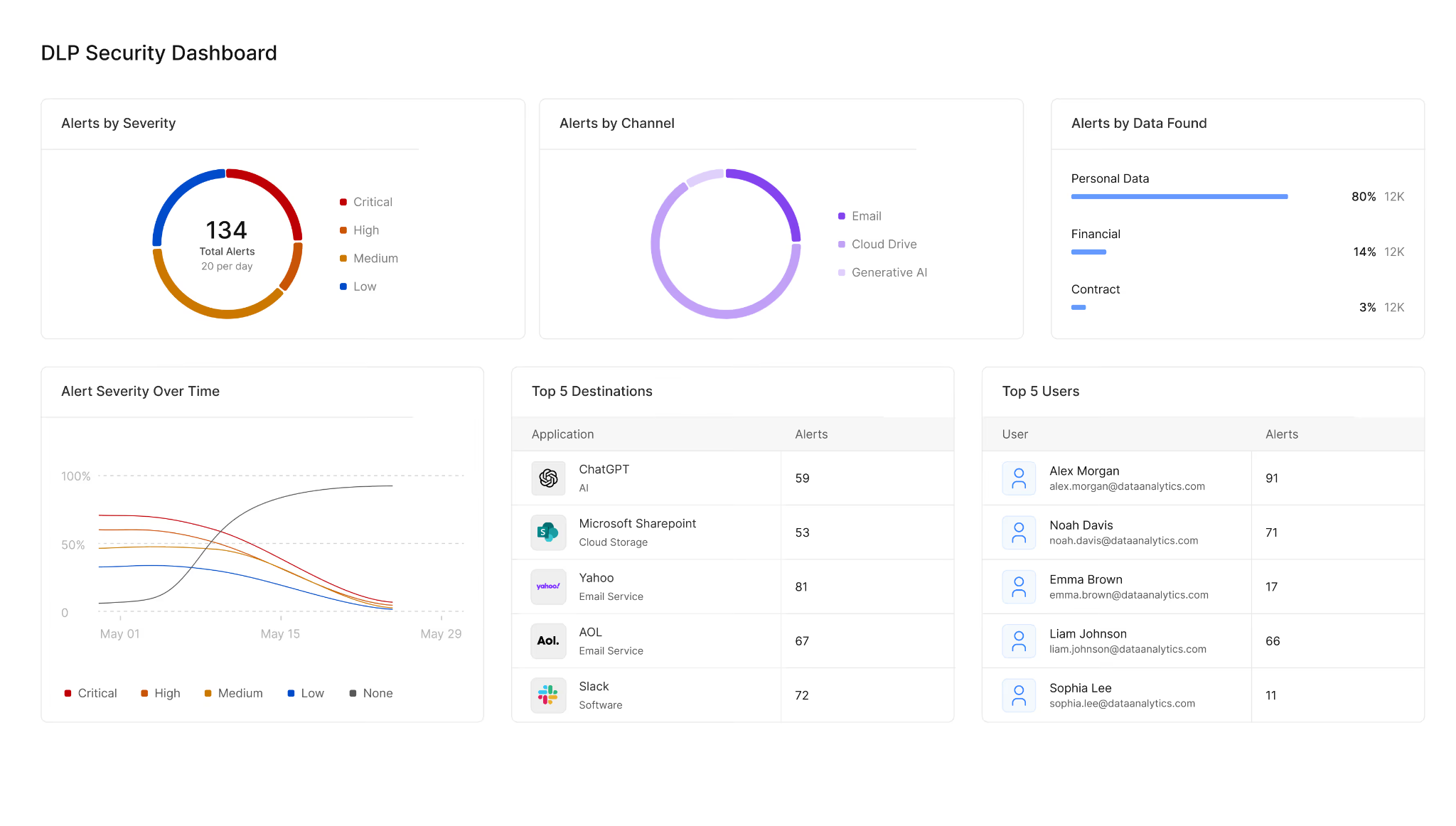
Cyera is an AI-native data security platform built for large enterprises operating across complex, multi-cloud environments. It focuses on the data itself, continuously discovering and classifying sensitive information across cloud, SaaS, and on-prem systems.
The platform combines DSPM, DLP, AI security controls, and automated remediation into a unified control plane. With 95%+ classification precision, petabyte-scale scanning, and deployment that delivers visibility in less than a day, Cyera helps organizations reduce data exposure and manage risk across hybrid environments.
Key features
- AI-powered DSPM: Automatically discovers and classifies sensitive data across cloud, SaaS, and on-prem environments while linking it to identities and access paths
- AI Guardian and AI-SPM: Detects shadow AI usage and governs how humans and AI agents interact with sensitive data
- Omni DLP: Uses a single AI-driven engine to prioritize alerts, reduce noise, and recommend tuned policies
- Access trail: Tracks every interaction with sensitive data to support investigations and insider risk detection
- Agentless discovery: Deploys quickly without agents and scans environments at scale to surface exposure risks
Acronis DeviceLock DLP

Acronis DeviceLock DLP is a DLP solution that monitors and controls how sensitive data is accessed, transferred, and stored across devices. It applies policy-based controls to restrict unauthorized data movement through channels such as USB devices, email, network connections, and virtual environments, while logging user activity to support auditing and compliance requirements.
Key features
- User activity monitoring: Collects audit logs and shadow logs for security investigations and forensic analysis
- Centralized management: Uses Active Directory and Group Policy for deployment and policy enforcement across systems
- Context-aware controls: Applies rules based on content and user behavior to manage data access and movement
AccessPatrol
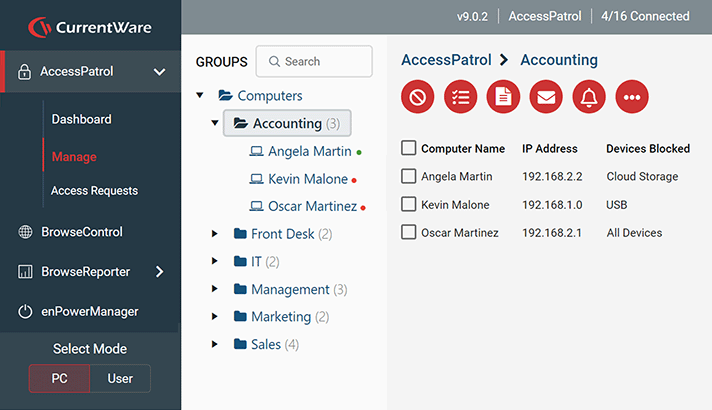
AccessPatrol is a USB and device control solution designed to limit how data moves through removable media on user devices. It focuses on preventing unauthorized file transfers by enforcing access rules on external drives, peripherals, and connected devices, while tracking user activity to support compliance and internal investigations.
Key features
- USB and device control: Blocks or restricts access to removable media, external drives, and peripheral devices
- Granular permissions: Applies access rules by user, group, or device type
- File transfer control: Restricts data movement based on file type, extension, or content patterns
Code42 (Incydr)
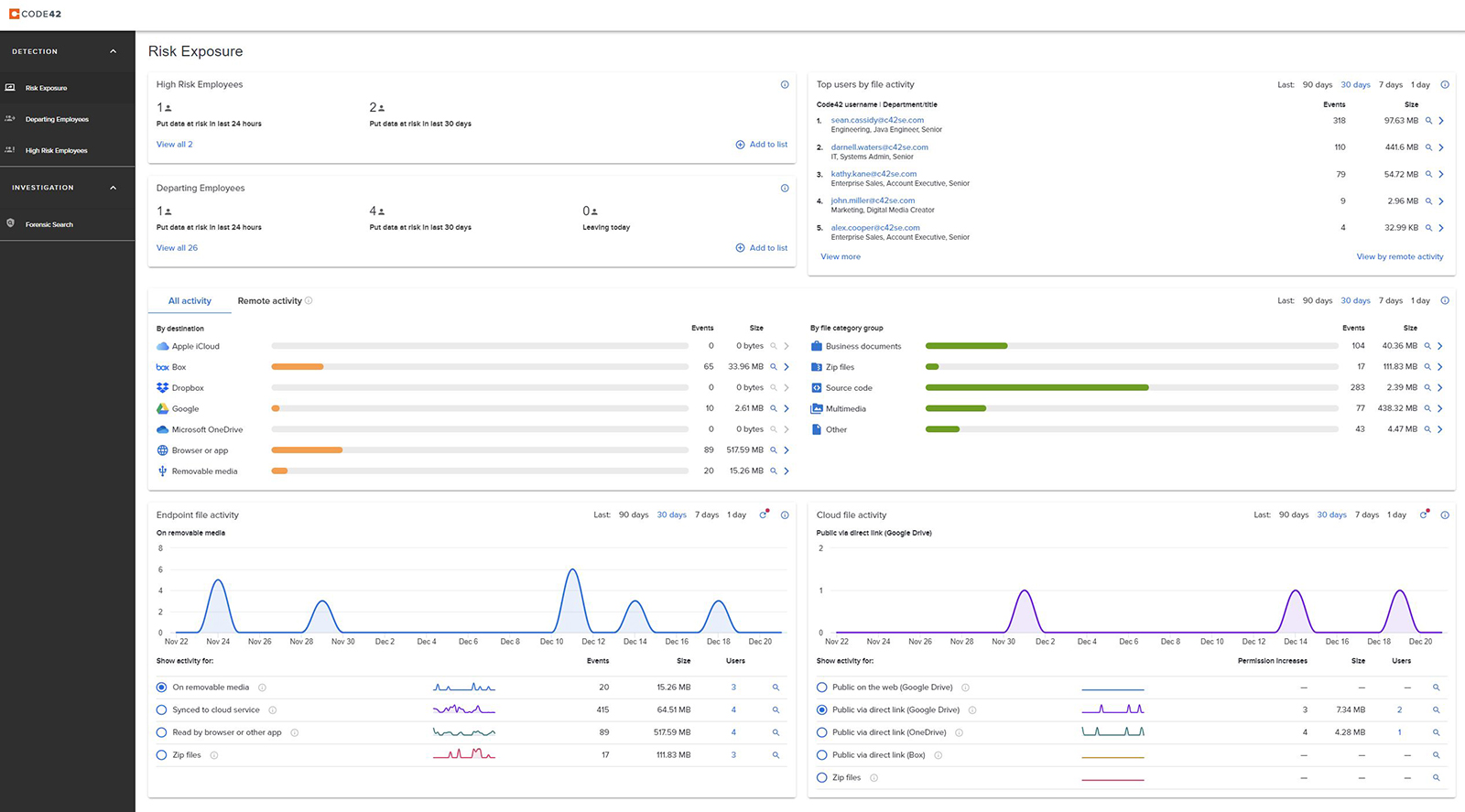
Code42, now part of Mimecast, offers Incydr, a DLP solution focused on insider risk and data exfiltration across modern work channels. It monitors how data flows through cloud apps and AI tools, using behavioral signals and context to identify risky activity, such as uploads to unsanctioned applications or transfers of sensitive files.
Key features
- Insider risk detection: Identifies risky user behavior tied to data movement across environments
- Shadow AI visibility: Monitors data transfers to unsanctioned AI tools and tracks potential exposure
- Context-aware analysis: Uses signals from user activity, data type, and destination to prioritize risk
Cyberhaven
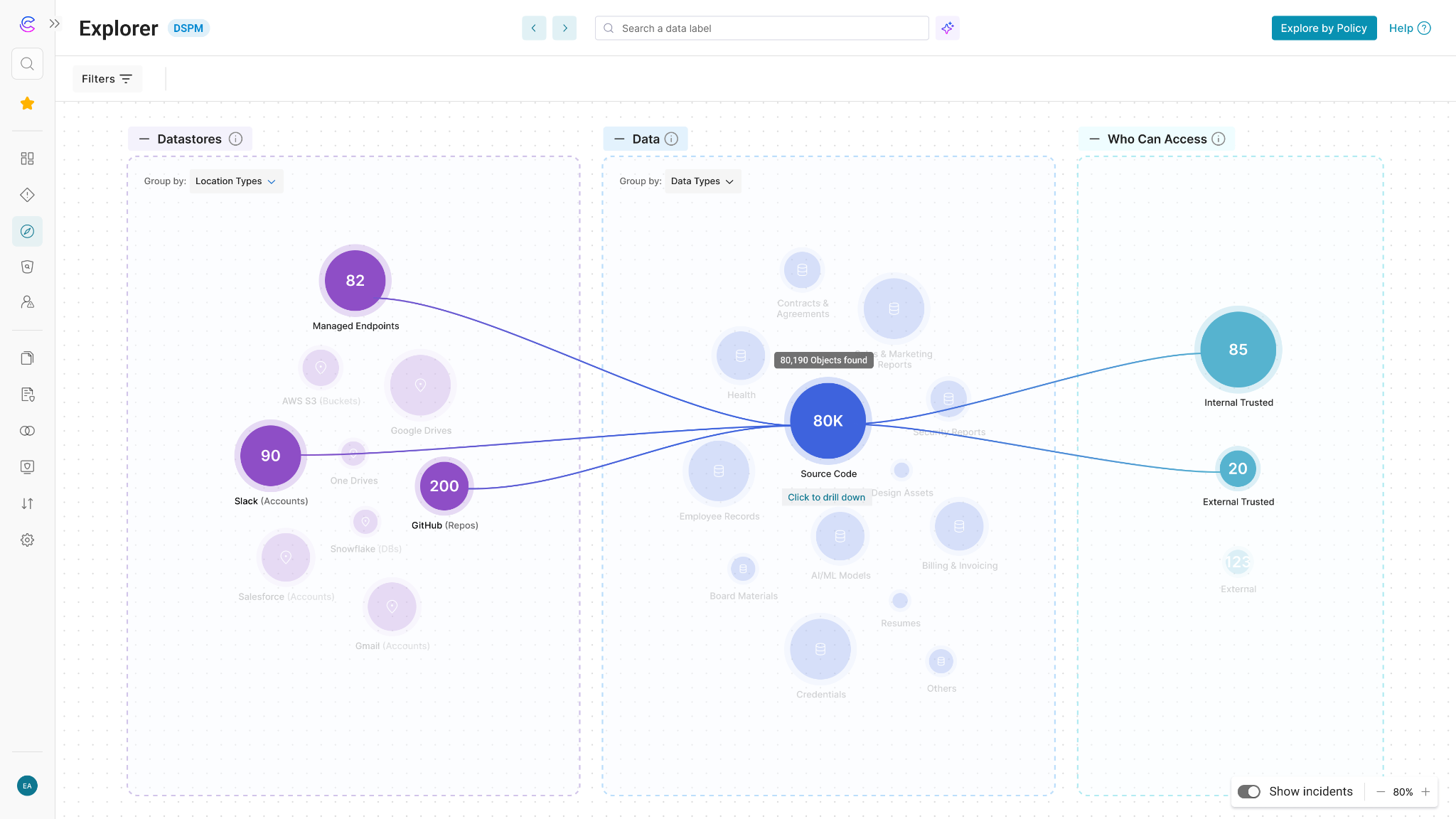
Cyberhaven is a DLP platform that centers on data lineage, tracking how information originates, transforms, and moves across systems over time. Instead of relying only on content patterns, it builds a historical map of data interactions across cloud apps and AI tools, allowing teams to detect exfiltration attempts based on how data is used and where it flows.
Key features
- Data lineage tracking: Follows data across systems, users, and applications to understand how it moves and changes
- Real-time response: Blocks, warns, or allows actions with justification when data is at risk of exfiltration
- Policy management: Uses a visual editor to define and test policies based on real data movement
Egress

Egress, part of KnowBe4, is a cloud-based email security platform that focuses on preventing data loss through outbound email and user-driven communication risks. It analyzes user behavior, email content, and contextual signals to detect accidental or intentional data exposure, then applies adaptive controls to encrypt, block, or guide user actions based on risk.
Key features
- Adaptive email protection: Adjusts security controls based on user behavior and risk signals
- Outbound data protection: Detects and prevents sensitive data from being shared via email
- Contextual machine learning: Uses behavioral and content analysis to identify risky interactions
Fidelis Security

Fidelis Security is a network-based DLP solution that inspects data in transit to detect and stop unauthorized transfers. It analyzes network sessions using deep packet inspection and metadata extraction, giving security teams visibility into how data moves across users, applications, and destinations within enterprise environments.
Key features
- Deep session inspection: Analyzes network traffic and extracts metadata across hundreds of attributes
- Data-in-motion monitoring: Tracks and controls sensitive data as it moves across network channels
- Insider threat detection: Identifies suspicious data transfers linked to user activity
Forcepoint DLP
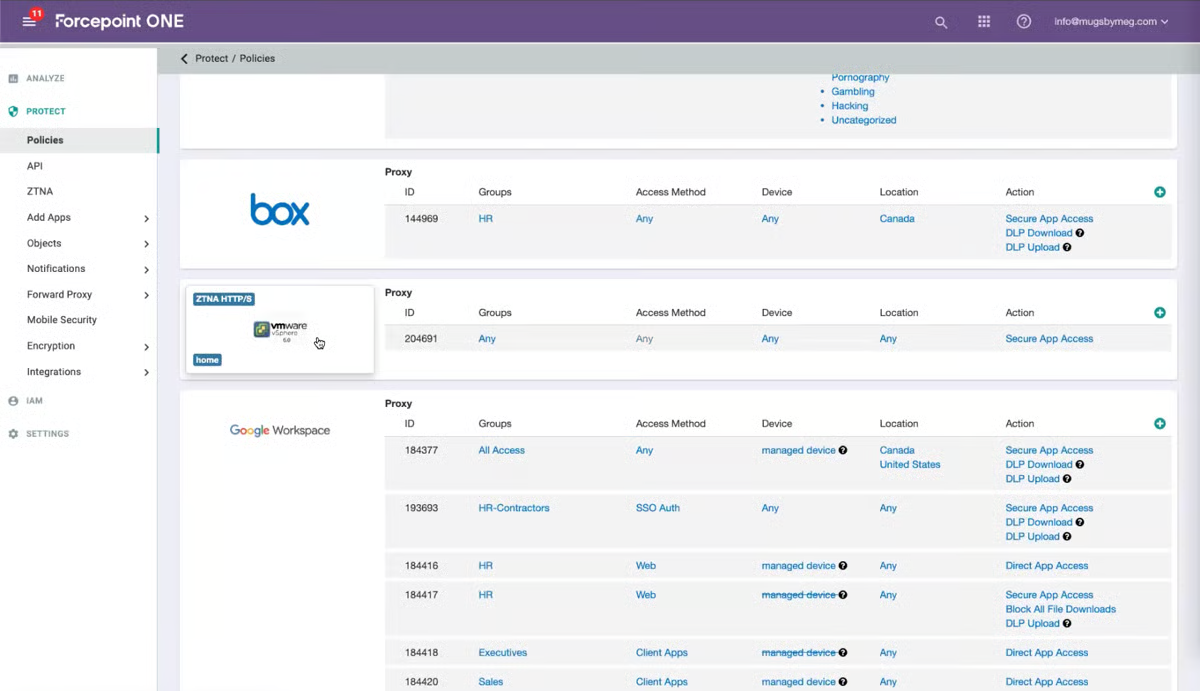
Forcepoint DLP is a unified DLP platform that enforces consistent policies across cloud applications, web traffic, and email. It uses a large library of predefined classifiers and templates to identify sensitive data, then monitors user behavior and data interactions to control how information is accessed, shared, or transferred across environments.
Key features
- Unified policy management: Applies consistent controls across cloud, web, and email channels
- Prebuilt classifiers and templates: Identifies sensitive data using a large library of predefined policies
- Behavior-aware risk analysis: Evaluates user actions and context to adjust data protection controls
Fortra DLP (Digital Guardian)

Fortra provides a DLP platform that monitors and controls sensitive data across networks and cloud environments. It connects data activity with user behavior and system context to track how information is accessed, shared, and transferred, enabling consistent policy enforcement and investigation across hybrid environments.
Key features
- Dual discovery approach: Enables both top-down and bottom-up visibility to identify where sensitive data resides and how it flows
- Network inspection: Analyzes data in motion to detect and prevent unauthorized transfers
- Cloud protection: Applies controls to SaaS and cloud environments to manage access and data exposure
GTB Technologies

GTB Technologies provides a content-aware DLP platform that monitors and controls sensitive data across infrastructure. It inspects data in motion using deep content analysis, allowing organizations to enforce policies based on what the data is, where it is going, and how it is being used.
Key features
- Content-aware inspection: Analyzes structured and unstructured data across all channels to detect sensitive information in real time
- Network and cloud DLP: Monitors and controls data movement across email, web, cloud applications, and network traffic
- Data discovery and classification: Identifies and catalogs sensitive data across systems, file shares, and cloud storage environments
IBM Data Security
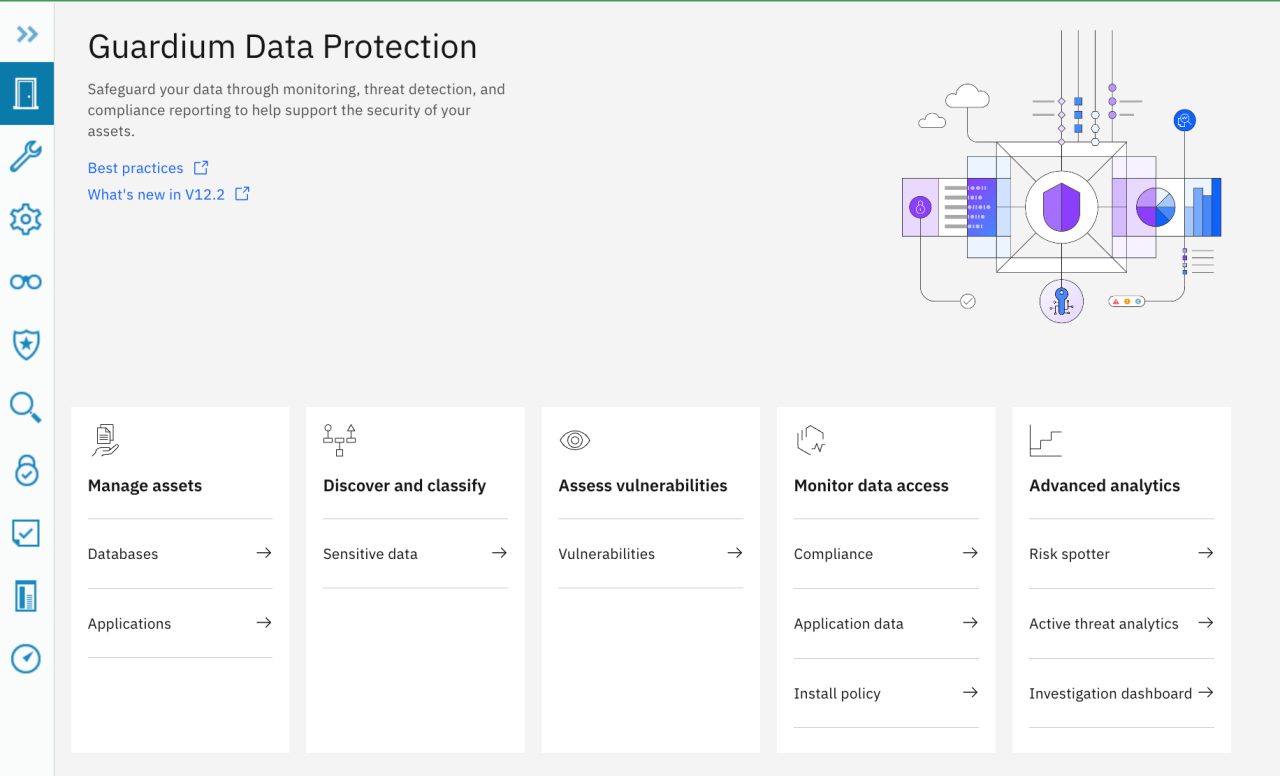
IBM is a data security platform that protects sensitive data throughout its lifecycle, from discovery to monitoring and remediation. It brings together data visibility, access controls, and threat detection to help organizations manage data across cloud, on-prem, and hybrid environments while supporting compliance requirements.
Key features
- Data discovery and classification: Identifies structured and unstructured data across environments to support protection and governance
- Access control and IAM integration: Manages who can access data through identity and access management capabilities
- Data activity monitoring: Tracks how data is accessed, used, and transferred to detect potential risks
Imperva: Best for database and data-layer security monitoring
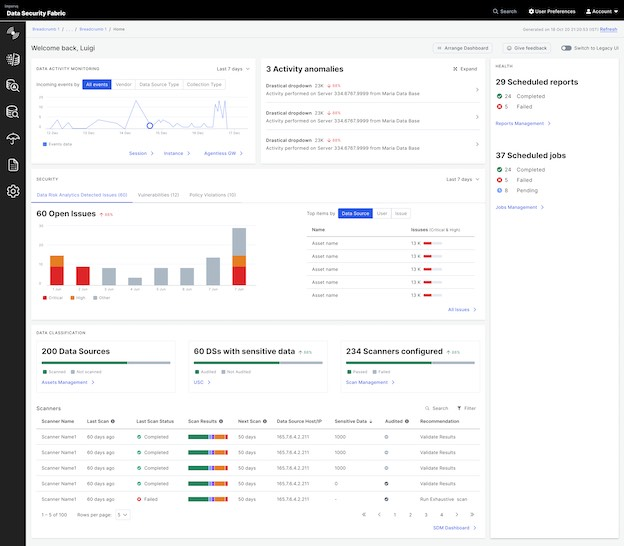
Imperva provides a data security platform that protects sensitive data across on-premises, cloud, and hybrid environments. It combines data discovery, activity monitoring, and risk analytics to give teams visibility into sensitive data locations, access patterns, and potential exposure.
Key features
- Unified data security platform: Combines data protection, governance, and compliance into a single control plane
- Data activity monitoring: Tracks access and usage across data stores to detect unauthorized or risky behavior
- Risk analytics and threat detection: Analyzes data access patterns and context to surface potential threats and misuse
Microsoft Purview

Microsoft Purview provides a unified data security, governance, and compliance platform designed to protect data across cloud, on-premises, and SaaS environments. It combines classification, risk management, and policy enforcement to help organizations reduce data exposure and support AI-driven use cases.
Key features
- Data loss prevention: Prevents sensitive data exposure across apps, browsers, and cloud services with policy-based controls
- Data discovery and classification: Identifies and labels sensitive data across the data estate to support governance and protection
- Insider risk management: Detects and investigates risky user behavior, including data leaks and policy violations
Nightfall

Nightfall AI is an AI-native platform designed to detect and stop sensitive data exposure across SaaS applications, email, browsers, and AI tools. It combines AI-powered classification with data lineage tracking to understand how data moves and enforce policies in real time, helping security teams reduce risk without slowing down business operations.
Key features
- Data exfiltration prevention: Monitors and blocks sensitive data movement across SaaS apps, browsers, and AI tools in real time
- Data detection and response: Automatically identifies and remediates exposure of sensitive data such as PII, PHI, and credentials
- Data discovery and classification: Scans and classifies structured and unstructured data across SaaS and cloud environments to reduce exposure risk
Proofpoint
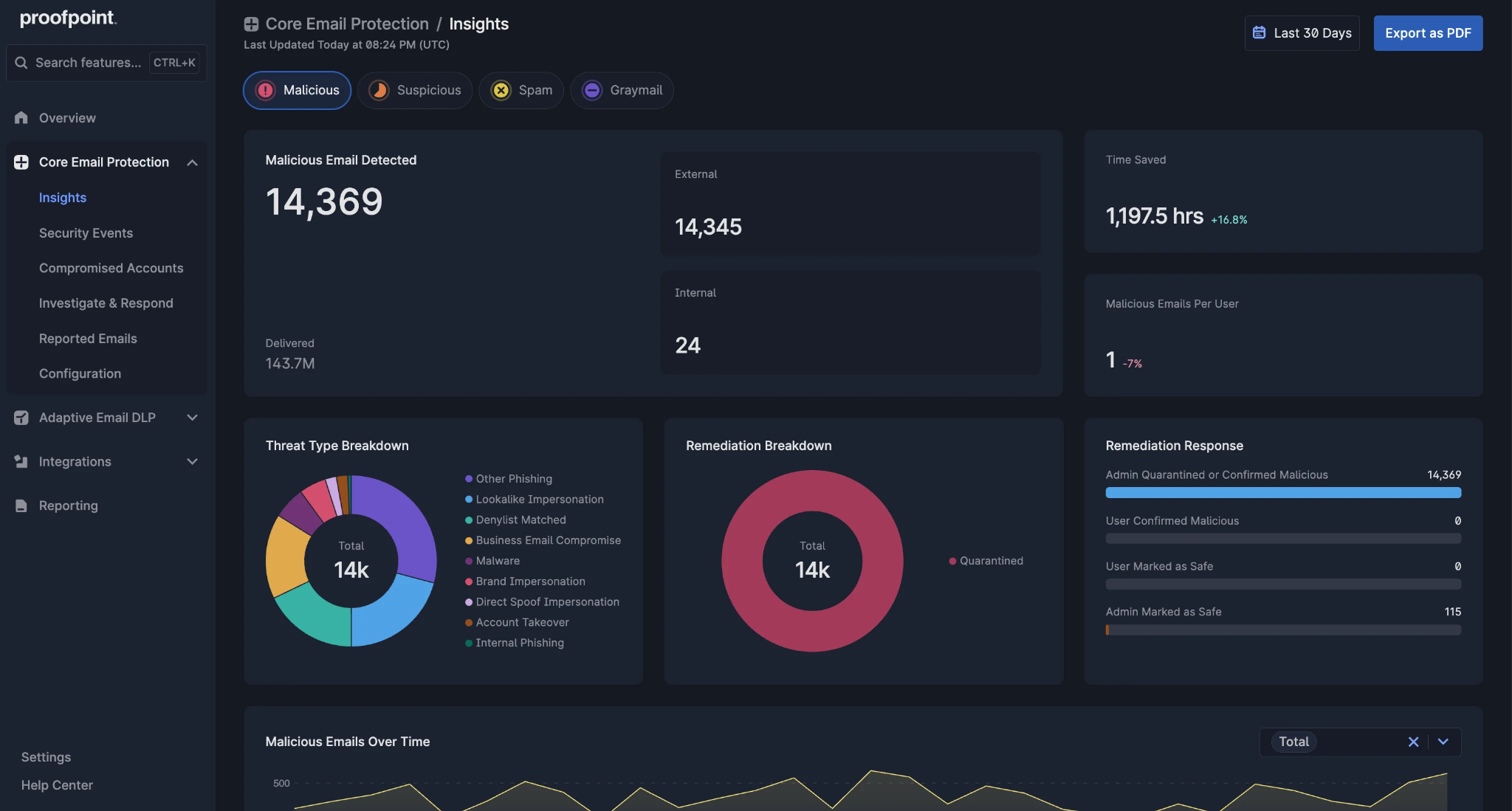
Proofpoint offers a data security and governance platform designed to protect sensitive information across email, cloud applications, and collaboration tools. It focuses on securing how people and data interact, using AI-driven detection and behavioral analysis to reduce risks from insider threats, compromised accounts, and data misuse.
Key features
- Data visibility and governance: Provides insight into where sensitive data exists and who or what has access to it across cloud and collaboration environments
- Insider threat protection: Detects risky user behavior, data misuse, and potential exfiltration from both negligent and malicious insiders
- AI-driven threat detection: Identifies human-centric and AI-driven threats across email, messaging platforms, and cloud apps
Safetica ONE

Safetica is a DLP and insider risk management platform that helps organizations discover, monitor, and protect sensitive data across infrastructure. It combines data classification, user behavior analysis, and policy enforcement to reduce the risk of data leaks and insider threats.
Key features
- Data discovery and classification: Identifies and classifies sensitive data based on content, file type, origin, and third-party labels across environments
- Cloud data protection: Secures data in cloud applications like Microsoft 365 by monitoring activity and blocking unauthorized sharing
- User activity monitoring: Tracks file operations, application usage, and data movement to provide full visibility into how data is handled
Spirion

Spirion is a data security posture management (DSPM) platform that helps organizations discover, classify, and remediate sensitive data across cloud, on-premises, and hybrid environments. It provides visibility into data exposure and applies automated controls to reduce risk and support compliance.
Key features
- Sensitive data discovery: Identifies personal, regulated, and business-critical data across structured and unstructured environments to reduce blind spots
- Data classification: Applies labels, tags, and rules to organize sensitive data and support governance and compliance requirements
- Automated remediation: Detects exposed or vulnerable data and triggers actions to reduce risk without relying on separate tools
Teramind
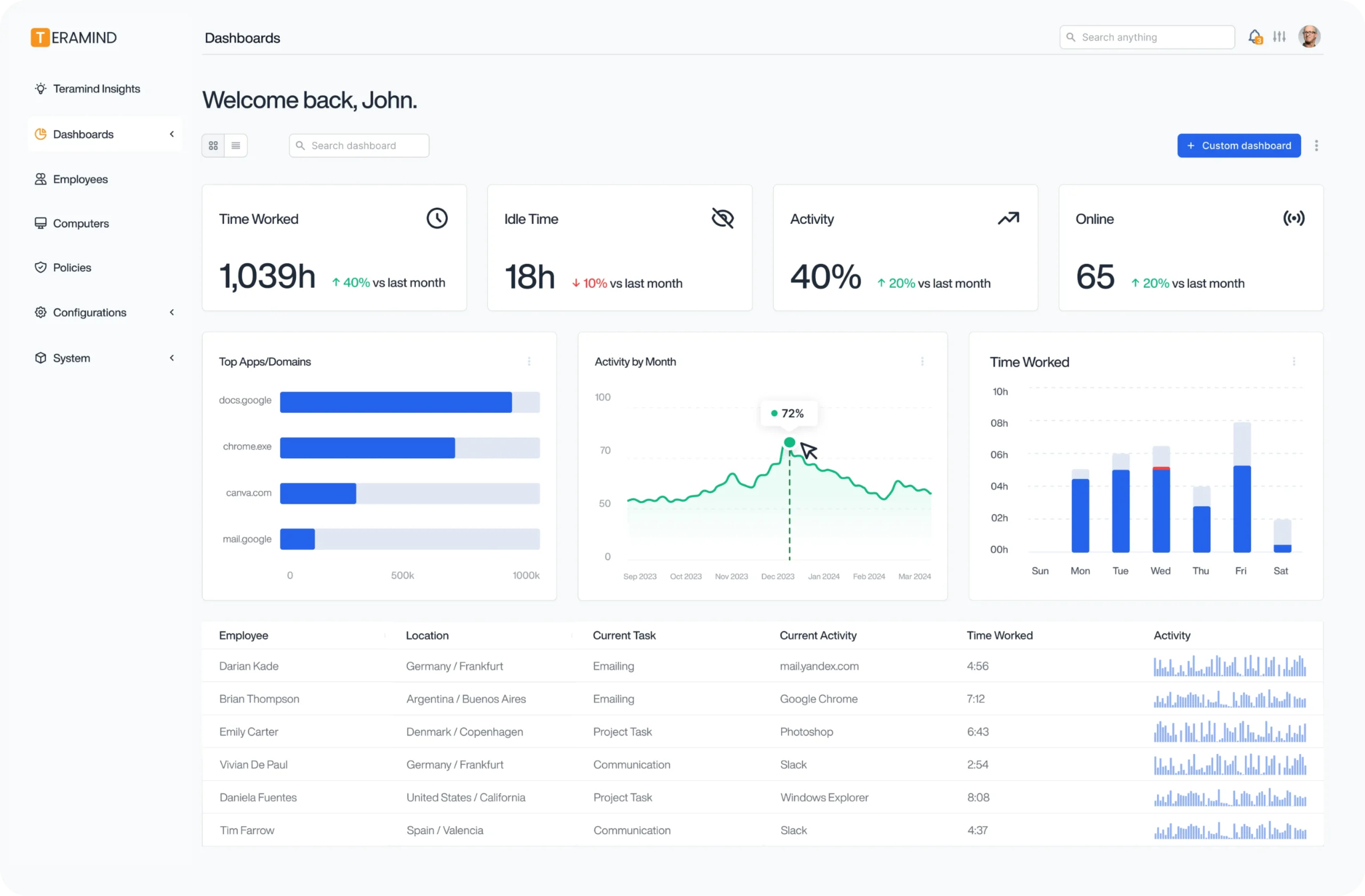
Teramind is an insider risk management and DLP platform that monitors user activity, analyzes behavior, and prevents data exfiltration across environments. It helps organizations detect insider threats, enforce policies, and improve workforce productivity through real-time visibility and analytics.
Key features
- User activity monitoring: Tracks user behavior across applications, websites, and systems to provide full visibility into workforce activity
- Behavior analytics: Uses machine learning to identify anomalies, risky actions, and potential insider threats
- Real-time alerts and response: Generates alerts and enables immediate action when policy violations or suspicious behavior occurs
Trellix DLP: Best for modular enterprise security stack integration

Trellix DLP helps organizations discover, monitor, and protect sensitive data across networks, and cloud environments. It enables security teams to apply unified policies, detect risky behavior in real time, and prevent unauthorized data movement while supporting compliance requirements.
Key features
- Real-time monitoring and response: Detects and responds to data movement and policy violations as they occur
- User behavior guidance: Notifies users of policy violations and prompts justification to reduce risky actions and improve awareness
- Data protection: Secures data on Windows and macOS devices, including control over removable media and local data transfers
TrendMicro

Trend Micro offers an enterprise cybersecurity platform centered on Trend Vision One, which provides unified visibility, risk assessment, and threat detection across cloud, networks, email, and AI systems. It is designed to help security teams identify exposures, prioritize risks, and respond to threats across distributed environments.
Key features
- Integrated security controls: Covers identity, cloud, email, network, and AI workloads within a single platform
- Threat intelligence network: Leverages global telemetry and research data to identify emerging threats and vulnerabilities
- Automated response workflows: Enables security teams to respond to incidents with automated or guided remediation actions
Best Data Loss Prevention Software According to Redditors
We analyzed multiple Reddit threads to see which data loss prevention software professionals recommend. Based on feedback from 60+ cybersecurity and data security professionals, Cyberhaven, Cyera, and Forcepoint Data Loss Prevention received the most positive responses, while Microsoft Purview, Teramind, and Safetica ONE generated the most negative or mixed sentiment.
Protect Your Data with the Best Data Loss Prevention Software
With exploding data volumes and information scattered across systems, data discovery and tracking are extremely difficult without advanced tools. Without the right safeguards in place, organizations face increased risk from insider threats, misconfigurations, and unauthorized data sharing. The right software helps you understand where sensitive data lives, monitor how it’s used, and enforce policies that prevent exposure without slowing down the business.
Cyera takes a data-first approach to protection, combining DSPM, DLP, and access governance into a unified platform. It enables you to discover and classify sensitive data at scale, control access, monitor data flows, and automatically remediate risks across cloud, SaaS, and hybrid environments.
Data Loss Prevention Software FAQs
What is the best DLP software?
The best DLP software depends on your environment, data types, and security needs. Most leading solutions combine data discovery, classification, policy enforcement, and real-time monitoring across endpoints, cloud, and SaaS applications, but the right choice ultimately comes down to your use case and security maturity.
For example, Egress is a strong fit for organizations focused specifically on cloud email security and preventing misdirected or risky outbound messages. Cyberhaven is well suited for teams that prioritize data lineage and want deep visibility into how sensitive data moves across systems and users. And Microsoft Purview is a natural fit for organizations deeply embedded in the Microsoft 365 ecosystem that want integrated compliance and data protection.
Cyera is best suited for enterprises looking for a data-first approach, combining DSPM, DLP, and AI-driven classification to provide a unified, 360-degree view of sensitive data across cloud, SaaS, endpoints, and on-premises environments.
Explore Cyera’s AI-powered DLP
What does data loss prevention software do?
Data loss prevention software identifies, monitors, and protects sensitive data across an organization. It enforces policies to prevent unauthorized sharing or exposure, whether data is at rest, in motion, or in use, and helps security teams detect and respond to potential risks in real time.
What type of software can be used to prevent loss of data?
Several types of software help prevent data loss, including:
- DLP tools for monitoring and controlling data movement
- Backup and recovery solutions for restoring lost or corrupted data
- Encryption tools to secure sensitive information
- Access control and identity management platforms to limit who can access data
Can you integrate enterprise DLP software with cloud platforms?
Yes, most enterprise DLP solutions integrate with cloud platforms and SaaS applications such as Microsoft 365, Google Workspace, and major cloud providers. These integrations allow organizations to monitor data flows, enforce policies, and maintain visibility across hybrid and multi-cloud environments.
Platforms like Cyera are built for this model, offering agentless integration across cloud, SaaS, and supported on-prem environments to continuously discover, classify, and monitor sensitive data without complex deployment.
What are the benefits of data loss prevention software?
DLP software helps organizations protect sensitive data, enforce policies, and reduce risk as information moves across endpoints, cloud apps, and collaboration tools. It keeps data available for day-to-day operations while improving visibility, supporting regulatory compliance, and enabling timely incident response.

Get your AI Security Assessment




.svg)