Cyera Identity

Securing access in the agentic enterprise.

Cyera Identity Hero image
Dashboard showing 81M sensitive records at high risk (22.6%), a downward risk trend graph, and 2.7K open issues by severity.

Identity governance that moves
at the speed of AI

+500%

growth in non-human identities across the Fortune 500, in six months.

40%

of enterprises will demote or decomission their AI agents because of governance gaps.

9/10

of agentic actions have no observable intent.

Deep context. Automated action. Continuous control.

From non-human identity governance to real-time enforcement. Every AI agent, service account, and machine identity, controlled and enforced under a single policy and mapped to the data it reaches.
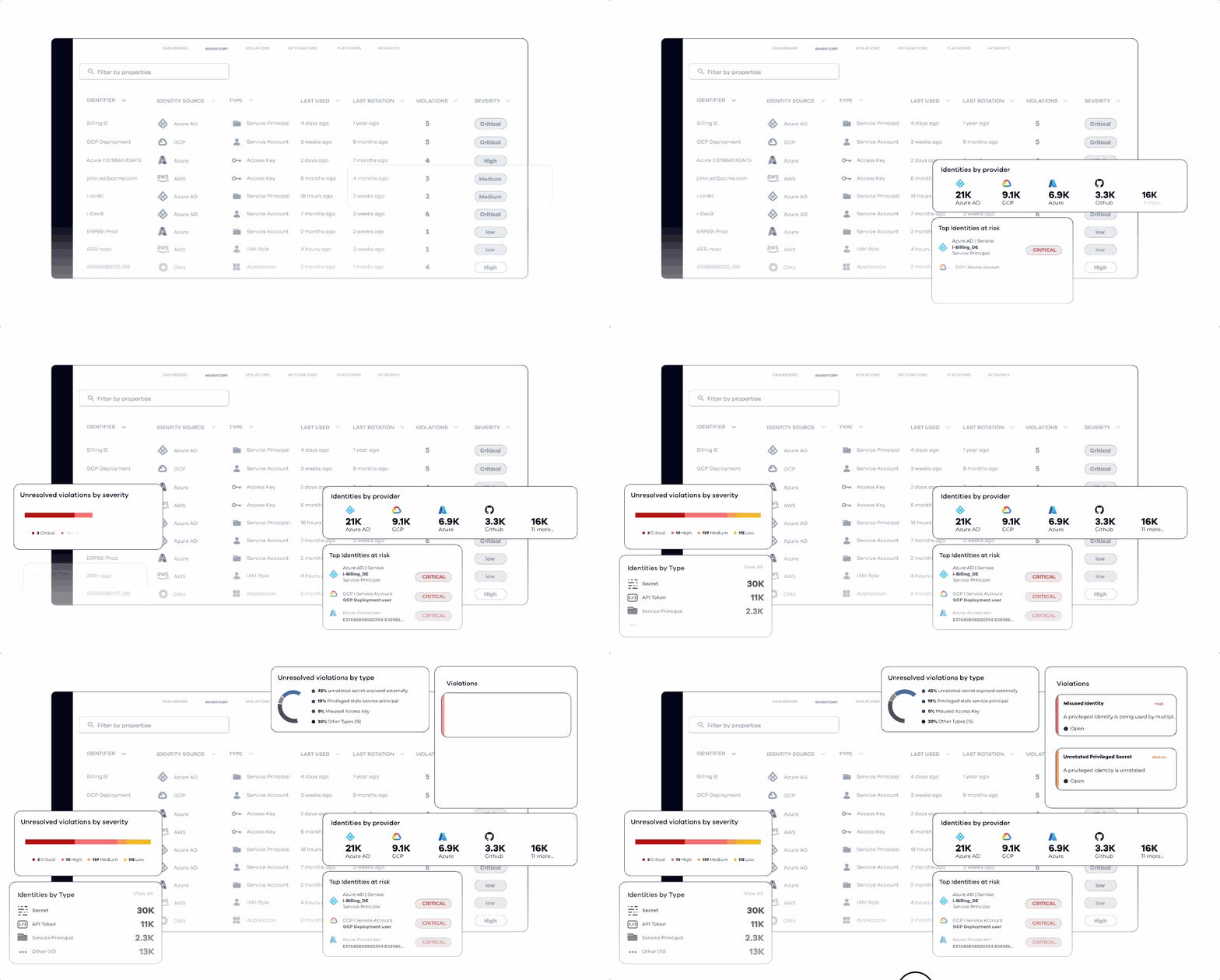
User interface screen showing an inventory table with columns for Identifier, Identity Source, Type, Last Used, Last Rotation, Violations, and Severity, listing various entries with different cloud services and corresponding data.

Lottie File version (below)

From non-human identity governance to real-time enforcement. Every AI agent, service account, and machine identity, controlled and enforced under a single policy and mapped to the data it reaches.
Discover

Cada alerta preanalizada y lista para actuar

Deja de perseguir falsos positivos. Obtén alertas confiables y priorizadas con el análisis contextual que los equipos necesitan para ver el panorama completo del riesgo interno. Pasa de la investigación a la ejecución en minutos.
Correlate

Políticas listas cuando las necesites

No pases por alto la filtración de datos críticos. Las políticas se redactan, prueban y ajustan por sí mismas, cerrando brechas de cobertura a medida que surgen nuevos patrones de comportamiento. La protección se adapta y fortalece con el tiempo sin necesidad de mantenimiento manual.
Right-size

Obsérvalo en reposo, detenlo en movimiento

Convierte la clasificación profunda de almacenes de datos y la información de identidad en prevención temprana antes de que la información se mueva a través de correo electrónico, la nube y la IA. DSPM y DLP, trabajando juntos.
Govern

Decide access at the moment of action

A permission granted in advance cannot govern a choice made at runtime. Cyera Identity scopes each agent to what its task needs, for that session only, and expires it when the task is done. No standing privilege, no long-lived credentials, and a record of what was granted and why.

Govern non-human
identity at scale 
1 \
8
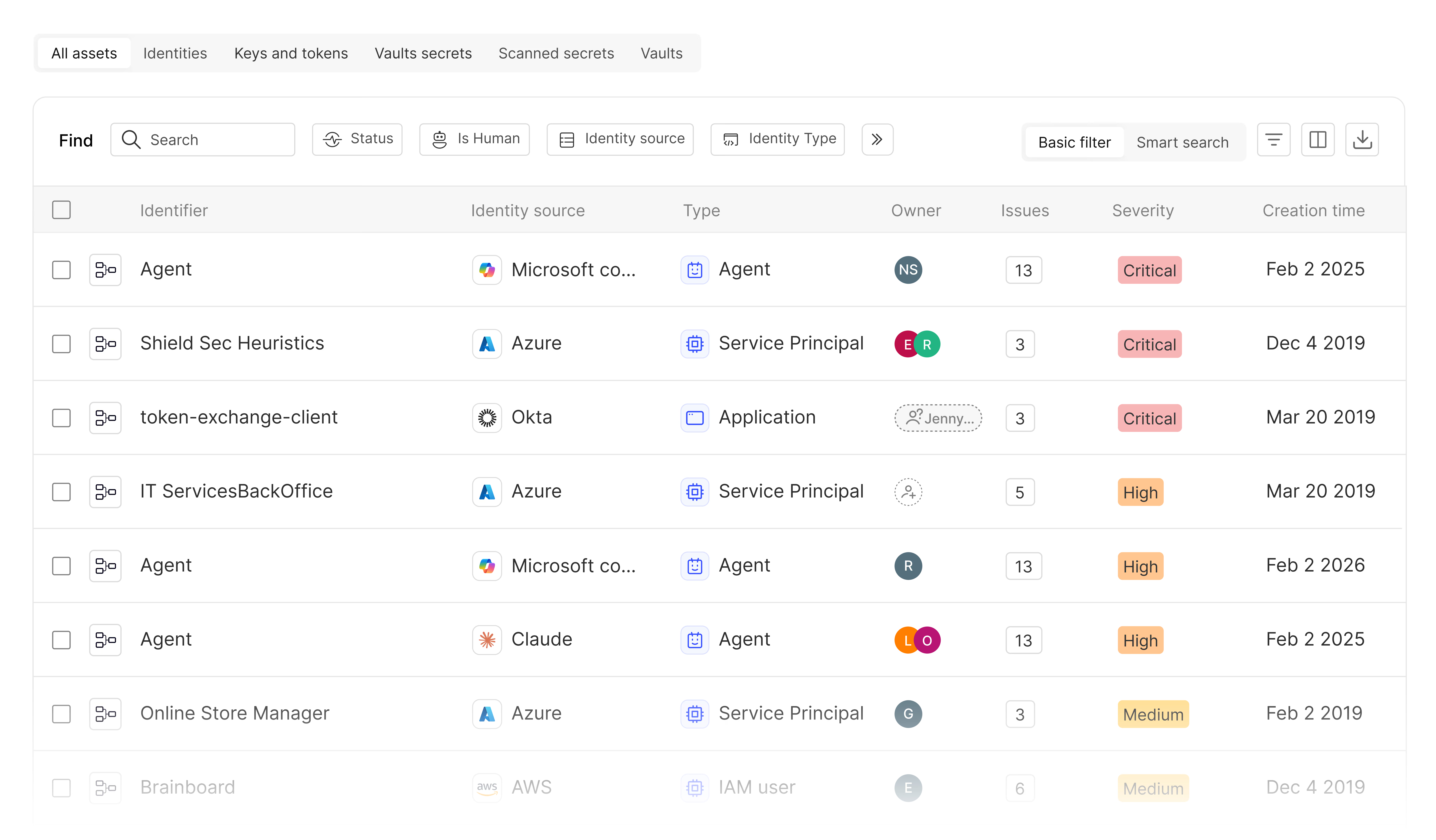
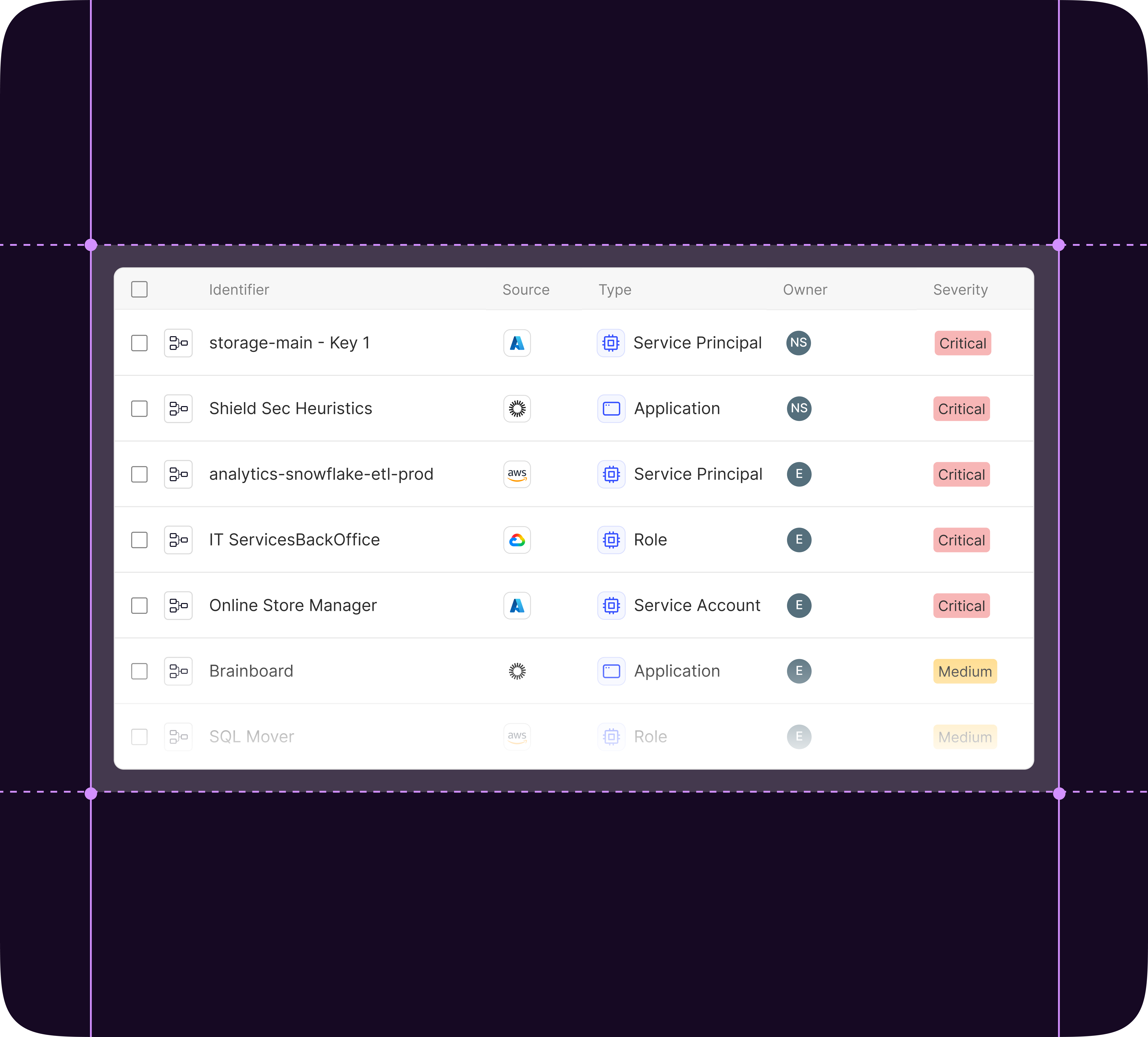
NHI and agent inventory with context
Automatically discover and catalog every non-human identity across cloud, SaaS, on-premises directories, databases, and AI platforms. See type, owner, privilege status, usage and blast radius in one place.
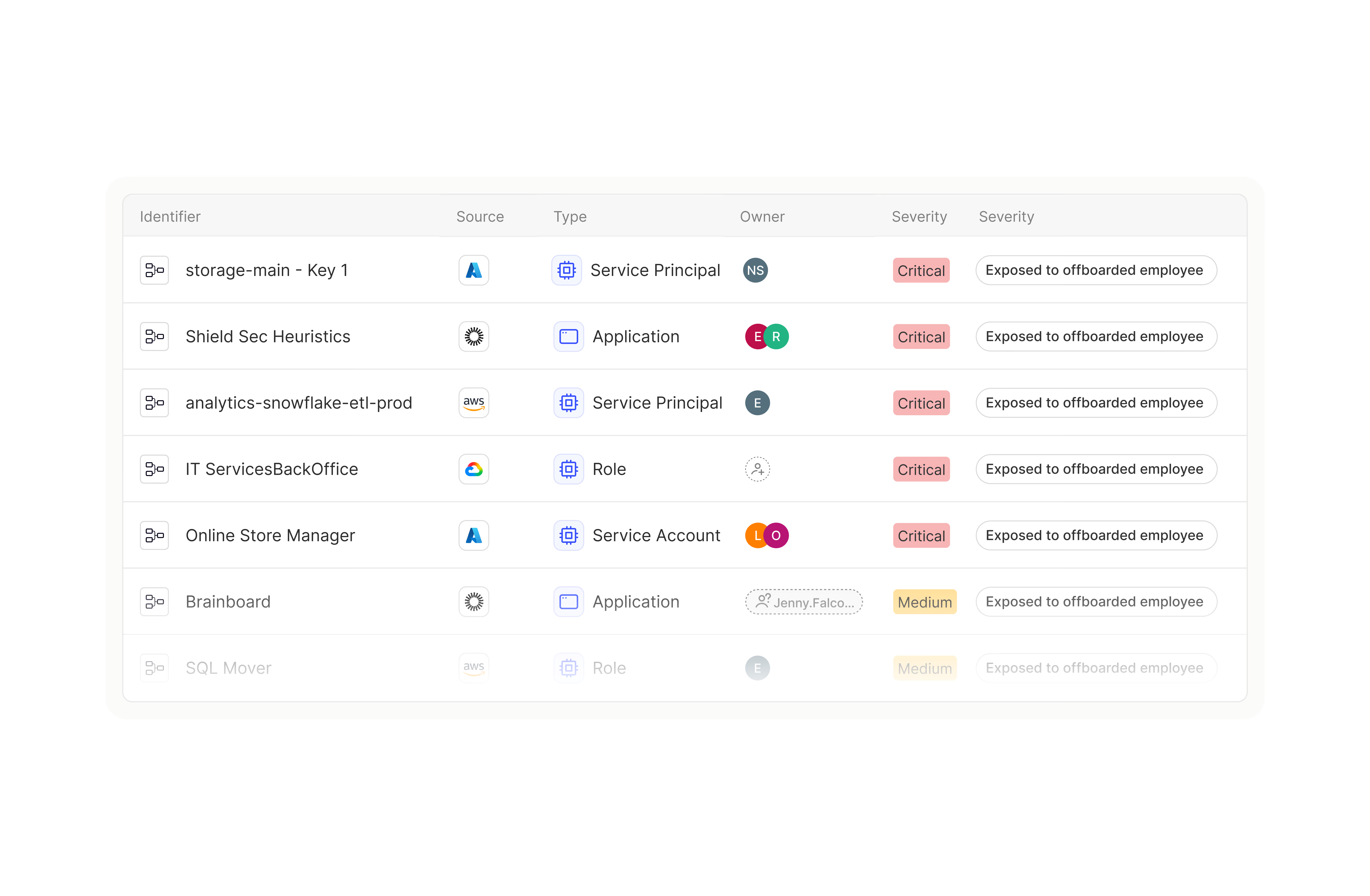
Table listing identifiers, sources, types, owners, and severity levels of various entities including storage-main - Key 1, Shield Sec Heuristics, analytics-snowflake-etl-prod, IT ServicesBackOffice, Online Store Manager, Brainboard, and SQL Mover, with most severities marked as Critical and a few as Medium.
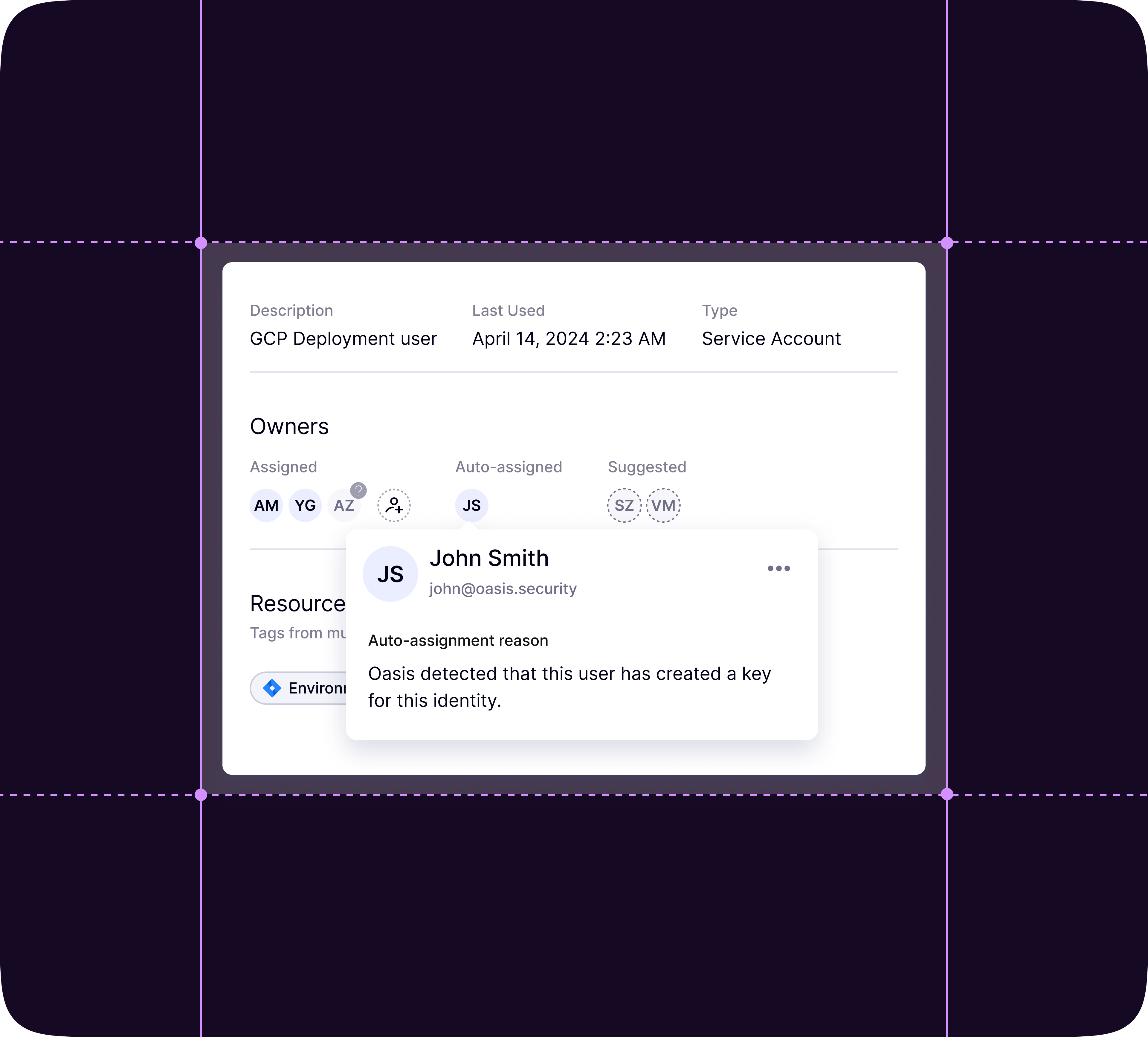
Ownership and attribution
User interface panel showing details for a GCP Deployment user service account last used on April 14, 2024, at 2:23 AM. The Owners section lists assigned users AM, YG, AZ; auto-assigned user JS with tooltip showing John Smith's email john@oasis.security and reason: Oasis detected the user created a key for this identity. Suggested owners SZ and VM are also shown.
Establish human accountability for every identity. Cyera Identity infers ownership from behavioral signals and usage, enriched with CMDB and platform metadata, then closes the remaining gaps through certification campaigns.
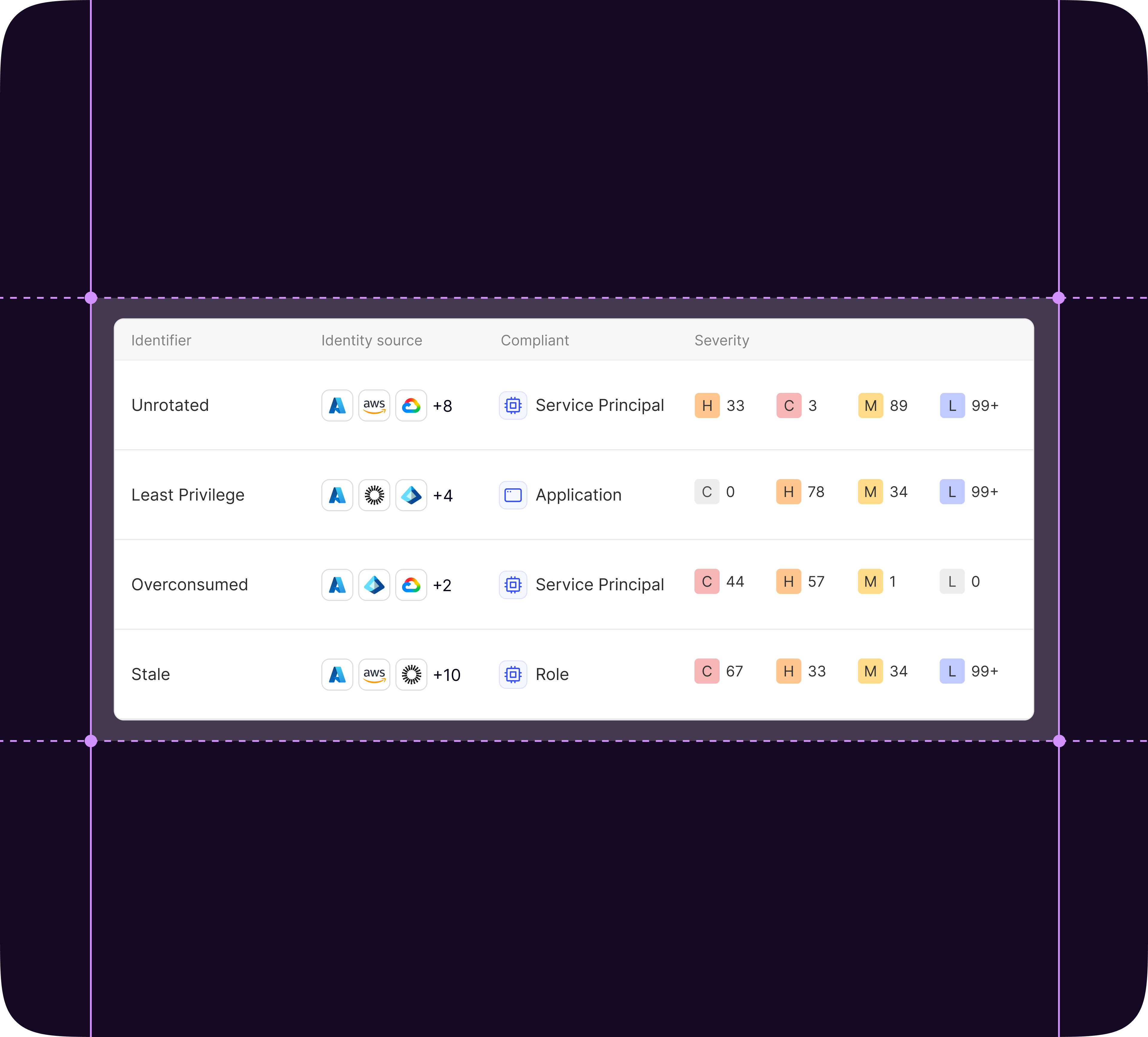
Data-aware risk prioritization
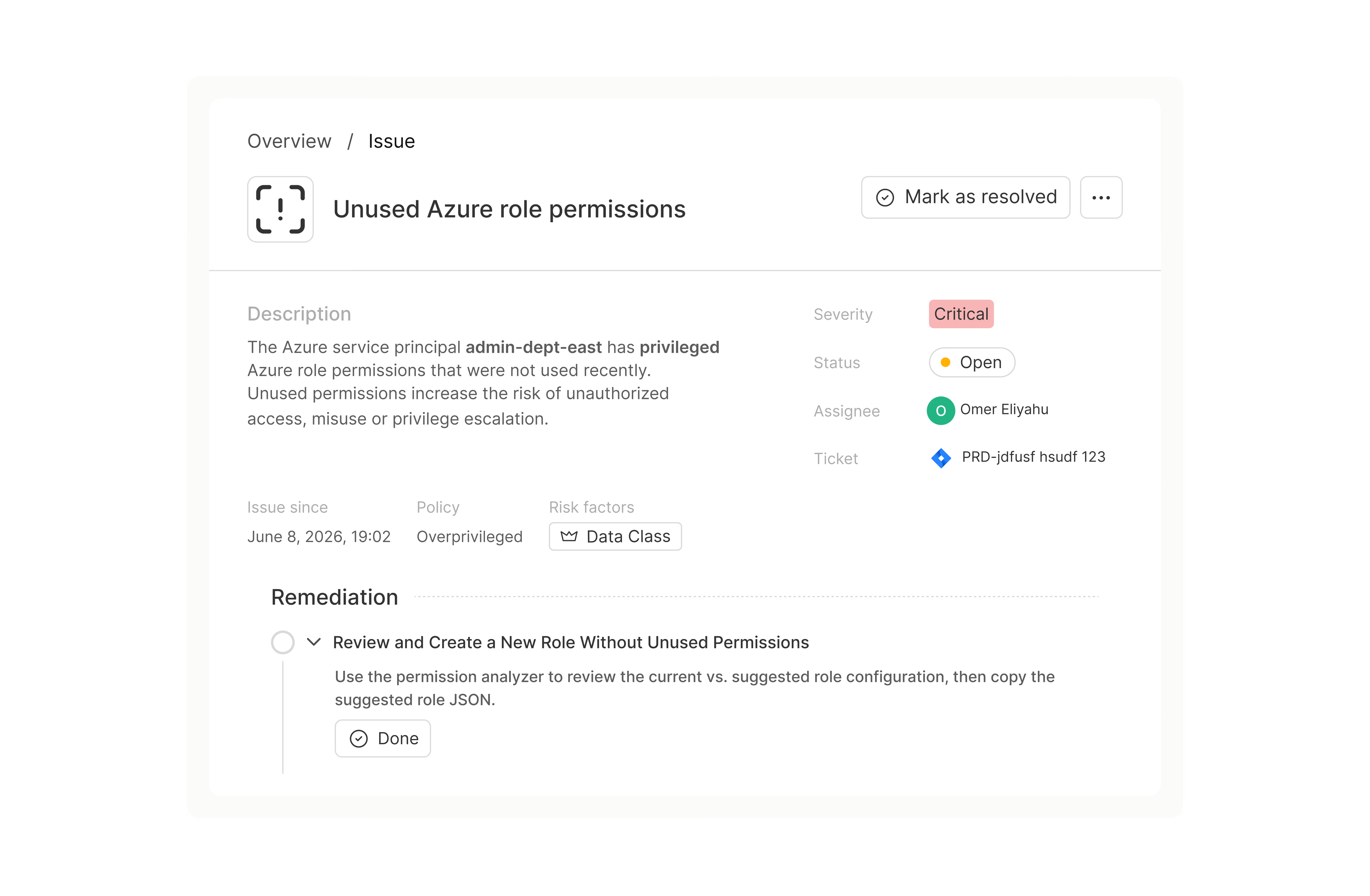
Assess and rank posture issues by what the access actually exposes. Stale accounts, unused privilege, over-broad entitlements, and unrotated credentials are ordered by the sensitivity of the data behind them, so the queue finally sorts by what is at stake instead of by severity alone.
Table showing risk prioritization with columns Identifier, Identity source, Compliant, and Severity. Rows show Unrotated, Least Privilege, Overconsumed, and Stale identifiers. Identity sources include icons for Azure, AWS, Google Cloud, and others. Compliance types listed are Service Principal, Application, and Role. Severity has colored labels for Critical (C), High (H), Medium (M), and Low (L) with numeric values for each risk type.
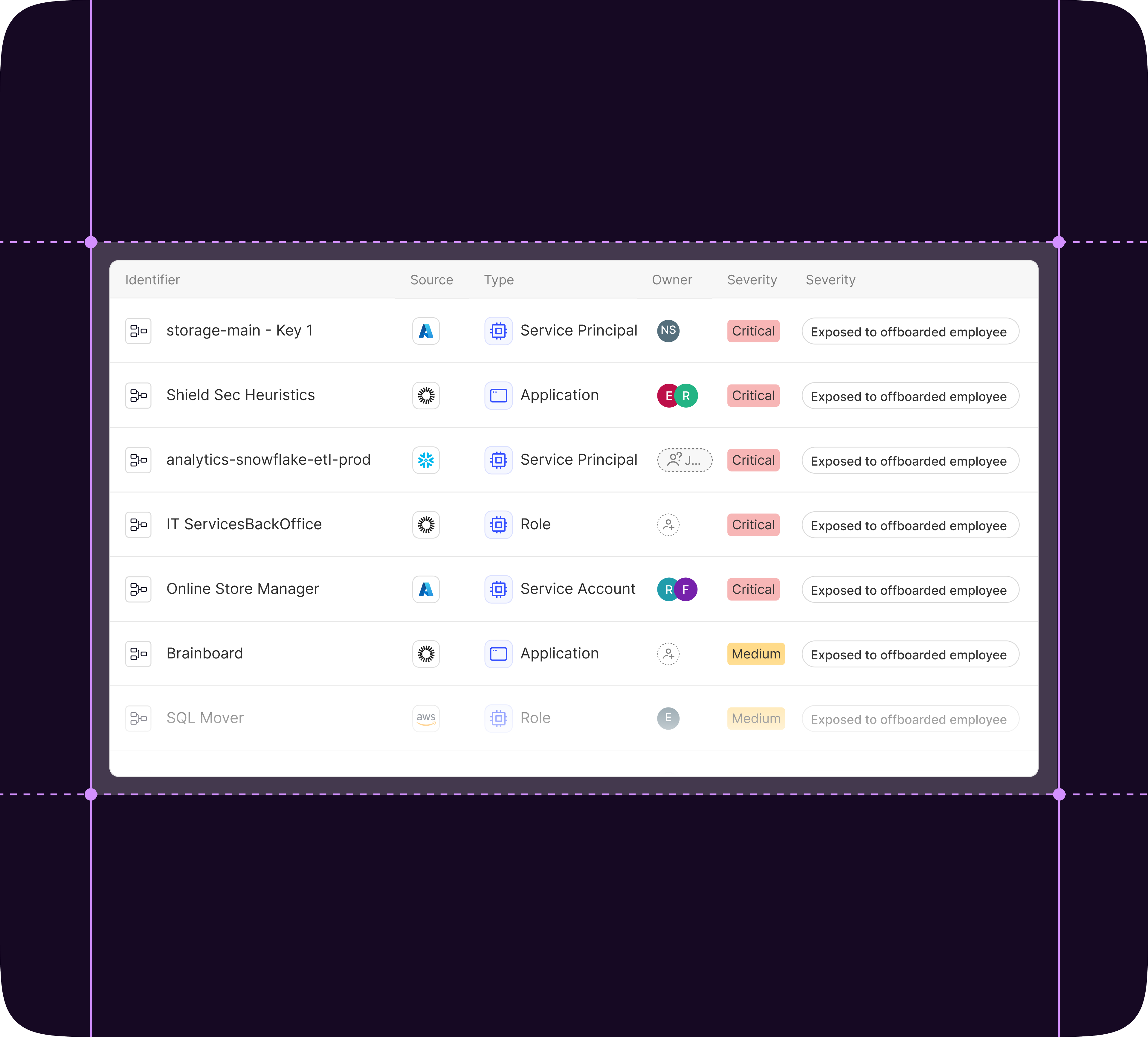
Secret scanning
Find secrets that have leaked into code, chat, collaboration tools, CI/CD, ITSM, and endpoints. Confirm which are still live, correlate each one back to the identity that owns it, and see the privileges and data that secret exposes before you decide what to revoke first.
A table listing identifiers related to secret scanning with columns for Identifier, Source, Type, Owner, and Severity. Entries include storage-main - Key 1, Shield Sec Heuristics, analytics-snowflake-etl-prod, IT ServicesBackOffice, Online Store Manager, Brainboard, and SQL Mover. Most entries have Critical severity marked red and indicate exposure to offboarded employees; some have Medium severity in yellow. Sources and types vary with icons such as applications, roles, service principals, and service accounts, and owner initials or icons appear.
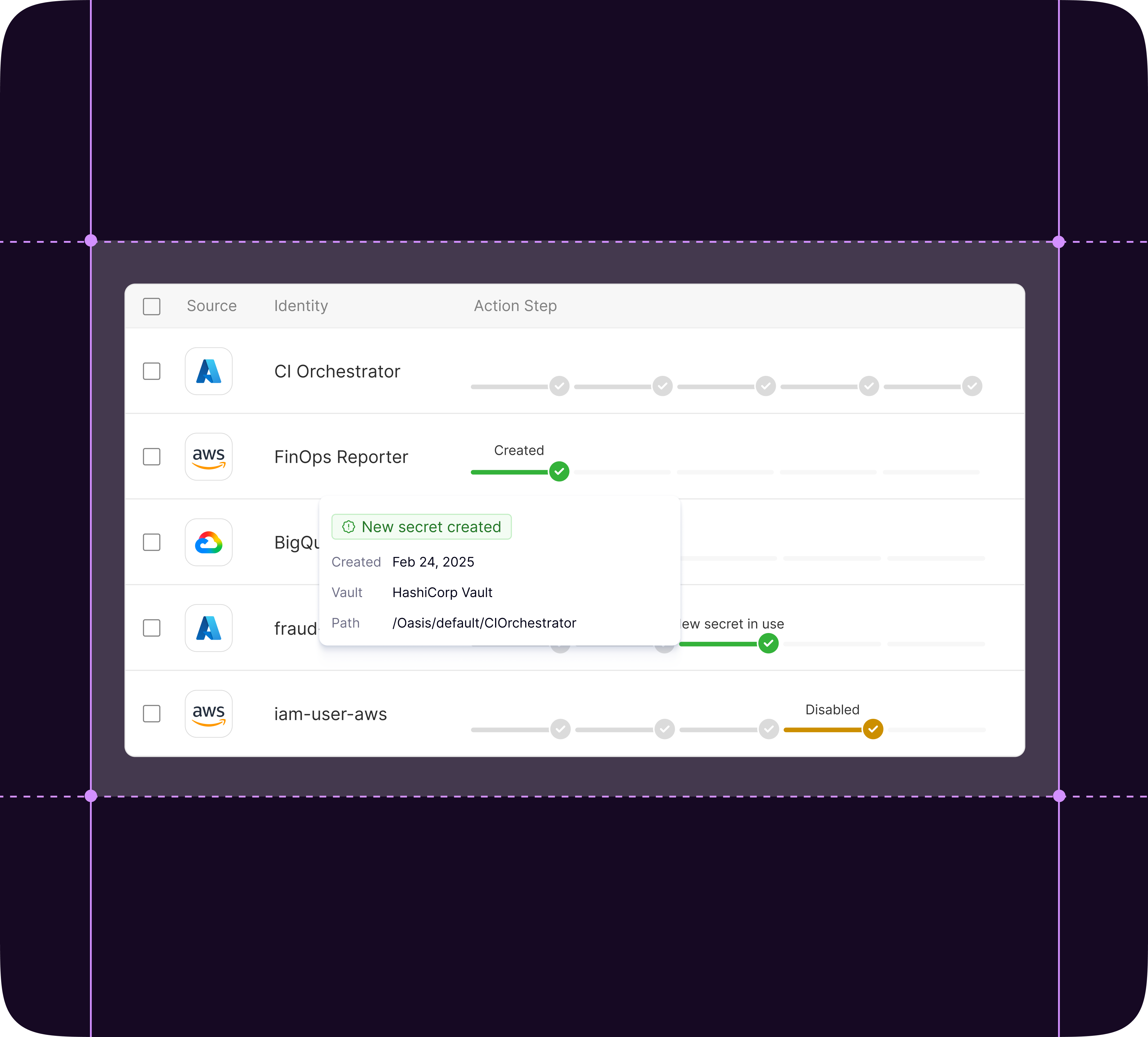
Safe rotation and vault governance
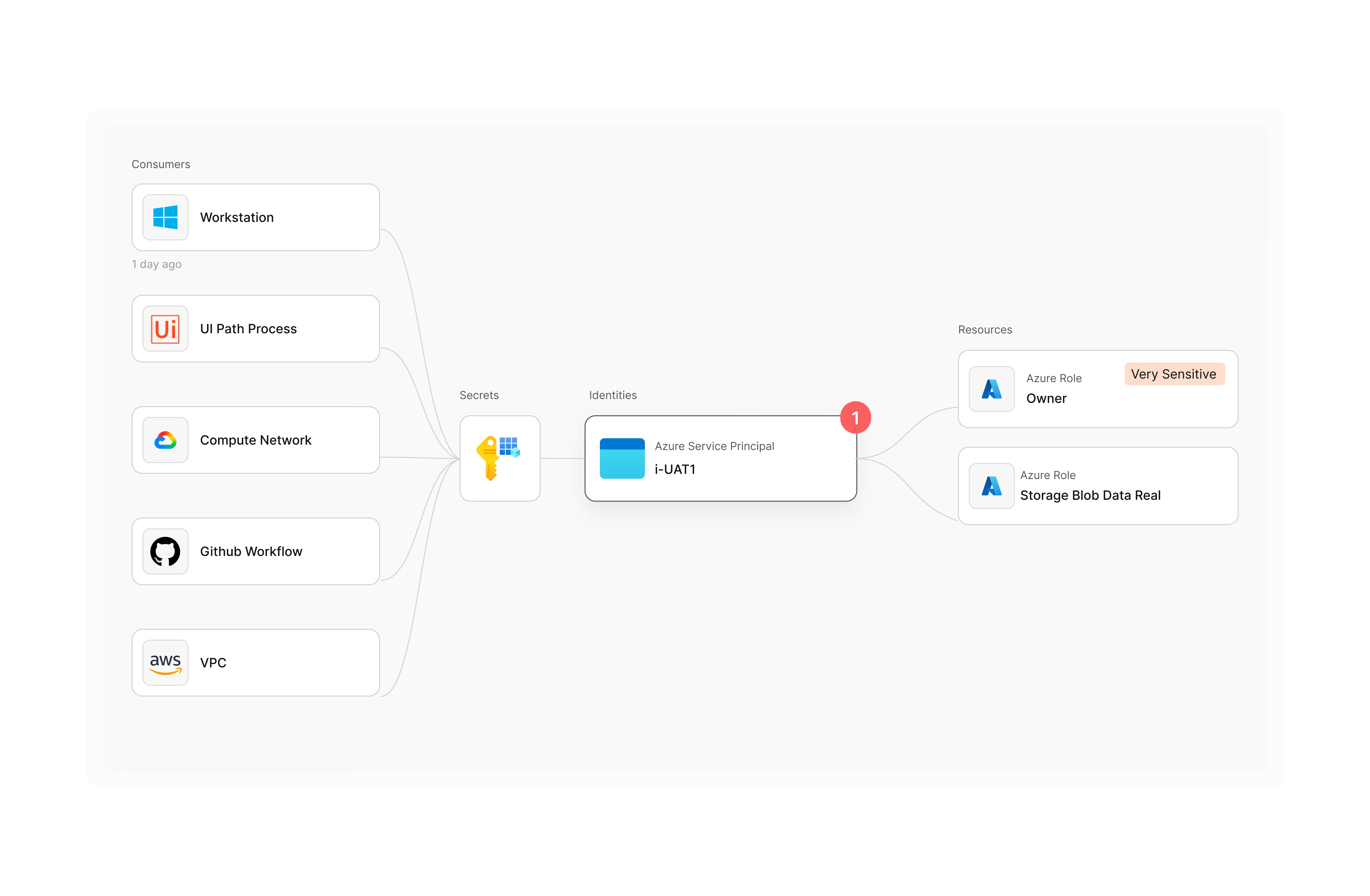
Rotate credentials without breaking production. Cyera Identity tracks which consumers use which secret, generates and distributes the new one through the vault you already own, ensures you aren’t breaking production, then retires the old secret. Vault-agnostic by design.
A table listing identifiers related to secret scanning with columns for Identifier, Source, Type, Owner, and Severity. Entries include storage-main - Key 1, Shield Sec Heuristics, analytics-snowflake-etl-prod, IT ServicesBackOffice, Online Store Manager, Brainboard, and SQL Mover. Most entries have Critical severity marked red and indicate exposure to offboarded employees; some have Medium severity in yellow. Sources and types vary with icons such as applications, roles, service principals, and service accounts, and owner initials or icons appear.
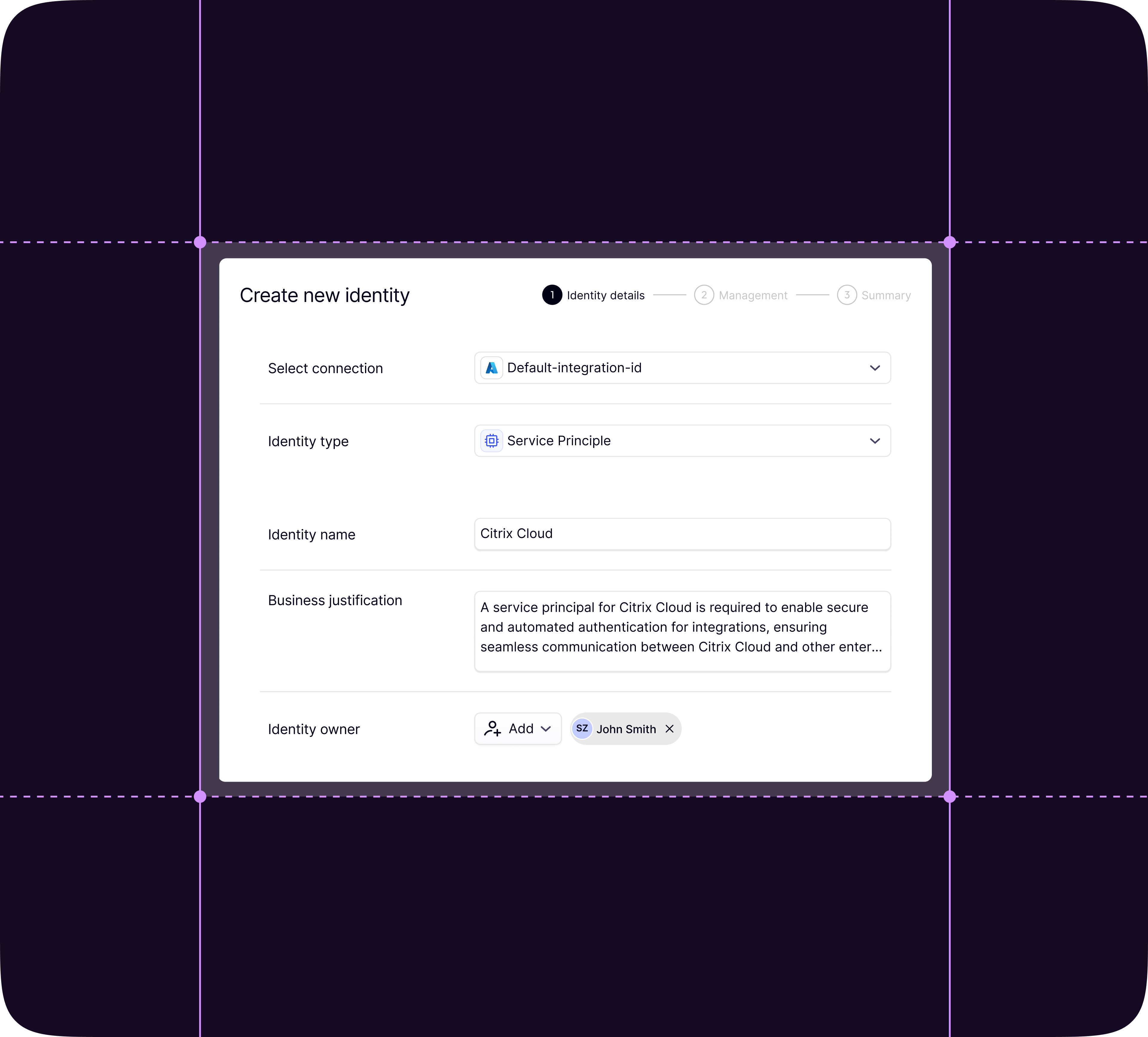
Lifecycle governance
Govern identities from creation, not after the fact. Provision cleanly and least-privilege by default, distribute secrets securely, run attestation and re-certification as access drifts, and decommission automatically when an identity goes dormant. One click, staged workflow, or fully automated policy.
A table listing identifiers related to secret scanning with columns for Identifier, Source, Type, Owner, and Severity. Entries include storage-main - Key 1, Shield Sec Heuristics, analytics-snowflake-etl-prod, IT ServicesBackOffice, Online Store Manager, Brainboard, and SQL Mover. Most entries have Critical severity marked red and indicate exposure to offboarded employees; some have Medium severity in yellow. Sources and types vary with icons such as applications, roles, service principals, and service accounts, and owner initials or icons appear.
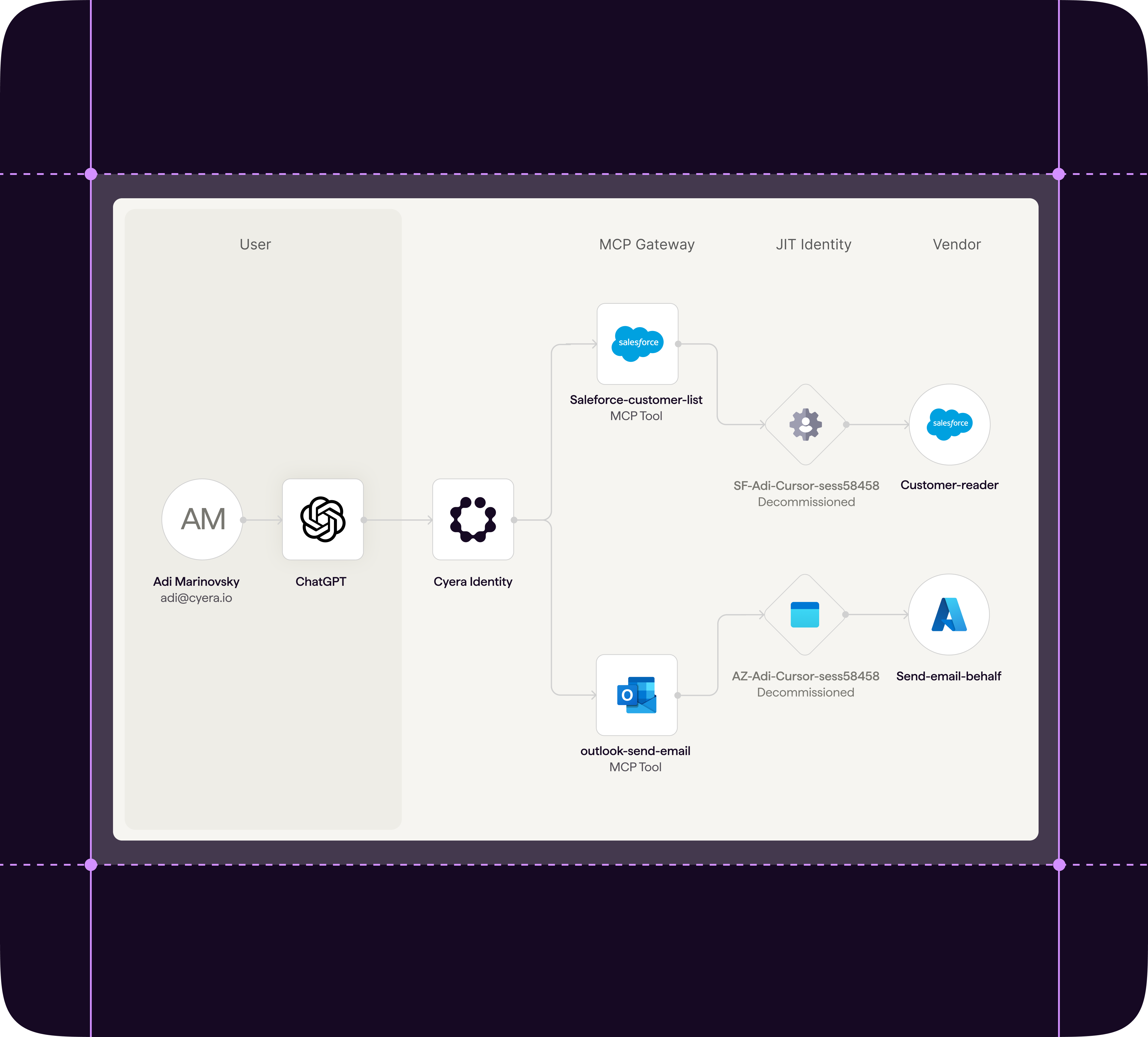
Agentic access management
Sit between the agent and the resources it wants. Cyera Identity reads the agent's intent, resolves it against deterministic policy, issues a downscoped session identity for that task, and expires it on completion. Every prompt binds to an identity, so the audit trail holds intent, policy, activity, and expiration.
A table listing identifiers related to secret scanning with columns for Identifier, Source, Type, Owner, and Severity. Entries include storage-main - Key 1, Shield Sec Heuristics, analytics-snowflake-etl-prod, IT ServicesBackOffice, Online Store Manager, Brainboard, and SQL Mover. Most entries have Critical severity marked red and indicate exposure to offboarded employees; some have Medium severity in yellow. Sources and types vary with icons such as applications, roles, service principals, and service accounts, and owner initials or icons appear.
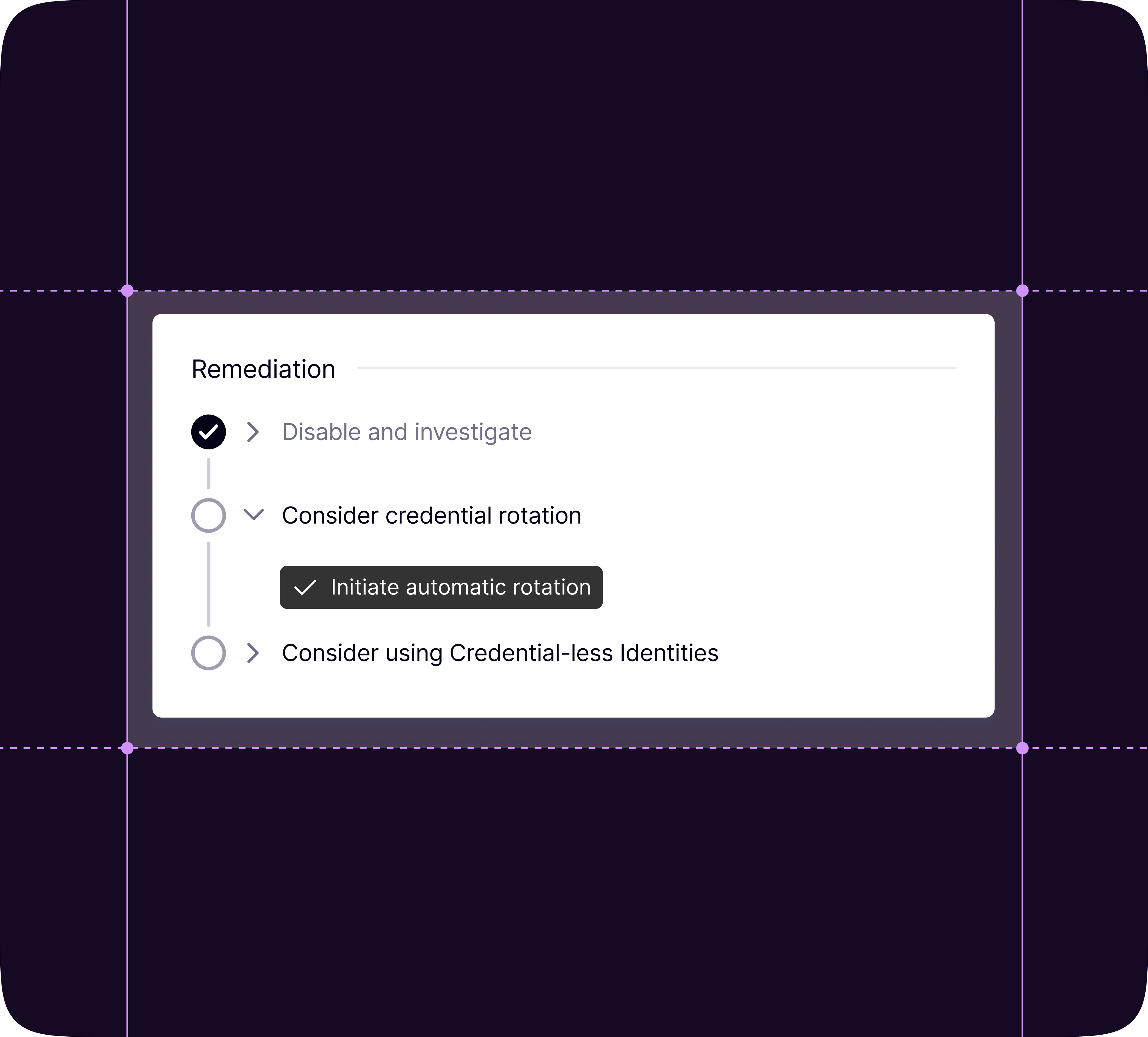
Threat detection and remediation
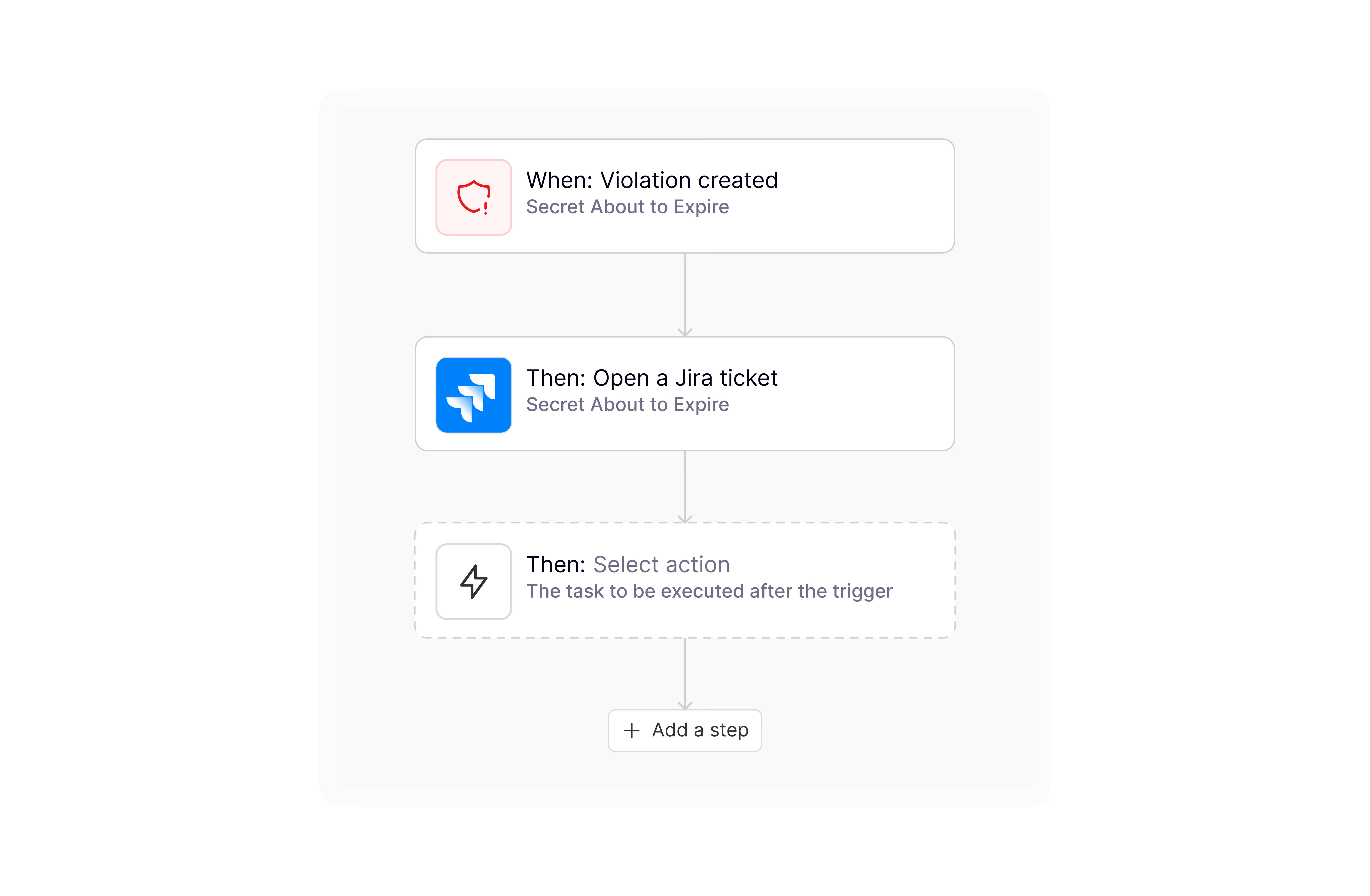
Watch for risky behavior: leaked credentials in use, access from somewhere new, a service account acting like a person. Detect it in the data, revoke it at the identity, and rotate the credential without waiting on a human to connect the two.
A table listing identifiers related to secret scanning with columns for Identifier, Source, Type, Owner, and Severity. Entries include storage-main - Key 1, Shield Sec Heuristics, analytics-snowflake-etl-prod, IT ServicesBackOffice, Online Store Manager, Brainboard, and SQL Mover. Most entries have Critical severity marked red and indicate exposure to offboarded employees; some have Medium severity in yellow. Sources and types vary with icons such as applications, roles, service principals, and service accounts, and owner initials or icons appear.
Table listing identifiers, sources, types, owners, and severity levels of various entities including storage-main - Key 1, Shield Sec Heuristics, analytics-snowflake-etl-prod, IT ServicesBackOffice, Online Store Manager, Brainboard, and SQL Mover, with most severities marked as Critical and a few as Medium.
User interface panel showing details for a GCP Deployment user service account last used on April 14, 2024, at 2:23 AM. The Owners section lists assigned users AM, YG, AZ; auto-assigned user JS with tooltip showing John Smith's email john@oasis.security and reason: Oasis detected the user created a key for this identity. Suggested owners SZ and VM are also shown.
Table showing risk prioritization with columns Identifier, Identity source, Compliant, and Severity. Rows show Unrotated, Least Privilege, Overconsumed, and Stale identifiers. Identity sources include icons for Azure, AWS, Google Cloud, and others. Compliance types listed are Service Principal, Application, and Role. Severity has colored labels for Critical (C), High (H), Medium (M), and Low (L) with numeric values for each risk type.
A table listing identifiers related to secret scanning with columns for Identifier, Source, Type, Owner, and Severity. Entries include storage-main - Key 1, Shield Sec Heuristics, analytics-snowflake-etl-prod, IT ServicesBackOffice, Online Store Manager, Brainboard, and SQL Mover. Most entries have Critical severity marked red and indicate exposure to offboarded employees; some have Medium severity in yellow. Sources and types vary with icons such as applications, roles, service principals, and service accounts, and owner initials or icons appear.
User interface panel titled Safe Rotation and Vault Governance showing a list with columns for Source, Identity, and Action Step. Rows display different service identities like CI Orchestrator, FinOps Reporter, BigQuery, fraud, and iam-user-aws with corresponding source icons and action steps. The FinOps Reporter row shows a green status labeled Created with a tooltip indicating a new secret created on Feb 24, 2025, in HashiCorp Vault at path /Oasis/default/CIOrchestrator. Other rows show grey or disabled steps with check marks in a progress style.
User interface screen for creating a new identity showing step one 'Identity details' selected with dropdowns for selecting connection set to Default-integration-id and identity type set to Service Principle. Fields include Identity name with 'Citrix Cloud' filled in, Business justification with text about enabling secure automated authentication for integrations, and Identity owner showing John Smith with an option to add more owners.
Flowchart showing user Adi Marinovsky's access workflow through ChatGPT and Cyera Identity into two MCP tools: Salesforce-customer-list and outlook-send-email, leading to decommissioned JIT identities for customer-reader and send-email-behalf respectively connected to their vendors.
User interface panel titled 'Remediation' listing three remediation steps with progress indicators: first step 'Disable and investigate' is checked, second step 'Consider credential rotation' is expanded with a checked option 'Initiate automatic rotation', third step 'Consider using Credential-less Identities' is collapsed and unchecked.
Utilizado por líderes de la industria
No se encontraron elementos.

Protect your data in minutes

Green checkmark inside a circle surrounded by floating purple geometric crystals on a blue gradient background.

Thank you!

Your submission has been received!
Button Text