Mythos can break into your house in hours. A practical guide to protecting what's inside
Anthropic's Mythos finds zero-days so fast they briefed the White House instead of releasing it. The cost of offense just collapsed. The only durable defense is knowing what attackers will find when they get in and securing it ahead of time.


Your board member forwards you an article about Mythos over the weekend. "Should we be worried?" You skim it. Anthropic built an AI that finds software vulnerabilities at a pace humans cannot match. They gated it to JPMorgan and AWS. They briefed the US government instead of releasing it publicly.
By Monday, your VP of Engineering is already dismissing it. "We patch fast. We have EDR. We're fine." Your compliance lead is less sure. You pull up your data inventory and realize you cannot answer the one question that actually matters: if someone exploits a zero-day in SharePoint tomorrow, what sensitive data is reachable from the other side?
That question is the only one worth answering. Mythos does not steal data. It finds doors. The attacker still needs something worth taking on the other side. And right now, most organizations cannot tell you what that is.
Offense economics just collapsed
The cost of finding a zero-day used to be months of skilled human labor. Mythos-class AI drops that to hours of compute. Anthropic gated their system because uncontrolled distribution is the risk, not the model itself. But the capability is already spreading. Open-weight competitors are claiming parts of it. The economics of offense shifted permanently, regardless of whether Mythos itself ever leaks.
More doors will open, faster
This matters because the software your organization already runs, SharePoint, M365, SaaS platforms, on-prem applications, will have vulnerabilities found faster than patches ship. Even well-maintained environments carry 30 to 90 day patching windows. AI-accelerated discovery means those windows are no longer safe assumptions. They are active exposure.
The goal did not change
Attackers still want the same things: deal books, pricing strategies, source code, customer databases, board materials, proprietary formulas. What changed is the speed at which they find ways in. The door gets found faster. What is behind it stays the same.
Perimeter tools were not built for this
EDR watches endpoints. SIEM correlates events. DLP scans for patterns at egress. None of them answer the question: which identities, if compromised through a zero-day, lead directly to crown jewel data? They watch the perimeter and operate reactively. They do not map what is inside and allow you to be proactively ready.
Most orgs cannot answer the question
Ask a security team what sensitive data lives in their environment and you get a partial answer at best. Most organizations have less than one percent of sensitive data labeled. Almost all of it is regulated PII. That is the easy part, the part that matches a regex.
Crown jewels are invisible to legacy tools
The data attackers actually target does not look like PII. It looks like a spreadsheet labeled "Q3 Pricing Model" in a SharePoint folder accessible to 400 people. It looks like source code in a repo with stale service account access. It looks like an M&A term sheet in a shared drive that was supposed to be locked down six months ago. Regex cannot find it. Manual audits cannot keep pace. And when a zero-day opens a door to that data, nobody knows until it is gone.
Access sprawl compounds the risk
Over-permissioned accounts are the blast radius multiplier. A compromised identity with broad access turns a single exploited vulnerability into access to everything that identity can reach. Service accounts without MFA, contractors with lingering permissions, Copilot users with inherited access to sensitive data they never needed. These are not hypothetical exposures. They are the exact paths an attacker follows after walking through the door.
How Cyera protects what is behind the door
Mythos shifts attacker economics. Cyera shifts defender economics. Instead of racing to patch every door before it is found, Cyera ensures that whatever is behind the door is classified, governed, and locked down before an attacker gets there.
Find the crown jewels, not just the regulated data
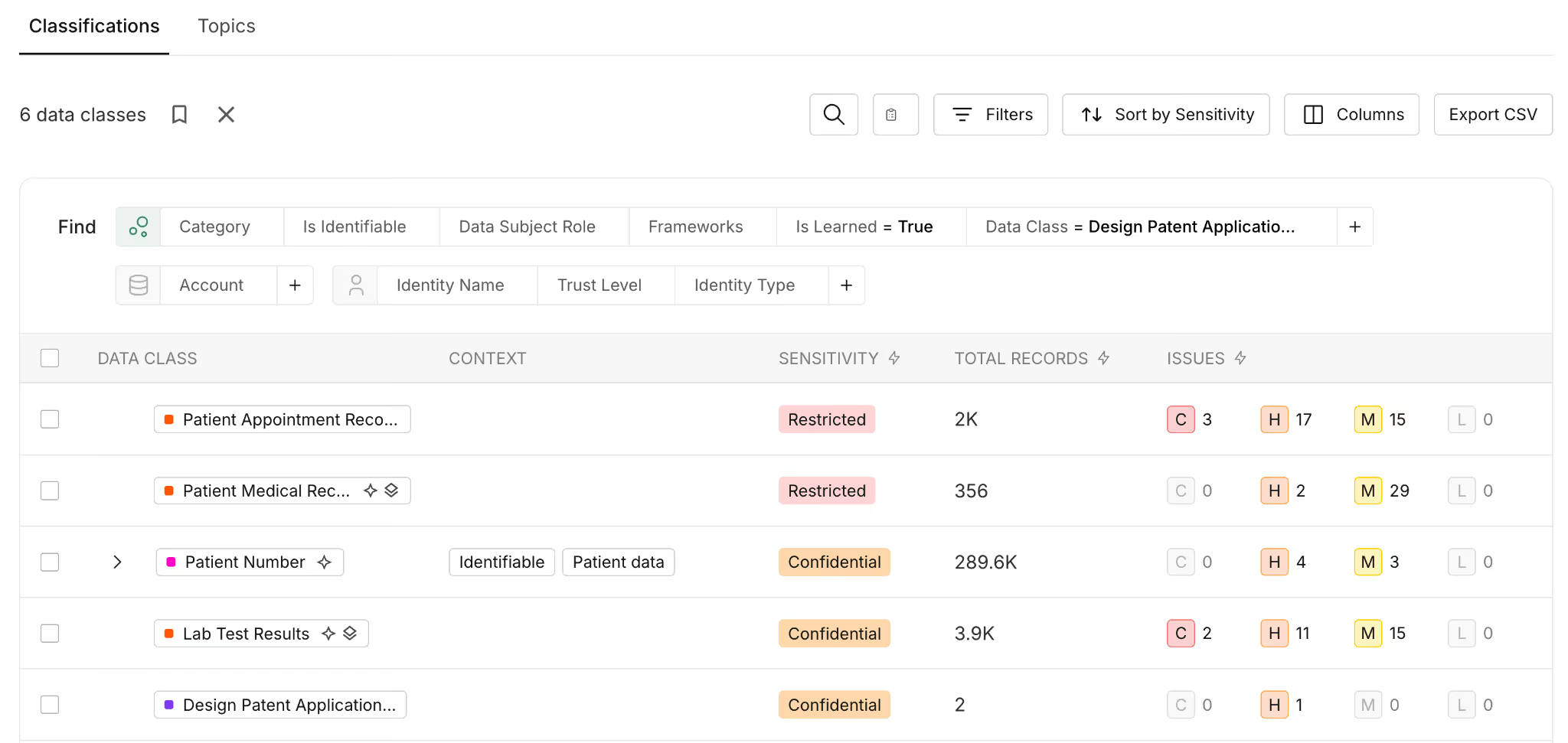
Cyera's AI classification learns what matters to the business, not just what regulators require. About half of what Cyera classifies has never been seen by another tool: deal books, proprietary formulas, source code, board materials, customer contracts, and pricing models. The classification engine uses contextual AI rather than regex, which means it catches sensitive data in free-text fields, unstructured documents, and repositories that keyword matching misses entirely.
This works across cloud, SaaS, and on-premises environments simultaneously. A single classification engine produces consistent sensitivity labels regardless of where data lives. The result is a complete map of what is actually valuable, not just what is regulated.
Map which identities reach what data
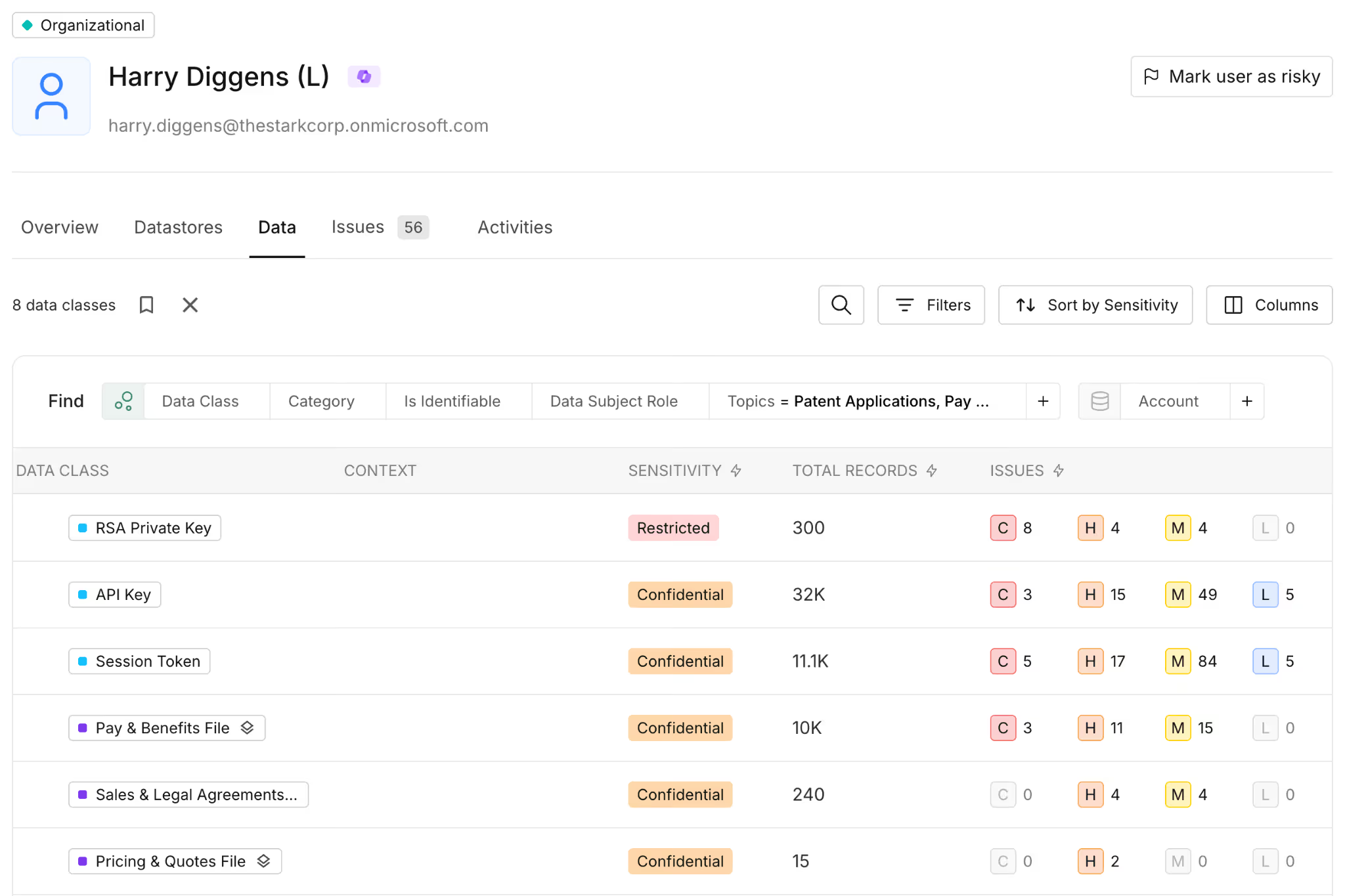
Classification alone does not close the exposure. Cyera DSPM correlates identity and data access and shows you exactly which accounts, if compromised, lead to crown jewel data. Active Directory sync maps database and file-level access to real human identities. This allows you to surface over-permissioned service accounts, contractors with stale access, and Microsoft Copilot users whose inherited permissions give them a straight line to sensitive data they were never intended to reach.
This is the blast radius view. When a zero-day compromises an identity, Cyera tells you in minutes what that identity can reach and how sensitive it is. Not days. Not weeks. Minutes.
Shrink the blast radius before the breach
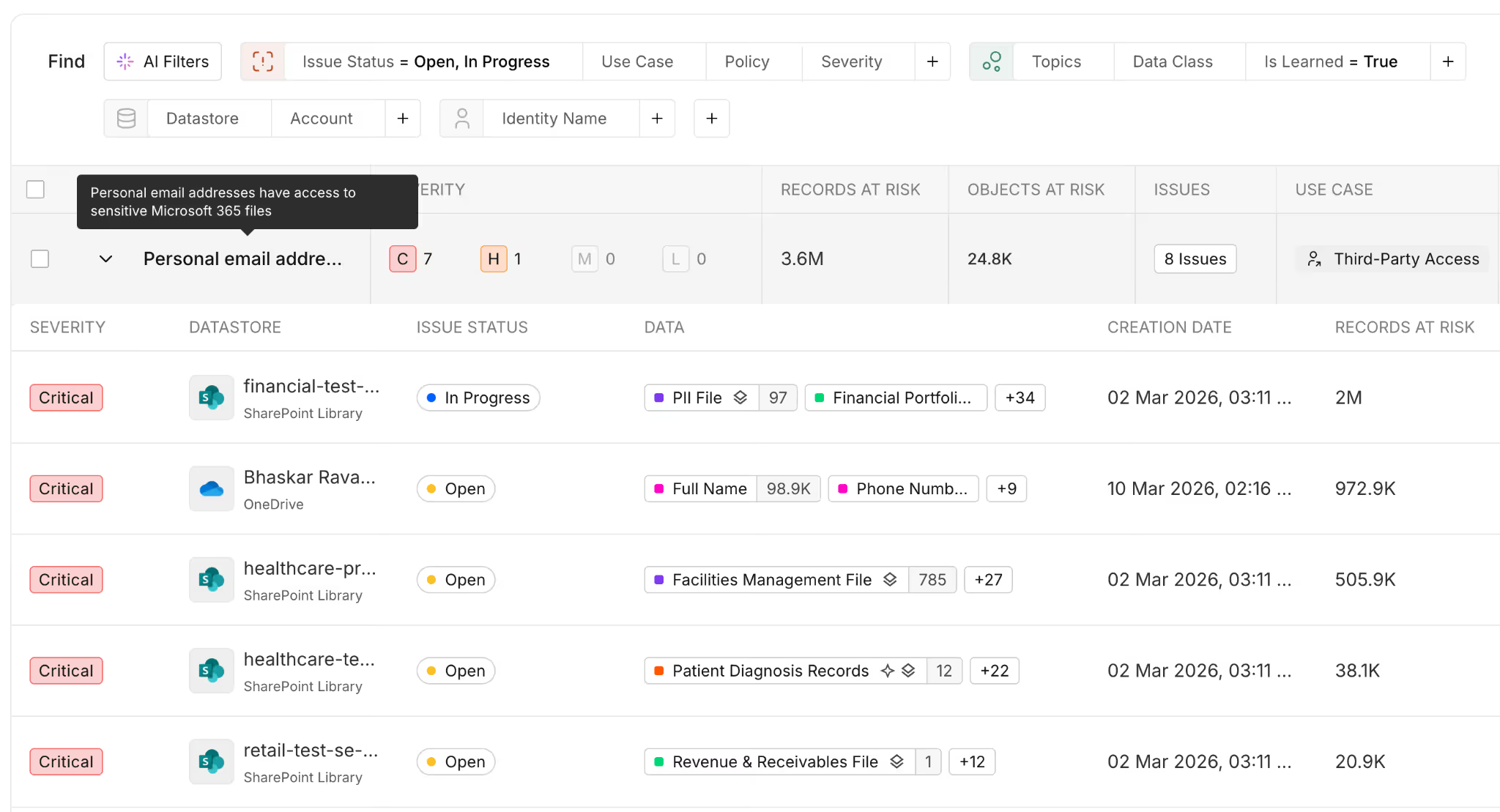
Once you can see which identities create disproportionate risk, you can fix them before a zero-day turns them into entry points. Cyera's remediation workflows let security teams revoke excess permissions, restrict access to crown jewels, and enforce least-privilege at the data layer. Findings route directly to ServiceNow, Jira, or Slack with full classification context, so the person receiving the ticket understands exactly what data is at stake and why access needs to change.
For organizations running Microsoft 365 and Google Workspace, Cyera applies controls directly: adjusting sharing settings, restricting file access, and notifying data owners when sensitive data is over-exposed. These are not theoretical recommendations. They are actions the platform takes, with a full audit trail, that reduce what an attacker finds on the other side of the door.
Enforce continuously with posture and runtime policies
Remediation fixes the problem once. Policies keep it fixed. Cyera's posture policies enforce rules continuously across the environment: no crown jewel data accessible to accounts without MFA, no sensitive files in externally shared folders, no production customer data in dev environments. When the environment drifts, and it always drifts, posture policies catch it automatically and trigger remediation before a zero-day can exploit the gap.
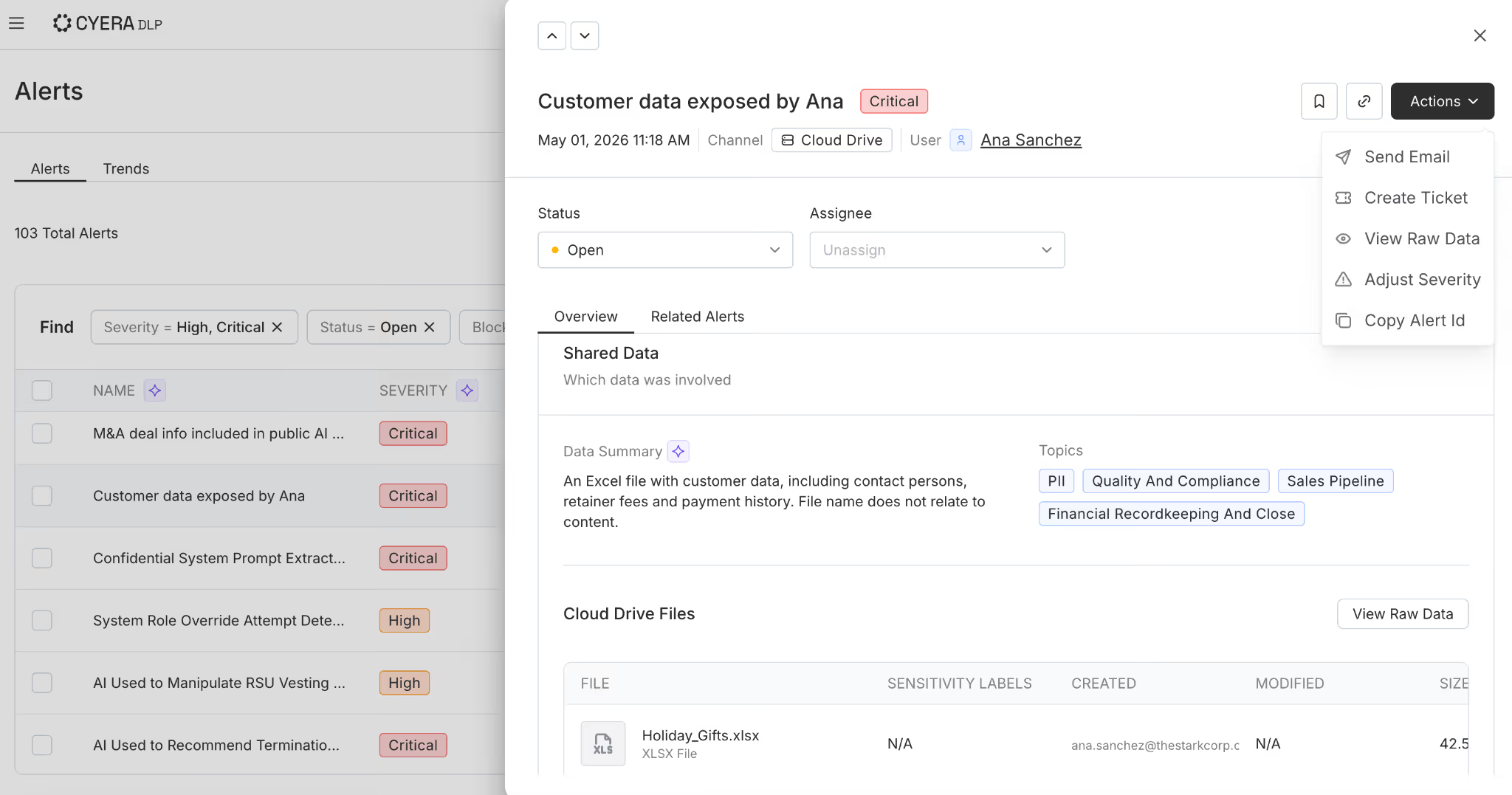
Runtime policies through Omni DLP add the detection layer for data in motion. If a compromised identity starts moving sensitive data through the door, exfiltrating files, copying crown jewels to unsanctioned locations, or forwarding classified documents, Omni DLP catches it in real time. This is not legacy DLP watching for credit card numbers at the email gateway. It is context-aware enforcement that understands what the data is, who is moving it, and whether that movement violates policy. Posture policies prevent the exposure. Runtime policies detect when someone tries to exploit it.
Recover surgically when something gets through
No defense is perfect. When an identity or agent is compromised despite preventive controls, the question becomes: what was accessed, and what needs priority recovery? Cyera's partnership with Cohesity turns "restore everything and hope" into surgical, business-aware recovery. Cyera tells Cohesity which data is sensitive and which backups contain crown jewels, so recovery prioritizes what matters to the business rather than following a generic restore order.
The door is not the problem. Protect your belongings.
Mythos and its successors will keep finding doors. That is the new normal. The organizations that survive this shift are not the ones who patch fastest. They are the ones who know what is on the other side of every door and have already locked it down.
To see how Cyera maps your crown jewels and closes the blast radius before the next zero-day lands, [request a focused walkthrough](https://www.cyera.com/demo) with the Cyera team.
FAQs
What is Mythos and why does it matter for data security?
Mythos is Anthropic's internal AI system that discovers software vulnerabilities at speeds humans cannot match. It matters because it signals a permanent shift in offense economics: finding zero-days now costs hours of compute rather than months of skilled labor. The capability is already spreading to open-weight models.
Does Mythos directly threaten my organization?
Not directly. Mythos is gated to a handful of Anthropic-approved enterprises. The realistic threat is the category: AI-accelerated vulnerability discovery becoming widely available. Your environment will face more zero-days, found faster, in software you already run.
Why can't patching and EDR handle this?
Even well-patched organizations carry 30 to 90 day vulnerability windows. EDR and SIEM watch endpoints and correlate events, but they do not map what sensitive data exists, who has access to it, or what an attacker reaches after initial compromise. The gap between "exploit detected" and "we know what was exposed" is where damage happens.
How does Cyera help reduce risk from AI-accelerated zero-days?
Cyera classifies all sensitive data across your environment, including crown jewels that regex-based tools miss. It maps identity-to-data access paths, surfaces over-permissioned accounts, and enables remediation before a breach. When a zero-day opens a door, Cyera ensures there is nothing unguarded on the other side.
What are crown jewels and why are they different from PII?
Crown jewels are the data that creates existential business risk if stolen: M&A plans, source code, pricing strategies, proprietary formulas, board materials. Unlike regulated PII, crown jewels do not match standard patterns and are invisible to legacy DLP. Cyera's contextual AI classification finds them where keyword-based tools cannot.

Get your AI Security Assessment


.svg)