


Account Takeover (ATO) is a primary risk addressed by the OWASP Top 10, specifically under Identification and Authentication Failures. When executed successfully, it can give an attacker access to everything the compromised identity has access to - email, SaaS apps, cloud storage, and sensitive data. From that point on, it’s a race.
Can you contain the compromised user before your data moves?
Traditionally, the answer has been no. Teams detect the compromise. Then they investigate:
- What data was accessed?
- Was anything downloaded?
- Was it shared externally?
By the time the SOC has the answers, the attacker has had hours or days of unrestricted access. That lag is where the real damage happens. This is where Abnormal and Cyera can take the response time from hours to minutes and significantly reduce exposure and risk.
Cyera and Abnormal close the distance between detection and action
Abnormal identifies and helps remediate compromised accounts the moment a takeover is detected. Cyera immediately limits what that identity can access and move. The handoff is automatic, so containment begins while the investigation is still spinning up.
From ATO Detection to Containment
Abnormal had already improved ATO detection significantly. It uses AI to create a baseline for user behavior and understand how each one normally interacts with email and identity systems. Once Abnormal detects deviations from the established baseline, it flags an account takeover attempt. Here are a few signals Abnormal is looking for:
- Unusual login behavior
Detects deviations from a user’s normal authentication patterns, such as atypical login times, locations, or session activity. - New or untrusted devices or locations
Flags access from previously unseen devices, IPs, or geographies that don’t match the user’s historical behavior. - Changes in communication patterns
Identifies shifts in how a user sends email, including tone, recipients, timing, and sending behavior. - Indicators of business email compromise (BEC)
Recognizes patterns consistent with BEC, such as payment requests, banking changes, or suspicious mailbox activity.
These signals are high confidence and often early. But detection alone doesn’t reduce risk.
A compromised account still has access to sensitive files, shared drives, data warehouses, and SaaS platforms. Attackers move quickly to access, download, and exfiltrate data. Breaches involving stolen credentials take an average of 246 days to identify and contain, with containment alone averaging 60 days. That is two months between knowing an account is compromised and limiting the damage.
Security teams know who is compromised but cannot immediately answer the questions that determine blast radius: What sensitive data can this user reach? What has the attacker already accessed? What was overexposed before the incident even started? Without those answers, containment is either too broad (lock everything, disrupt the business) or too slow (investigate first, contain later).
How It Works: Cyera + Abnormal
The integration between Cyera and Abnormal (available in Public Preview) connects identity risk directly to data control.
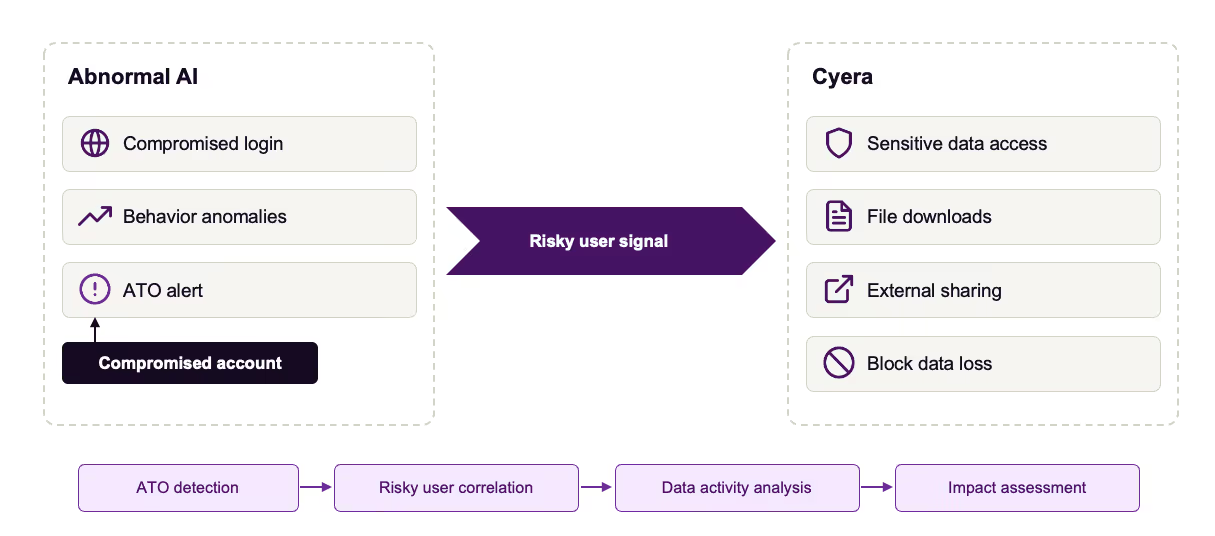
Step 1. Detect user risk
Abnormal uses behavioral AI to build a baseline of how every user interacts with email and identity systems over time. This includes login behavior, device usage, communication patterns, and typical business workflows. Rather than relying on static rules or known indicators, it continuously learns what “normal” looks like for each individual user.
When activity deviates from that baseline, Abnormal evaluates the risk in real time. A single signal—like a new login location—may not be enough to trigger an alert. But when multiple anomalies occur together, such as an unfamiliar device, unusual login timing, and a shift in communication behavior, Abnormal correlates those signals to determine whether the account is likely compromised.
Once the platform reaches high confidence that an account takeover is in progress, it generates a high-risk identity signal and immediately initiates response actions.
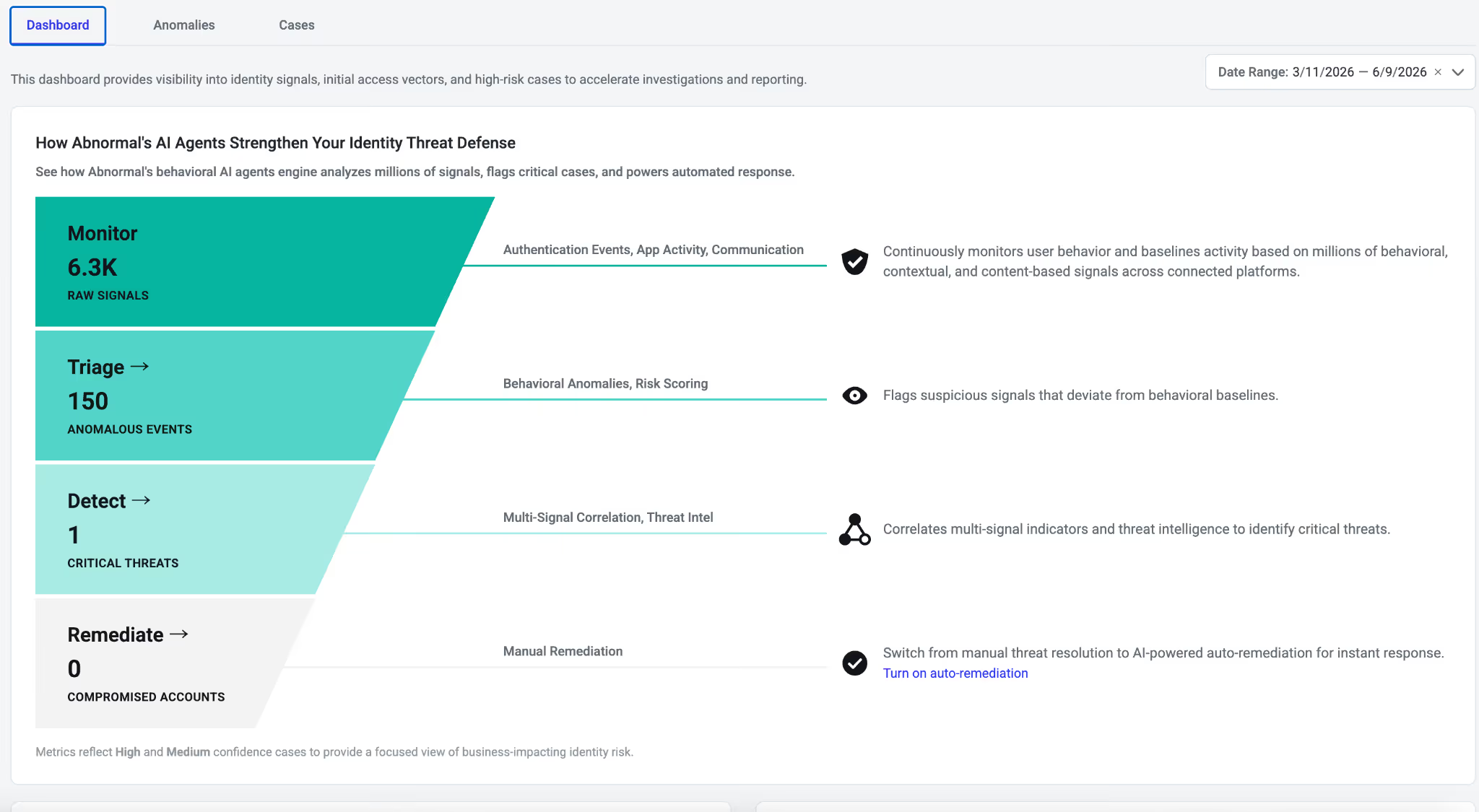
One of those actions is via the Cyera integration.
Step 2. Contain data access
When Cyera receives the high-risk identity signal from Abnormal, two things happen at once.

1. Tightened controls around the high risk user. Cyera Omni DLP recommends stricter data loss prevention (DLP) policies specifically for the flagged identity. These policies are pushed to the organization’s existing DLP tools, such as Microsoft Purview. Omni acts as the intelligence layer for DLP. Practically, this means running a collection policy to detect sensitive data movement and an enforcement policy to block data exfiltration, all targeted at the compromised identity.
2. Blast radius assessment. Cyera’s data security posture management (DSPM) shows analysts the scope of exposure: where the organization’s sensitive data lives, what this specific user can access, and what was already overexposed before the incident. Rather than manually tracing permissions across dozens of systems, the analyst sees a unified view of the compromised user’s data footprint.
The goal is immediate: reduce what the attacker can do before data is exposed, without waiting for the investigation to complete.
Step 3. Investigate and prioritize

Containment buys time. Omni DLP then helps teams prioritize what to investigate by correlating the compromised identity with sensitive-data context and data movement signals. Instead of reviewing every access event, analysts see which incidents involve genuinely sensitive data, which movements are anomalous, and which exposures carry the most business risk.

A compromised account in a large enterprise may have touched hundreds of files and applications. With Omni DLP correlating identity risk against data sensitivity, the team focuses on what matters. Critically, this investigation happens while the user is already contained. The SOC is working through a bounded problem, not racing against ongoing exfiltration.
What Your Analyst Sees in Minutes
An employee clicks a credential-harvesting link. An attacker gains access to their Microsoft 365 account.
In a traditional workflow, what follows is an investigation. The SOC analyst revokes the session and resets credentials, then begins the slower work: pulling sign-in logs, reviewing mailbox rules, and checking whether files were accessed or shared. Within the first hour, they discover the attacker reached a SharePoint site containing customer contracts. They escalate. Another team checks whether anything was downloaded or sent externally. Industry research consistently shows that attackers can move from initial compromise to lateral movement in under an hour, while security teams relying on manual investigation average over eight hours to contain. By the time the SOC has the answers, the attacker has had hours of unrestricted access.
With the integration in place, the same alert triggers a different experience. Within minutes, the analyst sees that the compromised user's access to sensitive repositories has already been restricted and blocking policies are in place. SOC teams still take the standard remediation actions: revoking sessions, resetting credentials, enforcing MFA, and remediating devices. But they are no longer racing against active data exfiltration while they do so. The immediate question shifts from "how do I stop this?" to "what do I need to investigate?" The analyst can see which sensitive data the user could reach, what was already overexposed, and where to focus. Instead of reconstructing a timeline from scratch across dozens of systems, they are working from a prioritized view of the exposures that carry real business risk.
The result is lower time to containment, reduced exposure risk, and less pressure on incident response. The investigation still happens. But the analyst is reviewing a contained incident, not chasing an active breach.
Contain high-risk users before your data moves
Detection and containment are not sequential steps. They are two halves of the same problem. If you can spot a compromised account but cannot immediately limit what it can reach, you are watching a breach unfold in real time. If you can lock down data but do not know which identity to target, you are disrupting your own business.
Abnormal tells you who is accessing your data and what normal access looks like. Cyera controls what they can do with your data. Together, they let your team contain account takeover at the speed it actually happens, not the speed your investigation allows.
Request a demo to learn how Cyera and Abnormal help you contain account takeover before data moves.
Account Takeover Protection FAQs
Q.) What is ATO and why is detection alone insufficient for enterprise security?
A.) Account takeover (ATO) occurs when attackers gain unauthorized access to user credentials, providing them with everything the legitimate user can access including email, SaaS applications, and sensitive data. Detection alone is insufficient because compromised accounts retain full access privileges, allowing attackers to exfiltrate data during the investigation period. Organizations need immediate containment capabilities to restrict data access while security teams assess the incident scope.
Q.) How does account takeover protection differ from traditional incident response approaches?
A.) Traditional account takeover protection follows a sequential model: detect the compromise, investigate the scope, then remediate. This approach leaves attackers with unrestricted access for hours or days. Modern account takeover protection implements immediate containment upon detection, restricting the compromised user’s access to sensitive data while investigation proceeds. This shift from reactive to proactive response significantly reduces potential data exposure.
Q.) What makes Cyera’s approach to account takeover containment unique compared to other solutions?
A.) Cyera combines data security posture management with dynamic policy enforcement to provide context-aware containment. When Abnormal AI detects a compromised account, Cyera immediately understands what sensitive data that user can access and automatically restricts those permissions. This eliminates the need for manual investigation across multiple systems and provides security teams with a unified view of the blast radius before data moves.
Q.) How quickly can the Cyera and Abnormal AI integration contain account takeover incidents?
A.) The integration enables containment within minutes of detection rather than the industry average of 60 days for full containment. Abnormal AI’s behavioral analysis identifies compromised accounts in real-time, while Cyera’s Omni DLP automatically enforces stricter policies for the flagged identity. This automated handoff eliminates the investigation delay that traditionally allows attackers unrestricted access to organizational data.
Q.) What specific data loss prevention capabilities does Cyera provide during account takeover incidents?
A.) Cyera’s data loss prevention capabilities include automated policy enforcement that restricts sensitive SharePoint access, blocks file downloads, disables external sharing, and removes DLP exceptions for compromised users. The system also provides continuous monitoring of data movement attempts and correlates identity risk with data sensitivity to help security teams prioritize their response efforts based on actual business impact.

Get your AI Security Assessment
.jpg)
.jpg)

.svg)